Can solar panels provide electricity during a power cut?
Solar panels alone usually cannot provide electricity during a power cut because their inverter safely disconnects from the grid. A compatible solar battery and backup system can keep selected circuits running, provided the installation has been designed for this purpose.
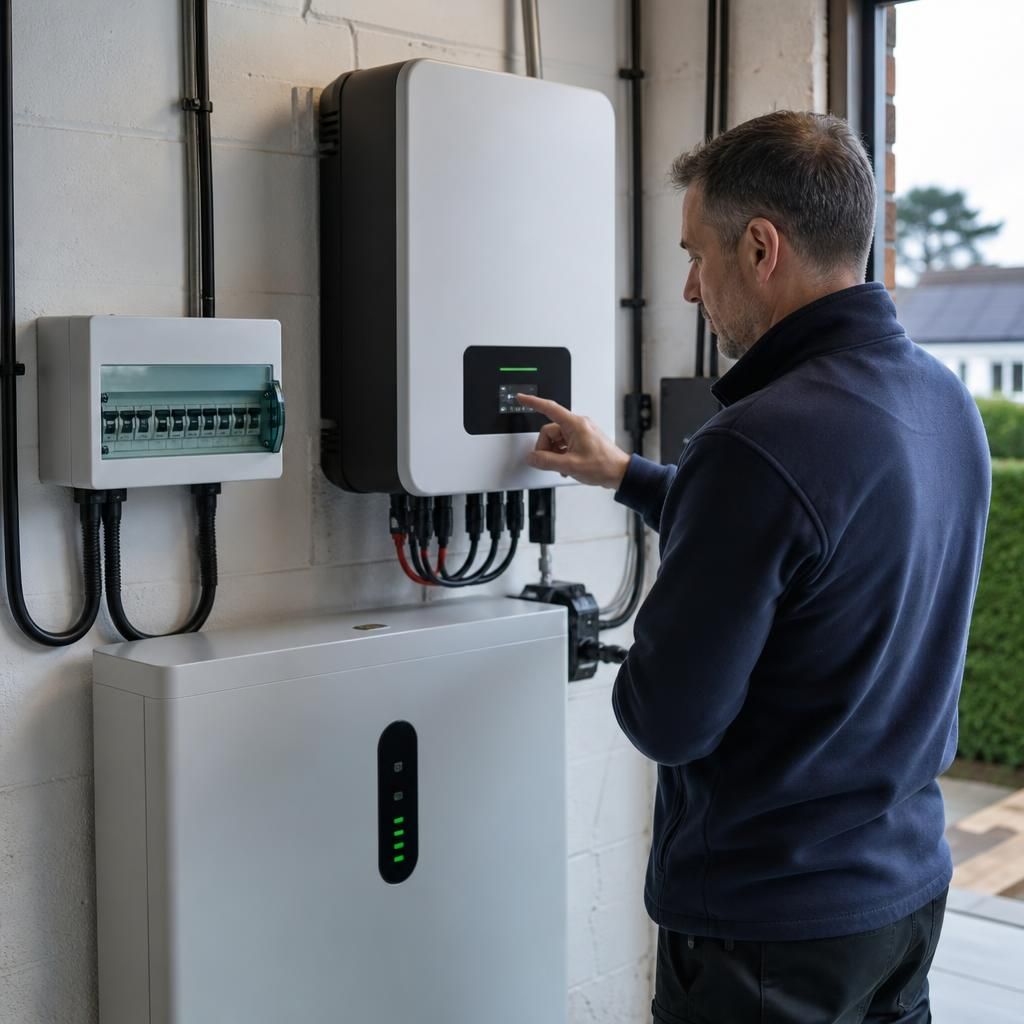
A standard grid-connected solar system is not an emergency electricity supply. To keep power on during an outage, the installation needs a battery, an inverter with backup capability and a safe way to separate the home from the National Grid.
This separation is essential. Without it, electricity from the panels or battery could feed back into cables that network engineers believe are dead. The backup equipment detects the outage, isolates the property and creates a controlled local supply instead.
What stays powered depends on the design. A backup system can feed selected circuits such as the fridge, freezer, lighting, broadband equipment and some sockets. A whole-home system may support more circuits, but the inverter, battery and consumer unit must be sized for the demand.
- High-power appliances can use a large share of the stored energy.
- Electric showers, immersion heaters, cookers, heat pumps and EV chargers may need separate consideration.
- Starting loads from pumps, compressors and refrigeration equipment can briefly exceed their normal running demand.
- Keeping essential circuits separate helps the battery last longer and prevents an overload trip.
The panels may continue producing electricity in daylight, but production changes with the weather and the position of the sun. At night, the battery is the available source. If the battery is already low when the outage begins, the backup supply cannot run indefinitely. A compatible system may allow the panels to recharge it during daylight, but that depends on the inverter and the way the backup circuits are wired.
Many existing solar installations were designed only to reduce imported electricity and send surplus power to the grid. They may have no facility for backup operation. Adding a battery does not automatically make such a system suitable during an outage. We check the inverter, battery compatibility, consumer unit, earthing arrangement and cable routes before recommending changes.
Your electricity demand matters as much as the panel capacity. We look at the appliances you want to keep running, how they start up and how long the battery would need to support them. That gives you a practical list of backed-up circuits rather than the assumption that every appliance will work normally.
Older properties can need extra care during the assessment. Several consumer units, older wiring, outbuildings or long cable runs can affect where the backup equipment is installed. We identify those constraints before work starts and explain any remedial electrical work needed to make the arrangement safe.
On installation, we fit the battery and backup equipment, connect the chosen circuits and configure the controls. We then test the changeover and restore sequence, including what happens if the battery is empty or the demand becomes too high. You should know which sockets remain live, which appliances must stay off and how to reset the system if it disconnects.
An outage can also occur while the system is exporting electricity, charging the battery or supplying the home. The controls manage those states automatically only when the equipment has been designed and commissioned for backup use. A standard solar inverter should not be manually altered or bypassed to try to keep the panels running.
For a new solar and battery installation, we can assess backup operation as part of the electrical design. For an existing system, we first establish what equipment is already fitted and whether it can be expanded. The written quotation sets out the equipment, backed-up circuits and any work required before installation.
If backup matters to you, the battery’s normal operating settings need attention. A system that uses all its stored energy each evening may have little left when an outage begins.
We can configure a reserve for backup use, so the battery holds part of its charge rather than discharging completely during everyday operation. That reserve still depends on the battery’s usable capacity and the circuits it supports. We explain how the setting affects normal solar use, so you know what the system is prioritising before a power cut occurs.