
Industrial Electrical Services
Industrial electrical faults, upgrades and new installations need safe planning around machinery, staff and production. We assess the site, coordinate the work and provide clear documentation, giving you a safe installation with minimal disruption. Contact us to arrange an assessment.
Planned for Reliable Industrial Operation
Production depends on electrical equipment that remains safe, accessible and properly documented. We check capacity, protection and cable routes so upgrades support machinery without creating problems for future maintenance.
Clear records help managers plan work and demonstrate upkeep. We provide quotations before starting, complete the agreed work tidily and leave paperwork showing what we tested, changed and flagged for attention.
Capacity for the next stage
Growing machinery loads can expose weak points in an installation. We assess demand and distribution capacity before new equipment is connected.
Protection that fits the site
Industrial environments place different demands on electrical equipment. We specify protection and containment for the machinery, building and working conditions.
Work planned around operations
Planned upgrades are sequenced around access, deliveries and production needs. That keeps the project controlled without treating disruption as an afterthought.
Records that support compliance
Managers need more than a completed installation. We provide the test results, certificates and installation details needed for audits, maintenance and future changes.
Built for practical maintenance
Poor access turns routine maintenance into avoidable downtime. We consider cable routes, isolation points and working space so engineers can reach equipment safely.
Qualified work, properly checked
NICEIC and ECA electrical credentials support the standards behind the work. We test the installation and explain anything that needs attention before handover.
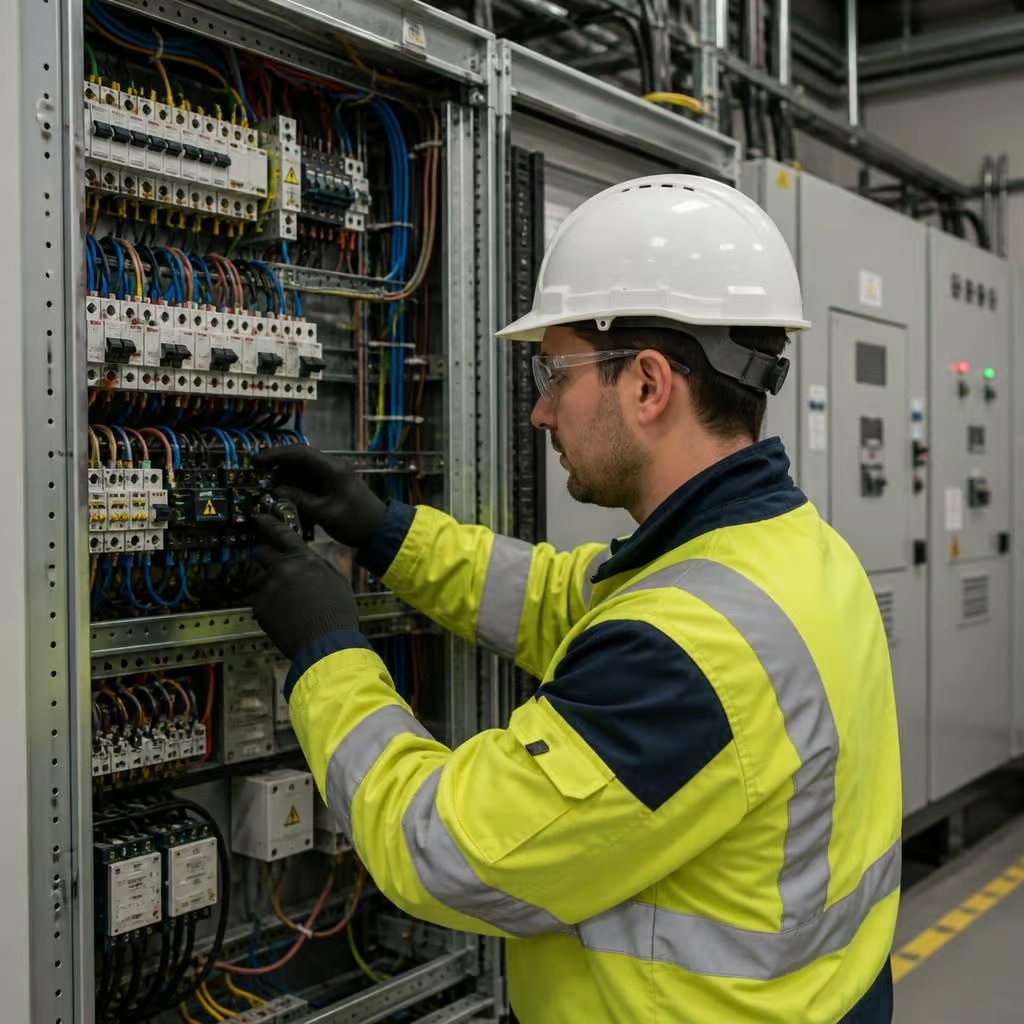
Designed Around Your Site and Machinery
Industrial premises rarely have a blank canvas. Existing switchgear, control equipment and fixed machinery affect what can be added, so we trace how the installation operates before recommending changes. That prevents a new circuit from masking an older weakness.
If production must continue, we plan isolations around your process and agree access with the site team. We keep intrusive tasks away from sensitive operations where practical, then identify what needs testing before equipment returns to service.
When a low-cost approach leaves awkward access or recurring faults, we explain the trade-off plainly. Recommendations reflect the load, environment and maintenance routine, not a standard package. The result fits the machinery already in place and supports the way your site runs.
Practical Results for Your Industrial Site
Reliable industrial power affects more than whether machinery starts. We identify avoidable energy waste, clarify which assets need investment, and record remedial priorities, helping managers control operating costs and protect the value of equipment.
Safer power for staff and machinery
When circuits, enclosures or protection devices are no longer suitable, we identify the risk and set out the corrective work. NICEIC and ECA standards guide our electrical work, giving you a safer installation and a clear route to compliance.
Capacity for new equipment
When you add machinery or change a production area, we check demand across the distribution system before connecting anything. We can identify where supplies, circuits or protection need upgrading, so new equipment has the capacity it requires.
Fewer avoidable interruptions
Recurring trips, hot connections or intermittent faults can interrupt work without an obvious cause. We test the installation, trace the underlying issue and recommend repairs that address the fault rather than repeatedly resetting the symptom.
More controlled energy use
If equipment runs when it is not needed, we review the relevant circuits, controls and operating pattern. We then identify practical changes that can reduce wasted electricity and make running costs easier to track.
A clearer maintenance plan
When several electrical issues compete for attention, we separate immediate risks from work that can be planned. You receive a practical order of priorities, helping you budget for upgrades and protect the value of industrial equipment.
Questions to Ask Before Appointing an Industrial Electrical Contractor
Can the industrial electrical contractor assess our machinery’s power demands?
Check that the contractor understands machinery loads, distribution, controls, hazardous areas and planned shutdowns. Ask for itemised pricing, testing records, competent engineers and clear arrangements for future maintenance and support.
Can an industrial electrician provide complete testing and compliance records?
Ask for inspection and test results covering distribution boards, protective devices and machinery circuits. We provide certificates, schedules and clear records, so future engineers can trace changes without repeating the work.
Can an industrial electrician support planned maintenance after installation?
If maintenance must fit around production, we review access, equipment condition and known faults with your team. We identify sensible priorities and leave clear recommendations for the next planned visit.
Can an industrial electrician upgrade old wiring without replacing the whole installation?
Older wiring does not always require complete replacement. We identify unsafe sections, separate essential circuits, and plan phased upgrades, limiting disruption while leaving the remaining installation safe and suitably documented.
How does an industrial electrician diagnose intermittent faults?
Intermittent faults need evidence, not guesswork. We review symptoms, inspect terminations and protective devices, then test circuits under relevant conditions. You receive a clear, specific cause and practical repair recommendation.