
Can an industrial electrician support planned maintenance after installation?
Yes. We can create a planned maintenance schedule for the installed electrical system, checking critical equipment at agreed intervals so developing faults are found before they cause avoidable downtime or damage.
A planned maintenance arrangement gives the installation a defined routine after commissioning, rather than waiting for a failure to interrupt production. We review the electrical system, agree suitable inspection tasks and record what needs attention at each visit.
The first step is understanding how the site operates. A production line with motor starters, variable speed drives and control panels has different maintenance needs from a warehouse distribution system. We review available drawings, previous test records, equipment manuals and the way each circuit is used. Where records are incomplete, we trace and identify the installation so future work starts from reliable information.
That review creates a practical asset list. It can include distribution boards, isolators, machine supplies, control panels, emergency stops, fixed wiring, sockets, external equipment and critical protection devices. We note the condition, location and function of each item, then separate equipment that can be checked during normal operation from equipment that needs an isolation or planned shutdown.
Inspection intervals should reflect risk and use. High-use equipment, dusty or damp areas, vibration, heat and frequent changes to machinery can all affect the appropriate interval. We use the site conditions and equipment history to recommend a sensible programme rather than applying the same timetable to every circuit.
- Visual checks can identify damaged enclosures, loose covers, cable strain, contamination, heat marks and signs of water or oil ingress.
- Connections, isolators and enclosures can be checked for deterioration and secure termination during safe isolation.
- Protective devices, earthing arrangements and selected circuits can be tested where the equipment and operating conditions allow.
- Control panels and machine supplies can be reviewed for damaged conductors, failed indicators, poor labelling and changes made since installation.
- Thermal checks may help locate abnormal heating at accessible connections or components, where this is suitable for the equipment and safe to carry out.
The point is not to test everything indiscriminately. Some machinery must remain in service, some tests require a controlled shutdown and some maintenance belongs with the machine manufacturer or specialist. We define the electrical boundary clearly, so the site team knows what our visit covers and what requires another party.
Planned work also reduces avoidable disruption. If a worn isolator, damaged gland or deteriorating connection is found, we explain its condition and the likely consequence of leaving it in service. Non-urgent repairs can then be arranged around production, stock movements or an existing maintenance shutdown. Where a repair affects a critical circuit, we identify the isolation point and the work needed before anyone starts.
Findings are prioritised according to safety, reliability and the effect on operations. An immediate danger needs a different response from faded labelling or a minor enclosure defect. We do not treat every observation as an emergency, and we do not leave a significant risk hidden inside a routine report.
Records make the next visit more useful. We document the equipment checked, the results obtained, defects found and actions agreed. Updated schedules, photographs or marked-up drawings can help the maintenance team identify the correct panel or isolator later. A record of recurring faults can also show when a repair is no longer the right answer and an upgrade should be considered.
Electrical maintenance must sit alongside the site’s wider compliance arrangements. Our NICEIC and ECA-backed electrical work supports safe inspection and maintenance of the fixed installation, while machinery servicing, fire-system checks and other statutory duties may require separate specialists. We can work from the site’s existing risk assessments and permit procedures, and provide the electrical information needed for the responsible person or facilities team.
After installation, the support can be as light or as structured as the site requires. That might mean a periodic condition review, scheduled checks of identified critical equipment or attendance during planned shutdown work. The result is a clear maintenance record, known outstanding actions and a better basis for deciding when equipment should be repaired, replaced or left under observation.
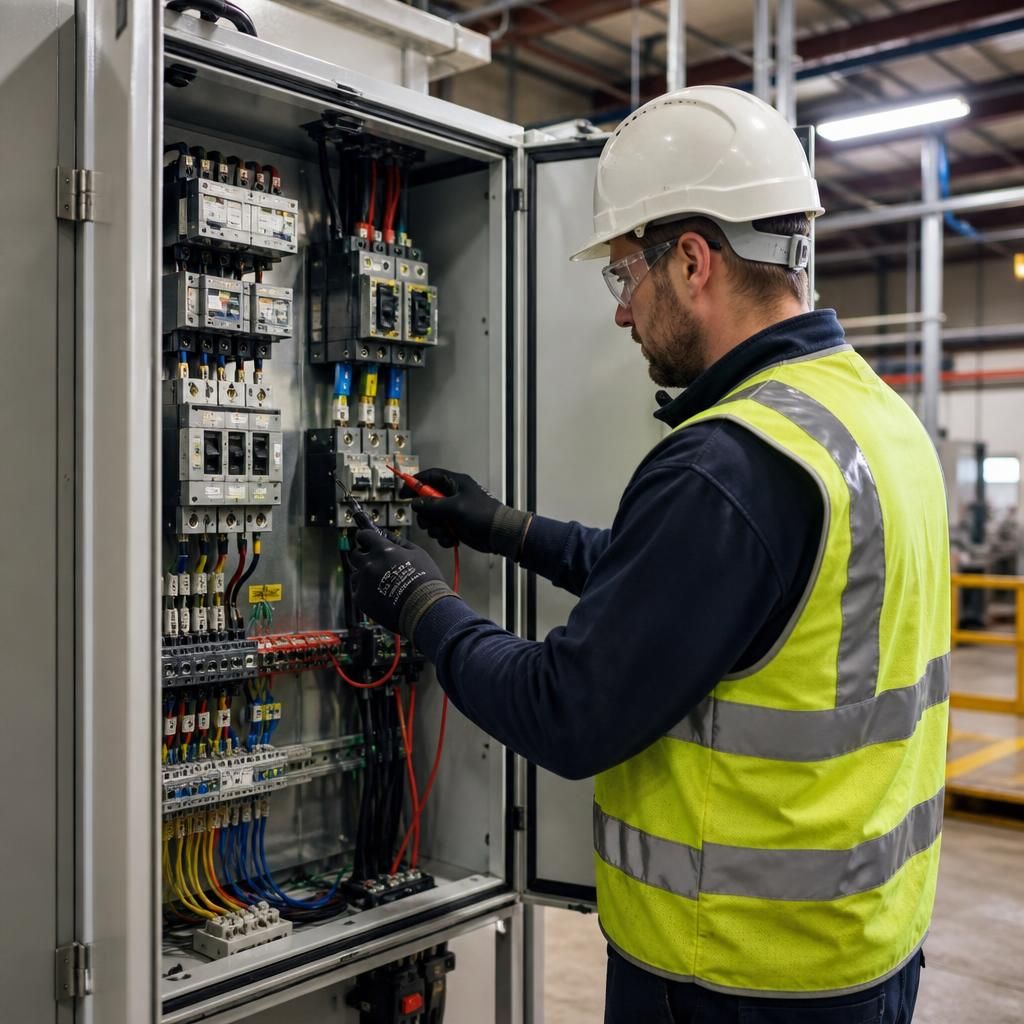
After a new installation, the maintenance team still needs to know what normal operation looks like. We can walk through the distribution boards, isolators, control panels and emergency stops, so staff can identify the correct equipment before a planned check or isolation.
That handover also clarifies what operators may reset and what requires an electrician. Clear labels and simple instructions reduce the risk of the wrong circuit being isolated or a recurring fault being treated as a quick reset. The site is left with a practical starting point for maintaining the installation safely.
Discuss planned maintenance for your industrial installation
If your installation needs ongoing electrical support after commissioning, speak to us about the level of planned maintenance that fits the site. We can review the existing information and agree a clear next step for the responsible person or facilities team.