
7kW, 22kW or Three-Phase?
Choosing between 7kW and 22kW charging is less about the fastest charger and more about your car, electricity supply and parking setup. We explain what three-phase power changes, where a 7kW home charger fits, and when higher power is worthwhile.
EV Charger Power Options Compared: 7kW, 11kW, 22kW and Three-Phase
These power levels suit different homes, cars and daily routines. The comparison below covers charging time, electrical work, likely running costs and future usefulness, so you can weigh a standard domestic installation against higher-powered alternatives.
7kW: the usual home charging choice
If your home has a standard single-phase supply, a 7kW charger is usually the practical starting point. We check the consumer unit, cable route and parking position, then size the installation around the car and available capacity.
11kW: useful only when the car and supply support it
An 11kW charger can reduce charging time, but the car must accept that rate and the property needs a suitable three-phase supply. We confirm both before recommending it, so you do not pay for power the car cannot use.
22kW: the highest-power domestic option
A 22kW charger suits a compatible car that needs faster AC charging and a property with enough electrical capacity. It normally requires three-phase power, so we assess the incoming supply and any upgrade work before quoting.
Three-phase power changes the installation
Three-phase does not automatically make a 22kW charger worthwhile. We check whether the supply is already available, whether the car can use it and whether the cable route and consumer unit can support the installation.
Higher power does not mean cheaper electricity
A faster charger can reduce the time your car is connected, but it does not make each unit of electricity cheaper. We look at the charger, tariff, supply capacity and charging routine together rather than treating power alone as a saving.
The right choice depends on the whole property
If you are comparing 7kW, 11kW and 22kW, we start with the car and your normal parking pattern. Our NICEIC and ECA electrical team checks the supply and installation route, then gives you a written quotation for the option that fits.
Charging Advice That Starts With Your Property
An online-only supplier cannot see an older wall, the consumer unit’s position or a commercial parking layout. Across Warwickshire, Oxfordshire, Gloucestershire and the North Cotswolds, we account for outbuildings, long cable routes and rural properties before recommending equipment.
When solar panels, batteries or other loads share the supply, one technical team keeps the design joined up. We coordinate the charger installation and testing, then explain the controls and paperwork clearly.
Homeowners need tidy cable routes; landlords and facilities managers need clear records. Our directly employed electricians handle both, with a written quotation before work starts and work that leaves the property as we found it.
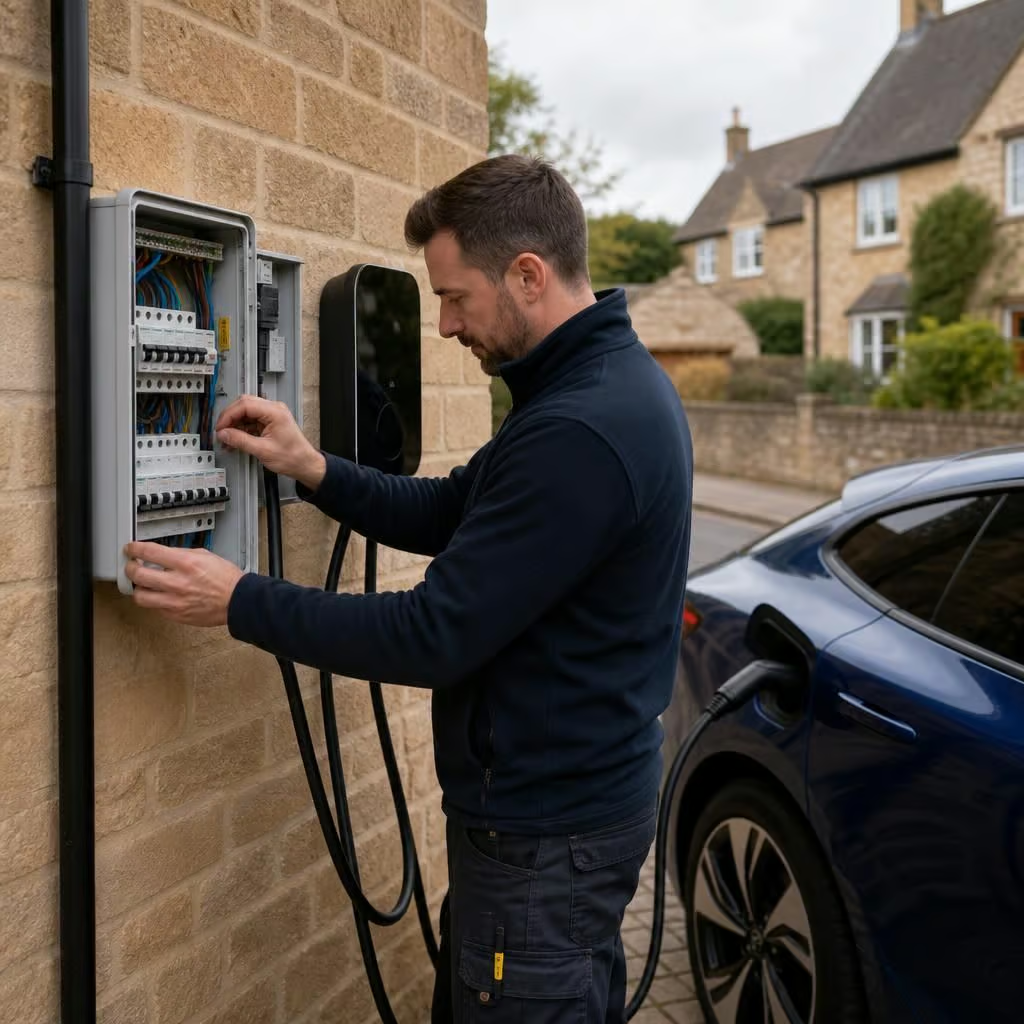
What Makes the Right Charger Fit Your Property
A higher-power charger only helps when the car and supply can use it. We check the vehicle, phase, earthing and available capacity before recommending equipment.
If three-phase power, load management or a longer cable route is needed, we set out that work first. Testing confirms the charger and protection work together; handover notes explain controls and fault steps.
The Details Behind a Charger That Works Properly
Your Car Sets the Charging Limit
A 22kW unit won't charge a car at 22kW if its onboard AC charger accepts less. We match the charger output to the vehicle, so you pay for useful capacity rather than a number the car cannot use.
7kW Usually Suits Single-Phase Homes
A typical home electricity supply can support a 7kW charger when the available capacity and installation conditions are suitable. We check the supply before confirming that choice.
Three-Phase Makes Higher Power Possible
A 22kW charger generally needs three-phase power and enough spare capacity. We establish whether the property already has three-phase electricity and explain any required supply work before installation.
Protection Matches the Installation
Older consumer units, earthing arrangements and outbuildings can affect charger design. NICEIC and ECA electrical expertise means we select the required protection and test the finished installation properly.
The Cable Route Affects the Result
A charger on a detached garage or far side of the property needs more than a longer cable. We plan the route, containment and connection point so the installation remains practical and tidy.
Controls Prevent Unwanted Demand
When a home already has significant electrical loads, charger controls can help manage how power is used. We explain the available control approach in relation to the supply and the charging routine.
You See the Difference in the Handover
After installation, you receive clear information about the charger controls, isolation point and fault steps. That gives homeowners, landlords and property managers the details needed to use and manage the equipment correctly.
Questions to Ask Before Choosing an EV Charger
What should an EV charger quotation include?
Expect a written quotation covering equipment, cable route, protective devices, testing, certification, making good, guarantees and future maintenance. Confirm exclusions, payment stages and post-installation fault arrangements before any work starts.
Does my home have the right electrical supply for a 22kW charger?
Most homes have single-phase supplies, so a 22kW charger may not deliver 22kW. We assess the incoming supply, meter, consumer unit and network capacity before recommending a practical charging option.
Can my parking space support the charger I’m considering?
An exposed wall, narrow drive or detached garage can affect cable route, weather protection and access. We assess mounting position, route length and vehicle clearance, then explain any preparation needed.
Who will maintain my EV charger after installation?
After installation, we can inspect the charger, test its protective devices and investigate faults. We explain any remedial work clearly, so maintenance is planned and explained fully in advance first.
Will a 7kW or 22kW charger suit my electric car?
Your car's onboard charger sets the limit: many accept 7kW, while some support 11kW or 22kW. We confirm its specification, then match charger power to supply and daily charging routine.