What should an EV charger quotation include?
An EV charger quotation should set out the charger, installation work, electrical checks, any required upgrades, and the full cost before work starts. It should also explain grant eligibility, cable routes, likely disruption and what paperwork you’ll receive when the installation is complete.
The quotation should let you compare the complete installation, not just the price of the charger. It should identify the equipment, show how the electrical work will be carried out, explain any limits or assumptions, and separate included work from possible additional costs.
Start with the charger itself. The quotation should name the make and model, charging power and connection type. It should make clear whether the unit is a 7kW or 22kW charger, and whether the charger can reduce its output when the property is using other high-load appliances. That matters because the advertised maximum is not always the rate your car or electrical supply can use.
- Charger model: the exact equipment being proposed, rather than a generic description.
- Charging power: the maximum output and any conditions that limit it.
- Controls: how charging is started, scheduled and monitored.
- Connectivity: whether the charger needs Wi-Fi or another connection for its app and smart functions.
- Included accessories: such as a tethered cable, untethered socket, key controls or mounting hardware.
Your car may accept less power than the charger can provide. The quotation should therefore confirm that the proposed unit suits the vehicle, rather than treating a higher rating as automatically better. A 22kW charger also needs the right vehicle and electrical supply to make use of its capacity.
The electrical survey should be described in practical terms. We assess the incoming supply, consumer unit, earthing arrangement and available capacity before confirming the installation. The quotation should say if this assessment has already taken place or if the price depends on a site survey.
Your existing consumer unit may not have the protection needed for an EV charging circuit. The quotation should identify the protective devices and isolation equipment required, including any additional work inside the consumer unit. It should also explain if the installation depends on upgrading an older board, improving earthing or carrying out remedial electrical work first.
Properties with older wiring need particular care. A charger adds a substantial electrical load, so we cannot assume that an existing circuit or outbuilding supply is suitable. If testing reveals a fault or limitation, the quotation should describe the corrective work separately rather than hiding it within a general installation allowance.
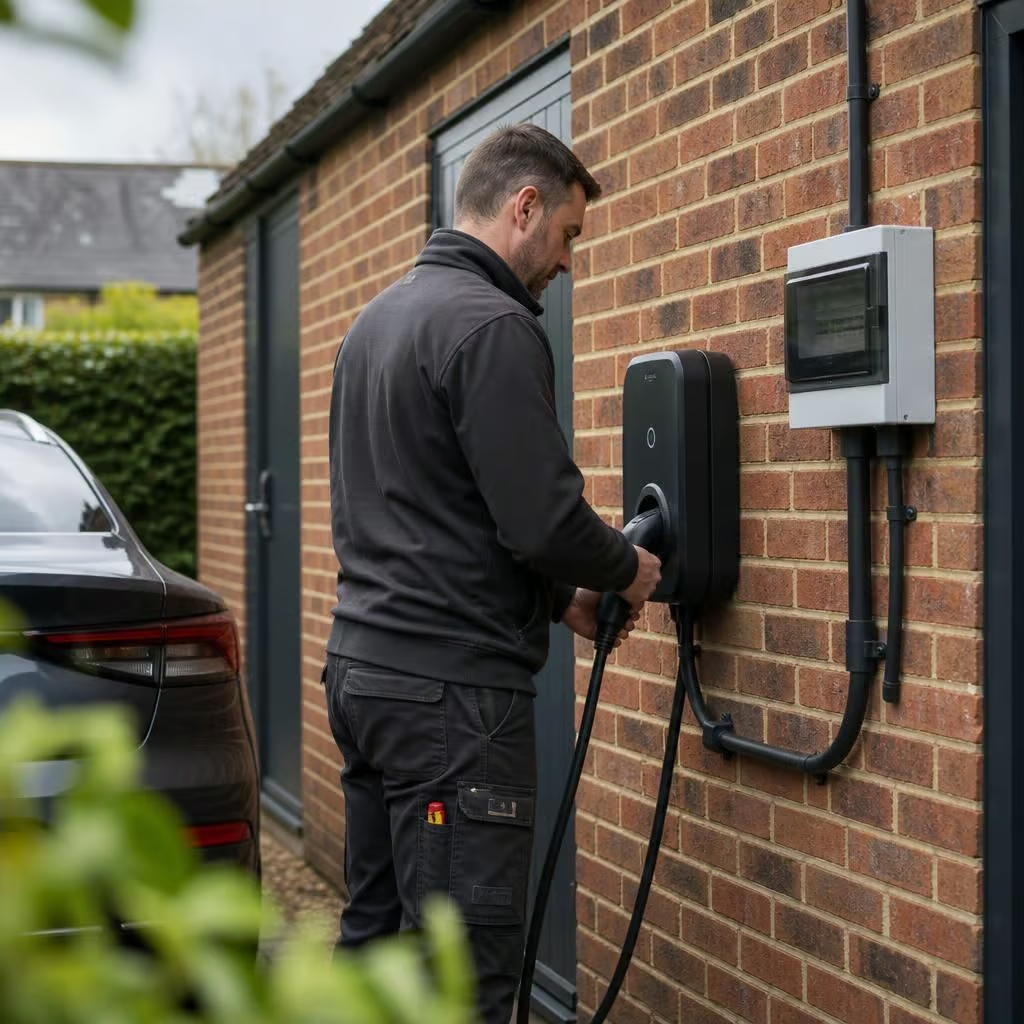
The cable route should be visible in the quotation or on an accompanying plan. It should state where the charger will be mounted, where the cable will run and how it will enter the building. A route through an external wall, loft, garage or outbuilding can involve different materials and working methods.
- Approximate cable length and route.
- Surface-mounted or concealed cabling.
- Drilling through walls or floors.
- Trenching or ducting across external ground.
- Protection for cable exposed to vehicles, gardening work or weather.
- Making good after the cable has been installed.
A quotation should not assume that the shortest route is practical. Your parking position may change, the consumer unit may be on the opposite side of the house, or an outbuilding may need a separate supply. If the route cannot be confirmed until the survey, that uncertainty should be stated clearly.
The supply arrangement needs its own explanation. A domestic property may have a single-phase supply, while some larger homes, farms or commercial premises have three-phase electricity. The quotation should confirm which supply the charger requires and whether the proposed output will be restricted by the available capacity.
Where the property has solar panels, a battery or other high-demand equipment, the quotation should explain how the charger will interact with it. You may need controls that prevent the charger, heat pump, electric heating or other loads from exceeding the supply limit. If charging from surplus solar is being considered, the quotation should state whether the required monitoring equipment and configuration are included.
The price should distinguish standard installation work from property-specific alterations. A clear breakdown might include:
- Charger and mounting equipment.
- Dedicated cable and protective equipment.
- Labour for the agreed installation route.
- Testing, configuration and commissioning.
- Electrical certification and any required notification.
- Groundworks, ducting, consumer unit alterations or supply upgrades, where applicable.
Some items may be excluded because they depend on what the survey finds. That is acceptable if the quotation identifies them and explains how they would be priced. Examples include unusual trenching, repairs to defective wiring, changes to a private supply, specialist access equipment or work by the electricity network operator.
Ask how changes will be handled if the agreed route or equipment cannot be used. We set out the work covered by the quotation and explain any necessary variation before carrying it out. That gives you a chance to decide whether to proceed with the additional work.
The quotation should also state the practical conditions for installation. It may depend on clear access to the consumer unit, permission to drill through a wall, safe access to an outbuilding or agreement from a landlord or property owner. If the parking space is shared or not directly beside the house, the quotation should record who owns the land and what permission is needed.
For a listed, solid-wall or older property, the cable route may need more thought than a standard external installation. The quotation should show how visible cabling, wall penetrations and any work to historic fabric will be handled. Planning or property restrictions should be checked where they apply, rather than assumed away.
Testing and handover are part of the installation, not optional extras. The quotation should say that the new circuit will be tested and that you will receive the relevant electrical paperwork. It should also explain what we will cover when we show you how to use the charger, set a schedule and connect any app.
Electrical work for an EV charger should be carried out by a properly registered contractor. Our NICEIC and ECA registration covers the electrical installation work, testing and certification that sit behind the quotation. The important point for you is that the quote relates to a properly assessed circuit, not simply to fixing a box to the wall.
Finally, check the commercial details. The quotation should show the total price, VAT treatment, payment stages, quotation validity period and any conditions attached to the price. It should identify the person responsible for the installation and explain what support is available if the charger later needs attention. If grant or other financial support might apply, the quotation should name the scheme, state that eligibility must be confirmed and explain who handles any application or evidence.
A useful quotation leaves you able to answer five questions: which charger is being fitted, can the property support it, where will the cable run, what exactly is included, and what could change the price. If any of those answers is missing, ask for clarification before comparing the figure with another quote.
If you’re considering solar panels, battery storage or a second charge point later, ask the installer to separate future-proofing from today’s installation. A quotation might include spare space in the consumer unit, conduit for a later cable or monitoring equipment that can support additional loads. These items should be listed individually, with a clear price and explanation of what they achieve.
That prevents you paying for vague “future provision” without knowing what has actually been installed. It also shows which parts can be added later and which would require new electrical work. We can record those choices in the quotation, so the charger you approve is clear and the optional work remains your decision.