
Can my parking space support the charger I’m considering?
Yes, provided the parking space gives safe access to the car and there is a practical route for the charging cable from the property. We check the electrical supply, charger position, cable route and any access or parking restrictions before recommending a 7kW or 22kW installation.
The important test is not simply whether the car fits. The space must let you park in the normal position, connect the charging lead without stretching it across a route, and leave the charger safely accessible for use and maintenance.
Start with how the car is parked. A driveway beside the house is usually straightforward. A garage can work well too, provided the charger position does not obstruct the door, shelves, vehicles or stored equipment. If you normally reverse onto the drive, we look at where the car’s charging socket sits when parked. That can affect whether the charger belongs near the front, side or rear of the parking space.
A charger can be fitted to a suitable external wall, garage wall or mounting post. If there is no wall beside the space, a post may provide a practical fixing point. It still needs a stable base, protection from vehicle impact and a sensible cable route back to the electrical installation. We do not recommend placing it where doors, gates or reversing movements could strike it.
The lead should stay within the property’s boundary. A cable laid across a footway, shared access route or public pavement can obstruct other people and create a trip risk. The same concern applies to a private path used by visitors, neighbours or other residents. If the only way to reach the car involves crossing one of these areas, we discuss a different charger position or cable arrangement rather than treating the route as acceptable.
Even on a private drive, the cable should not pass through a gate, across steps or around a corner where someone may not see it. A longer cable is not always the answer. It may reach the car, but it can still create a hazard when it lies across the space used to walk between the house and the vehicle.
Consider the way the space is shared. A private driveway gives you more control over the charger position. A shared drive, communal car park or parking court may need agreement from a freeholder, landlord, residents’ management company or other users. We can identify the physical route and equipment position, but the person responsible for the property must approve any work affecting shared walls, paving, access routes or communal electrical equipment.
Parking arrangements can also change. A space may be used by another vehicle, blocked by a gate or needed for deliveries. We look at the regular pattern rather than just where the car happens to be standing during the survey. The charger should remain usable without relying on a neighbour moving a vehicle or leaving a gate open.
The charger needs room around it. We allow space to plug in, unplug and read the controls without standing in the road or walking into the car. The position should not be directly behind a vehicle where it could be hit during reversing. It should also avoid locations exposed to falling objects, leaking gutters or persistent water run-off.
Outdoor equipment is designed for external installation, but the surrounding position still matters. We check the wall or post, the condition of the surface, the route into the building and any areas that need protection from impact. On an older property, stone walls, rendered elevations and detached garages may need a different fixing approach from a modern brick wall.
The car and charger must meet at the space. Some drivers park nose-in while others reverse in. The inlet may be at the front, rear or side of the vehicle, and that affects the most convenient position. If the charger is too far to one side, the lead may need to pass around the car or be pulled tight. We take the vehicle position into account rather than choosing the nearest wall automatically.
The selected charging rate does not make a poor parking layout workable. A 7kW charger may suit a simple driveway, while a 22kW installation may require further electrical checks and a different approach to the equipment position. The parking space itself does not decide which charging rate the car can use. The vehicle, electrical installation and available supply decide that, while the space decides whether charging can be carried out safely and conveniently.
During the assessment, we check:
- where the car normally parks and which way it faces;
- the position of the vehicle’s charging inlet;
- the distance between the parking space and a suitable mounting point;
- whether the lead would cross a pavement, shared route, gate or access way;
- whether a wall, garage or mounting post can support the charger securely;
- the risk of impact from vehicles, doors, gates and reversing movements;
- access for plugging in, unplugging and future maintenance; and
- any permissions needed for a shared drive, communal space or rented property.
If the space is suitable as it stands, the quotation should show the proposed charger position and cable route clearly. If it needs a post, extra protection or changes to the route, we explain those items before work starts. Where the only available position would leave a cable across a public or shared walking route, we say so and consider whether another position is practical.
That assessment gives you a clear answer before choosing equipment: the space can support the charger as planned, it needs a particular mounting or cable arrangement, or it is not suitable without changes to the parking layout.
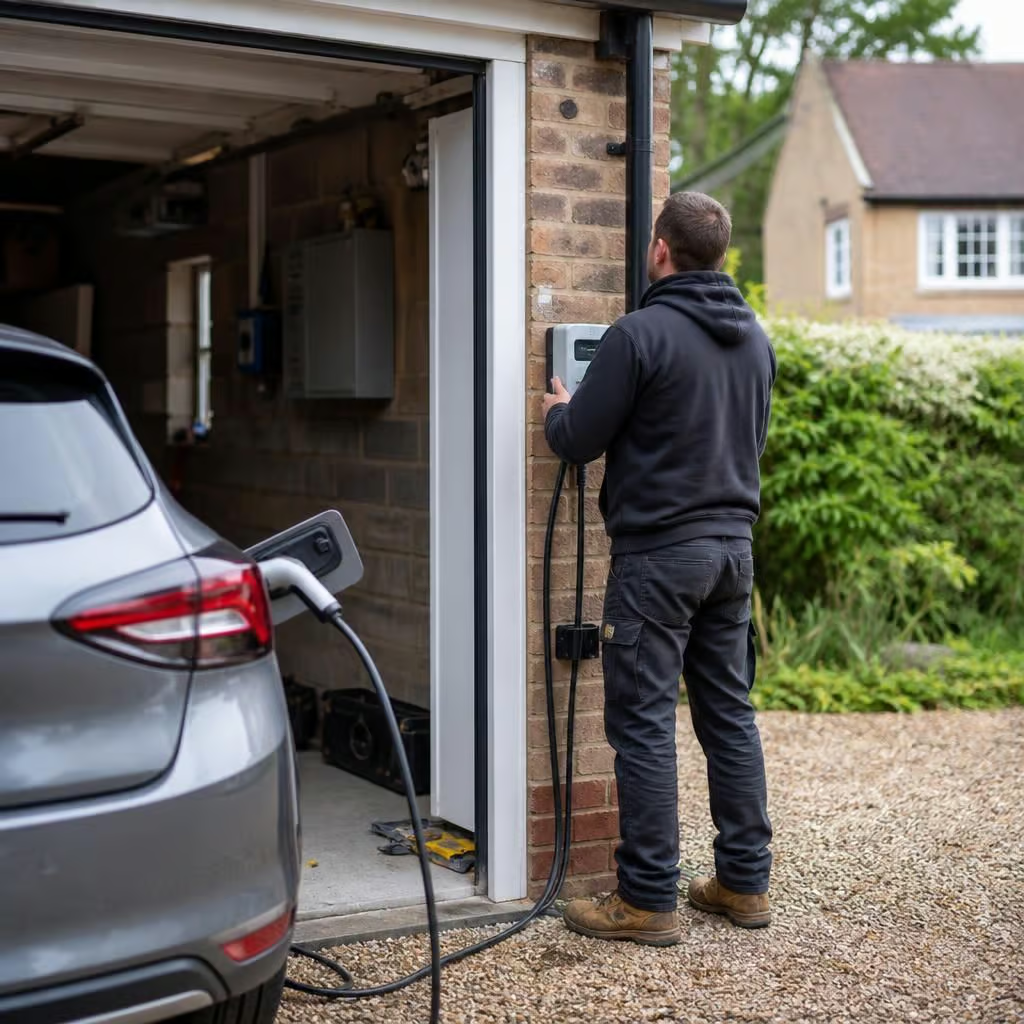
A detached garage can look like the obvious place for a charger, but its existing socket may not be suitable for vehicle charging. We check the garage supply and decide whether a dedicated circuit should run from the main electrical installation.
If that circuit must cross a garden or driveway, the route may involve underground cabling and local excavation. We explain the proposed route, any protection needed and the effect on the surface before work starts, so you can judge whether charging at the garage is practical.