
Will a 7kW or 22kW charger suit my electric car?
A 7kW charger suits most homes and electric cars, while a 22kW charger is worthwhile only if the car accepts 22kW AC charging and the property has a suitable three-phase supply. We compare the car’s onboard charger, your driving pattern and the available electrical supply before recommending either option.
For most electric cars and homes, a 7kW charger is the sensible choice. A 22kW charger is worth considering only when the car can accept that rate and the property has a suitable three-phase supply. A larger charger does not make a car charge faster if the car’s onboard charger cannot use the extra power.
Your car’s AC charging limit is the first point to check. Some cars can accept 7kW, while others can accept 11kW or 22kW from an AC charger. If the car is limited to 7kW, a 22kW unit will still charge it at no more than 7kW. The same applies to an 11kW car connected to a 22kW charger.
The battery size affects how long the car takes to fill, but it does not increase the car’s maximum charging rate. The car, charger and electrical supply must all support the intended speed. We check the car’s specifications rather than choosing a unit based only on its headline rating.
A 7kW charger normally suits a standard domestic electricity supply. It gives a useful overnight charge for many drivers and can work with a typical single-phase installation, subject to the property’s available capacity and electrical condition. It is often the better option where the car is parked at home for several hours between journeys.
A 22kW charger needs more than a higher-rated wall unit. The car must support 22kW AC charging, and the property needs a suitable three-phase supply. Most homes have a single-phase connection, including many larger rural properties. A three-phase supply cannot be assumed from the size of the house or the presence of other electrical equipment.
Where a property does not already have three-phase electricity, obtaining it may involve the electricity network operator, additional equipment and changes to the incoming supply. That work can make a 22kW installation considerably more involved than fitting a 7kW charger. We identify this before quoting, rather than allowing the charger choice to create an unexpected change later.
A 22kW charger can make sense when the car can use the full rate and the vehicle needs to recover a substantial amount of charge during a short stop. It may also suit a property with an existing three-phase supply and more than one electric vehicle. If the car normally remains at home overnight, the extra capacity may provide little practical benefit.
Charging speed can also reduce during use. The car may limit power because of its battery temperature or state of charge, and a home energy management system may reduce the charger’s output when other appliances are running. These controls protect the electrical installation and help prevent the property’s supply from being overloaded.
For that reason, the charger rating is only part of the decision. We check:
- the car’s maximum AC charging rate;
- whether the property has single-phase or three-phase electricity;
- the incoming supply capacity and the demand from existing equipment;
- the consumer unit, earthing arrangement and protective devices;
- the cable route between the supply and the parking space;
- the distance, route and protection needed for the charging cable; and
- whether load management is needed to control demand.
The parking position matters as well. A long cable route, detached garage, outbuilding or driveway crossing may affect the installation method and price. Where the car is parked away from the house, the cable may need suitable mechanical protection or a separate supply arrangement. We assess the route rather than assuming that the nearest indoor consumer unit is suitable.
An older home does not automatically rule out either charger. It may, however, need electrical work before the charger can be connected. An outdated consumer unit, inadequate earthing, damaged wiring or limited supply capacity needs attention first. We explain any required changes in the quotation and separate essential safety work from optional improvements.
The charger’s power rating also affects the cable, protective equipment and design of the installation. A 22kW unit cannot simply replace a 7kW unit on the same circuit without checking the supply and protection. If the charging requirement changes later, we reassess the installation rather than assuming the existing circuit can carry the additional load.
Solar panels and battery storage can influence how the charger is used, but they do not turn a single-phase property into a 22kW installation. A home may use surplus solar generation for charging, yet the available power will vary with daylight and household demand. We can consider the charging arrangement alongside the wider electrical system so the proposed setup reflects how the car is actually driven.
Our quotation sets out the charger rating, cable route, protective equipment, any consumer unit work and any supply-related requirements. You can then compare the cost of a 7kW installation with the additional work needed for 22kW, rather than comparing charger prices alone.
We carry out domestic electrical work through NICEIC-registered electricians, with ECA standards supporting the installation practice. That means the assessment covers the supply, protection and installation details, not just the wall-mounted charger. The practical recommendation is usually straightforward: choose 7kW for a compatible home-charging routine, and choose 22kW only when both the car and the property can make proper use of it.
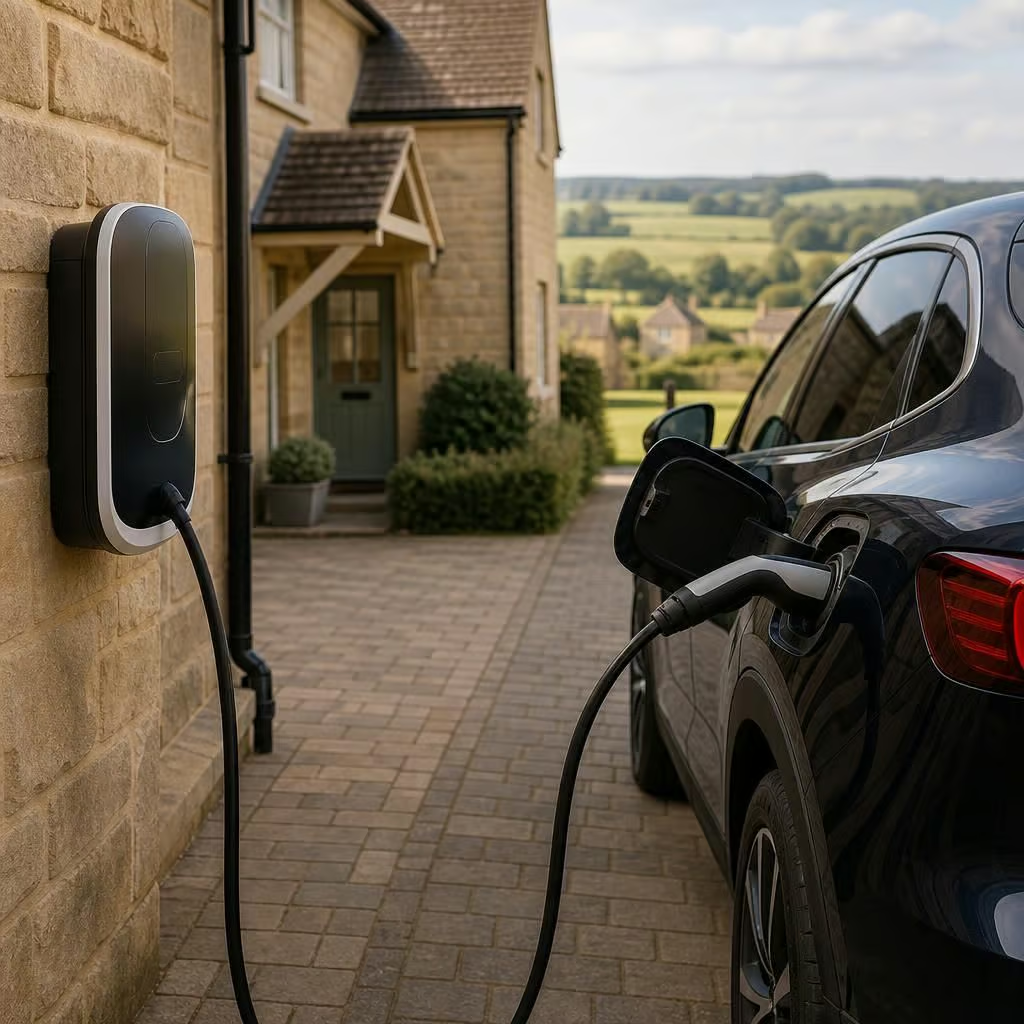
The highest charging figure in an electric car’s specification may refer to rapid DC charging, not home AC charging. It doesn’t prove that the car can accept 22kW from a wall-mounted charger.
Check the car’s maximum AC rate in the handbook or manufacturer’s specification. We use that figure when comparing a 7kW or 22kW charger, so the installation matches the car’s actual capability rather than its rapid-charging headline.