
Who will maintain my EV charger after installation?
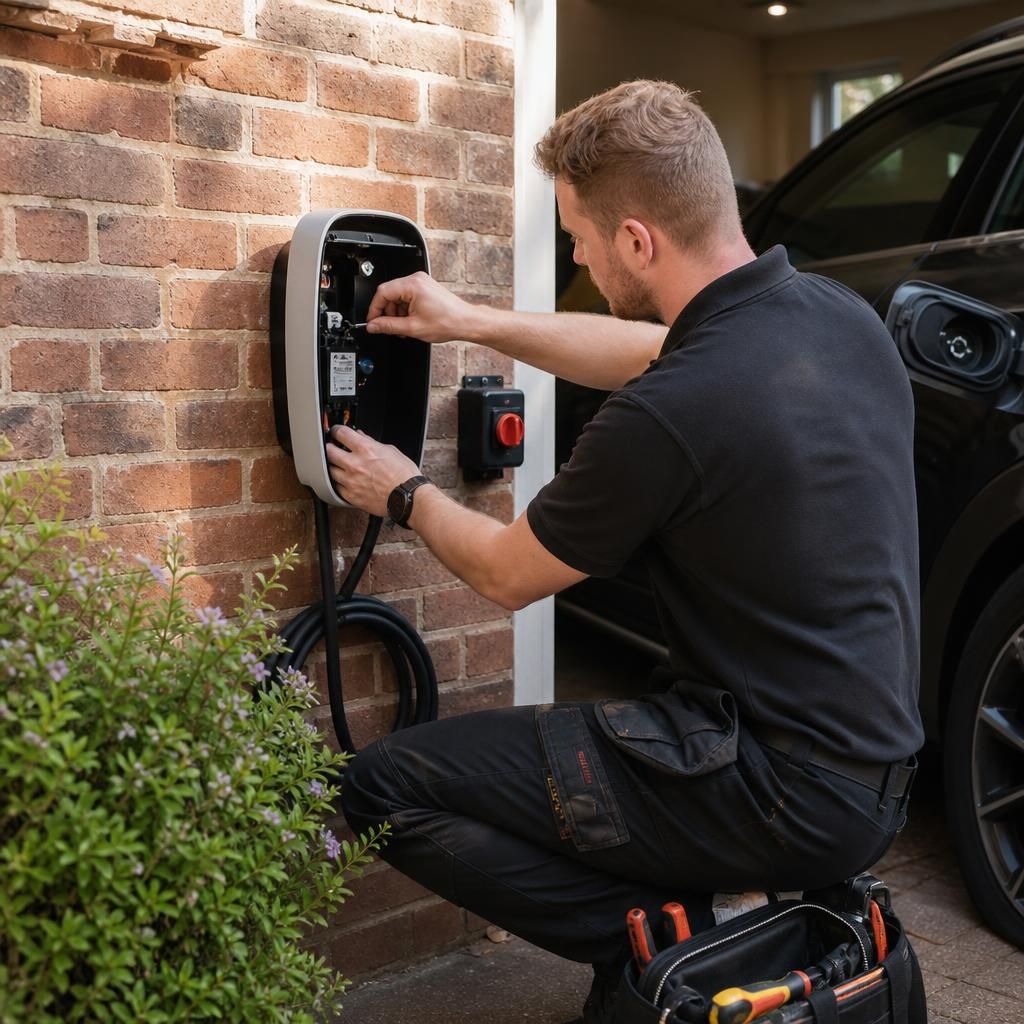
Alderminster Group can look after your EV charger after installation, carrying out checks, fault-finding and repairs when needed. If it stops communicating, trips the supply or won’t start a charge, we assess the charger and its electrical connection rather than treating the symptom alone.
After installation, support usually comes from three places: the installer for the electrical installation, the charger manufacturer for the unit and software, and the vehicle manufacturer for the car. We look after the installation and diagnose faults across those parts, so you do not have to guess whether the problem is with the charger, the supply or the vehicle.
There is no universal annual service requirement for every domestic EV charger. The right maintenance interval depends on the charger, how often it is used, its location and the manufacturer’s instructions. A charger exposed to rain, dust, farm conditions or accidental knocks may need closer attention than one installed in a protected garage.
During a maintenance visit, we may check:
- the charger casing, display, indicators and socket or tethered cable
- the cable for cuts, crushing, heat damage or damaged pins
- the connections inside the charger and consumer unit
- the dedicated circuit, protective devices, earthing and isolation equipment
- the operation of residual-current protection and any load-management equipment
- the charger’s error history, communications and software settings
- the condition of cable storage, mounting points and weather seals
Your charger may still provide power while a connection is becoming loose or a cable is deteriorating. Testing and visual inspection can identify those issues before they cause a nuisance trip, overheating or a complete failure. We explain what we find and tell you if the issue needs repair, replacement or attention from the manufacturer.
Software support is part of charger ownership. Connected chargers may rely on an app, Wi-Fi connection, firmware updates or a tariff schedule. If the charger works locally but the app stops updating, the cause may be the home network, account settings or the manufacturer’s platform rather than the electrical installation. We can check the charger’s local operation and configuration, then identify where further support is needed.
A fault does not always mean that the whole charger needs replacing. We first separate the possible causes:
- Charger fault: the unit, socket, internal electronics or software may need repair or replacement.
- Electrical supply fault: the circuit, protective device, earthing or consumer unit may need attention.
- Vehicle or cable fault: the car or charging cable may be preventing a session from starting.
- Communication fault: the charger may be working while the app, Wi-Fi or online service is not.
This diagnosis matters when a charger is under warranty. We record the symptoms and test results, so the manufacturer receives useful information rather than a description that the charger simply “doesn’t work”. Warranty terms vary by manufacturer and product. They may cover the charger itself but not damage, alterations or problems elsewhere in the installation.
If the installation needs electrical work, it is handled by engineers working to the relevant wiring and safety requirements. Our electrical work is covered by NICEIC and ECA registration, giving you a clear route back to the team responsible for the circuit and its protective equipment.
Call us before using the charger if you notice:
- a burning smell, discolouration, buzzing or unusual heat
- repeated tripping of the charger or consumer unit
- water inside the unit or damage to the casing
- a cable or plug that is cracked, bent or hot to touch
- fault messages that return after a reset
- charging that starts and stops without an obvious reason
Do not remove the charger cover or attempt to repair the cable yourself. Isolating the unit may be appropriate in an emergency, but the correct method depends on how the circuit was installed. We can explain what to do and inspect the equipment safely.
If you move house, keep the installation information, charger model, circuit details and any maintenance records for the next owner. A new owner may also need the app account transferred or the charger reconfigured. We can assess an existing installation before taking on its maintenance, particularly where the original paperwork is missing or the consumer unit has since been altered.
For planned maintenance or a fault investigation, we explain the work required before starting. If parts, manufacturer involvement or replacement equipment are needed, the quotation sets out those costs rather than leaving you with an unexpected charge.
Your charger shares the home’s electrical capacity with appliances, solar equipment and battery storage. If you add any of these later, ask us to review the charger circuit and load-management settings before the new equipment is commissioned.
That check confirms the protective devices still suit the installation and helps prevent nuisance tripping when several high-demand systems operate together. We record any changes so future maintenance starts with an accurate picture of how the charger now works.