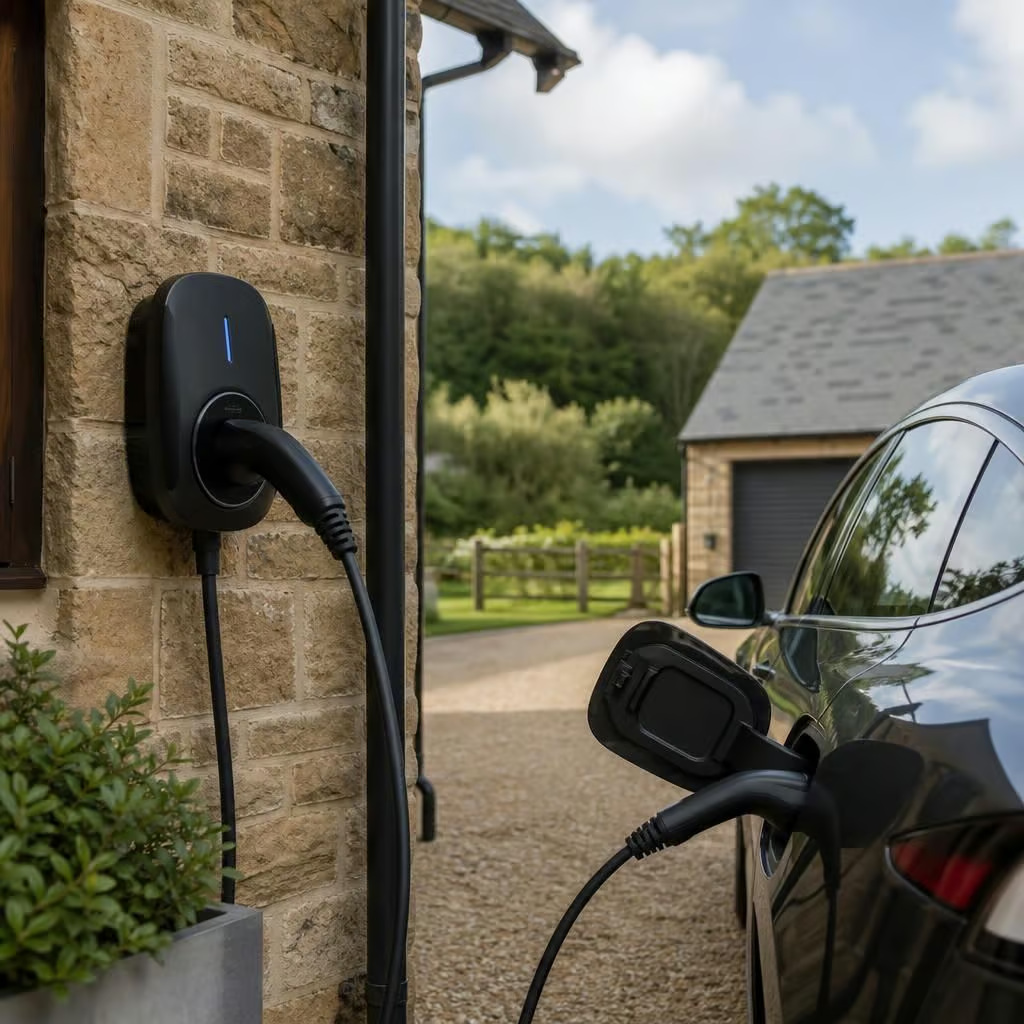
Do I need permission to install an electric car charger?
In most homes, you don’t need planning permission to install an electric car charger, provided the installation meets permitted development rules. Listed buildings, conservation areas, flats and chargers mounted away from your property may need further approval, so we check the property, parking arrangement and electrical supply before confirming what applies.
For most houses with private off-street parking, a home charger can be installed without a separate planning application. The position changes when the property is listed, lies in a conservation area, has restricted parking, or the charger would sit on a boundary wall or other unusual location.
Planning permission is only one part of the check. You may also need consent from a landlord, freeholder, management company or mortgage-related covenant. A charger can be permitted under planning rules but still prohibited by the terms of a lease or tenancy.
When permitted development usually covers a charger
- The charger is within the property’s curtilage.
- The property has suitable private parking, such as a driveway or garage.
- The unit is fixed to the house, garage or another suitable structure.
- The installation does not create a hazard for people using a pavement or shared access.
- The equipment and cable route meet the relevant permitted development conditions.
Those conditions can affect where the unit goes. A wall-mounted charger may need a different planning approach from a post-mounted unit in a front garden. A charger on a wall that forms the boundary with a neighbour can also require closer consideration, particularly if the equipment projects over or affects the adjoining property.
Listed buildings and conservation areas
A listed building may need listed building consent as well as, or instead of, planning permission. The fixing method, cable route and visual effect can all matter. Drilling through historic fabric or routing a cable across a prominent elevation may not be acceptable, even where the charger itself is small.
Conservation areas do not automatically prevent charger installations, but extra controls may apply. An Article 4 direction can remove permitted development rights in a particular area. Local planning policies may also influence the acceptable position and appearance.
We check the property type, the proposed fixing point and the cable route before work starts. If the position is not clearly covered by permitted development, we explain what needs checking with the local planning authority rather than treating the installation as automatically exempt.
Flats and shared parking
Flats often need more than an electrical survey. The parking space may be leased, shared or separate from the flat, and the external wall may belong to the freeholder. You may need written consent before we fix equipment to the building or run a cable through communal areas.
Shared car parks can also involve a management company, residents’ association or freeholder. The proposed cable route must not create a trip hazard, obstruct access or cross land that you do not control. If the parking space is away from the building, the electrical design may need additional protection and a different cable route.
Charging from a pavement or shared access
A cable must not be left across a public pavement. It can cause a trip hazard and may breach highway rules. A channel, cover or overhead arrangement does not automatically make it acceptable. If the car cannot park on your property, speak to the local authority before choosing a charger location.
Shared private access needs similar care. A neighbour’s right of way can restrict where a cable or protective duct is placed. We look at the access route and parking arrangement as part of the installation plan, but the landowner or management company may still need to approve it.
Electrical requirements are separate from planning
Even when planning permission is not needed, the electrical work must comply with current wiring requirements. The installation may need a dedicated circuit, suitable earthing and bonding checks, protective devices and load management. The existing consumer unit and supply also need to support the charger safely.
Our NICEIC and ECA registered electricians assess the supply, position the isolation equipment and test the completed circuit. You receive the electrical certification for the work, so you have a record of how the charger was installed. A building regulations notification may also be required, depending on the work and property.
What we check before installation
- We confirm whether the property is listed, in a conservation area or affected by a planning direction.
- We check who owns the wall, parking space and cable route.
- We assess whether the charger can be installed without crossing a pavement or obstructing shared access.
- We inspect the consumer unit, earthing arrangement and available electrical capacity.
- We agree the charger position and cable route with you before providing the written quotation.
If planning consent or another owner’s approval is needed, we identify that before the installation date. That avoids fixing equipment in a position that later has to be moved. For a straightforward house with private parking, the main requirement is usually a safe, compliant electrical installation rather than a planning application.
The charger may be permitted, but changes around it can need separate approval. For example, excavating a new cable route, installing a post in a front garden or altering access to create a parking space may involve planning or highways requirements.
We consider the whole arrangement rather than the charger alone. That includes where the car parks, how the cable reaches it and whether any ground or boundary work is needed. You can then deal with any required consent before the electrical installation begins.