
What does your gas safety inspection report cover?
A gas safety inspection report records the checks on each gas appliance, its flue, ventilation and the gas installation, along with any safety defects found. It states whether the equipment passed, what needs attention and which actions are recommended before it is used again.
A gas safety inspection report shows what we checked, what we found and what needs attention. It normally covers the gas appliances, flues, ventilation, gas-tightness checks, operating performance and any accessible pipework. It also records limitations, unsafe conditions and the action needed before the installation can be used safely.
The property and appliances inspected
The report identifies the property, inspection date and engineer. It lists each appliance included in the visit, such as a boiler, cooker, fire, water heater or central-heating appliance. For each one, we record its location and inspection result rather than treating the installation as a single pass or fail.
If an appliance could not be inspected, we explain why. An appliance may be inaccessible, disconnected, concealed or outside the agreed inspection. That distinction matters because a report only confirms the parts we were able to examine.
Flue and ventilation checks
A boiler may appear to work normally while its flue or ventilation arrangement creates a risk. We check the visible flue route, terminal position, joints and support, along with the condition of the flue where the inspection allows. We also check that required ventilation is present, suitable and unobstructed.
Older homes, extensions and converted rooms can make this particularly important. A room may have changed use since an appliance was installed, or a cupboard may now restrict the air supply. The report notes defects such as poor access, damaged components, inadequate ventilation or an arrangement that needs further investigation.
Gas-tightness and appliance operation
We check accessible gas pipework and connections for signs of leakage and carry out the relevant tightness checks. We examine the appliance condition, controls, ignition and safety devices, then assess how it operates under the inspection conditions.
We also check operating pressure and combustion where the appliance and test conditions allow. These checks can identify problems that are not obvious from the room, including unsafe combustion or a fault with the appliance’s safety controls. The report records the result and any further testing required.
Safety findings and classifications
Where we find a defect, the report explains its significance in plain terms. Gas safety findings are commonly classified as:
- Immediately dangerous: continued use presents an immediate danger. We explain that the appliance or installation must not be used.
- At risk: continued use could create a danger. We advise that the affected appliance or installation is not used until the fault is dealt with.
- Not to current standards: the installation does not meet the current standard, although the engineer has not judged it to be immediately dangerous or at risk.
The classification applies to the specific defect, not automatically to every appliance in the property. A report can therefore identify one appliance that must be taken out of use while recording other appliances separately.
What happens when the engineer finds a dangerous fault
If an appliance or installation is unsafe, we explain the risk before leaving and advise on the immediate action. We may need to isolate the appliance or gas supply, depending on the circumstances and the nature of the fault. We record what we did and what repair, replacement or further investigation is needed.
Do not use an appliance that has been labelled unsafe, reconnect it or remove the label yourself. A qualified Gas Safe engineer needs to confirm that the fault has been resolved before it returns to service.
Recommendations and limits of the report
The report separates urgent safety work from recommendations for repair, improvement or future replacement. It does not automatically mean that an old boiler needs replacing. If the appliance can be made safe and remains suitable, repair may be the appropriate next step. If its condition, performance or flue arrangement makes repair unsuitable, we explain why replacement should be considered.
A safety inspection is not the same as a full boiler service, energy assessment or survey of hidden pipework. We do not describe concealed defects as safe simply because they were not visible. The report states where access was restricted or where additional investigation is needed.
Landlord gas safety records
For a rented property, the inspection produces the information needed for the landlord’s gas safety record. That record identifies the appliances and flues checked, gives the results and records any remedial action. The landlord must provide the relevant record to tenants and keep the required documentation in line with current legal duties.
Our Gas Safe registered engineers explain the findings on site and provide written paperwork before work starts if repairs are recommended. If you are unsure what a classification or recommendation means, ask us to explain the exact appliance affected, whether it can be used and what needs to happen next.
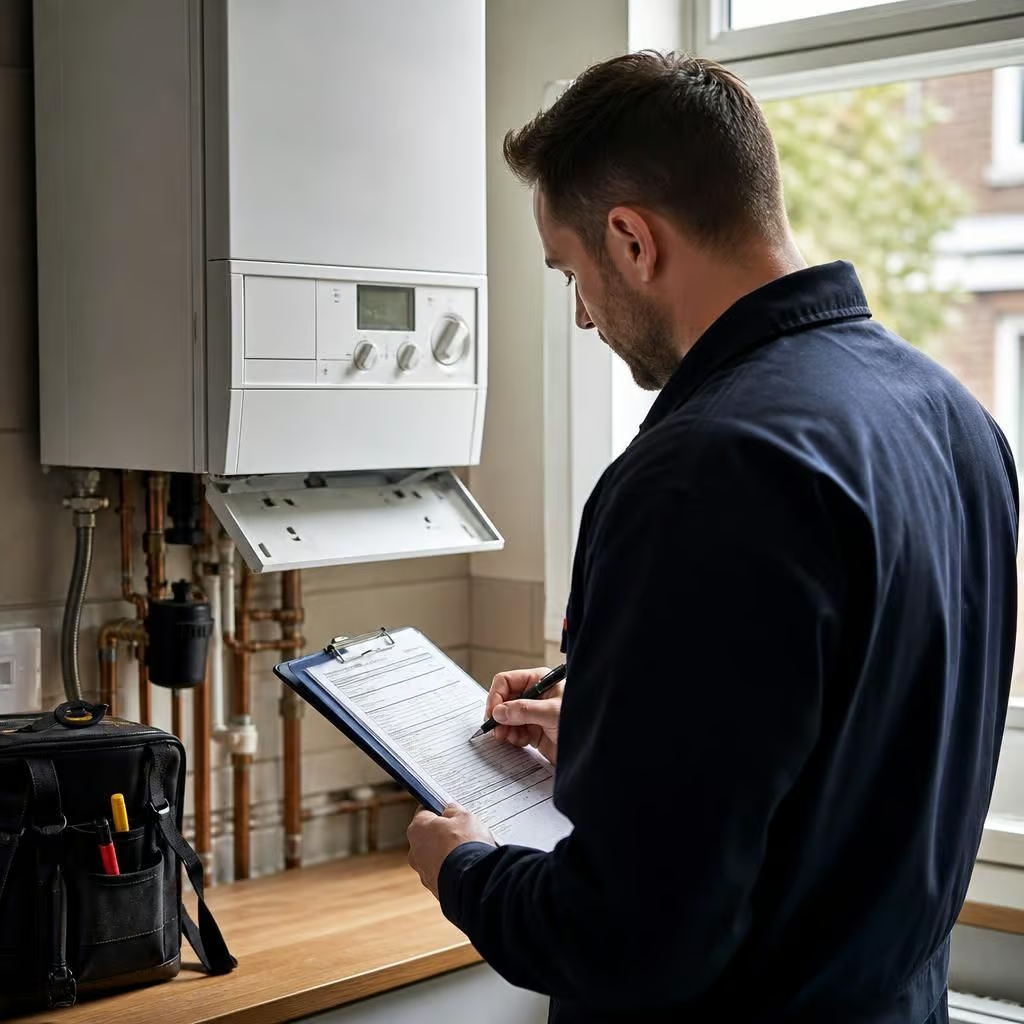
A gas safety inspection report is a record of the installation on the inspection date, not a permanent guarantee that it will remain safe. An appliance, flue or ventilation arrangement can change after building work, alterations or damage.
If you enclose a boiler, add an extractor fan or change the room where an appliance is installed, tell us before relying on an earlier report. We can assess whether the changes affect ventilation, combustion or flue safety and explain if a further inspection is needed.