
How do you diagnose a boiler fault before recommending replacement?
A failed boiler does not automatically need replacing: we identify the fault, check whether a safe, lasting repair is practical, and assess the boiler’s condition. If replacement makes better sense, we explain why and recommend a suitable system for your home and existing heating installation.
Replacement is recommended only when the fault, the boiler’s condition and the likely repair have been assessed together. A single fault code does not, by itself, mean that the boiler needs replacing.
We start with what has changed. Your account of the problem helps us distinguish a one-off failure from a developing fault. We ask when the problem began, whether the heating or hot water is affected, how often the boiler locks out, and whether you have noticed unusual noise, pressure loss or repeated resets. The boiler’s service history and previous repair records can also show whether the same component has failed before.
We then use the boiler’s stored information and live readings to confirm what is happening. A fault code may identify the area of the problem, but it does not always identify the failed part. For example, a sensor fault can be caused by the sensor itself, its wiring or another component affecting the reading. Testing the system prevents us from replacing a part simply because its code is showing.
Safety comes before the repair decision. We check that combustion is safe and that the appliance is operating within the manufacturer’s requirements. We also look for signs that a fault could create a dangerous condition, damage the property or cause the boiler to fail again after a short period. Gas work is carried out by Gas Safe registered engineers, as the law requires.
A repair is usually the sensible option when the boiler is in sound condition, the fault has a clear cause and the replacement part should restore reliable operation. We explain what has failed, what the repair involves and what could still require attention later. You can then weigh the repair cost against the boiler’s remaining condition rather than deciding from the fault code alone.
Replacement becomes more reasonable when several concerns come together. These may include repeated breakdowns, corrosion, a history of costly repairs, obsolete parts, unsafe operation or a fault affecting a major assembly. An older boiler is not automatically condemned, and we do not recommend replacement simply because a newer model exists. The question is whether repairing this appliance is likely to be a sensible use of your money.
If replacement is a possibility, we assess the whole heating system. The right boiler depends on the home’s hot-water demand, the number of bathrooms, the available gas supply and the way the system is controlled. We consider whether the existing cylinder, pump, pipework and radiators can support the proposed arrangement. This helps prevent an oversized boiler, poor hot-water performance or unnecessary changes after installation.
Your property may also affect the installation. A boiler in a cupboard, loft or older extension can have restrictions around access, flue routing, condensate drainage and servicing space. We identify these before recommending a model or preparing a quotation. That is particularly important in older houses, where previous alterations may not follow the layout used in newer homes.
We separate the immediate repair from any longer-term recommendation. If a repair can return the boiler to safe operation while you consider replacement, we explain that option. If replacement is needed, we set out the installation work, any changes to associated equipment and the reason for each item. You receive a written quotation before work starts, so the decision is based on the full cost rather than an incomplete figure.
The assessment gives you one of three practical outcomes:
- Repair: the fault has a clear cause and repairing the boiler is proportionate to its condition.
- Repair with further monitoring: the immediate fault can be addressed, but the boiler or wider system shows signs that may justify planned replacement later.
- Replacement: the appliance is unsafe, unreliable, uneconomic to repair or unsuitable for the home’s needs.
When replacement is advised, we explain what will change in the house as well as what will change on the wall. That can include the position of the boiler, controls, condensate route, flue arrangement, hot-water setup and any associated heating work. We do not treat the boiler in isolation when the fault has exposed a weakness elsewhere in the system.
Before an engineer visits, keep a note of the fault codes, pressure readings and symptoms, and avoid repeatedly resetting a boiler that is locking out. If you smell gas, turn off the gas supply if it is safe to do so, avoid electrical switches and seek emergency gas advice. For other faults, the information you provide helps us begin with the right context and avoids unnecessary part replacement.
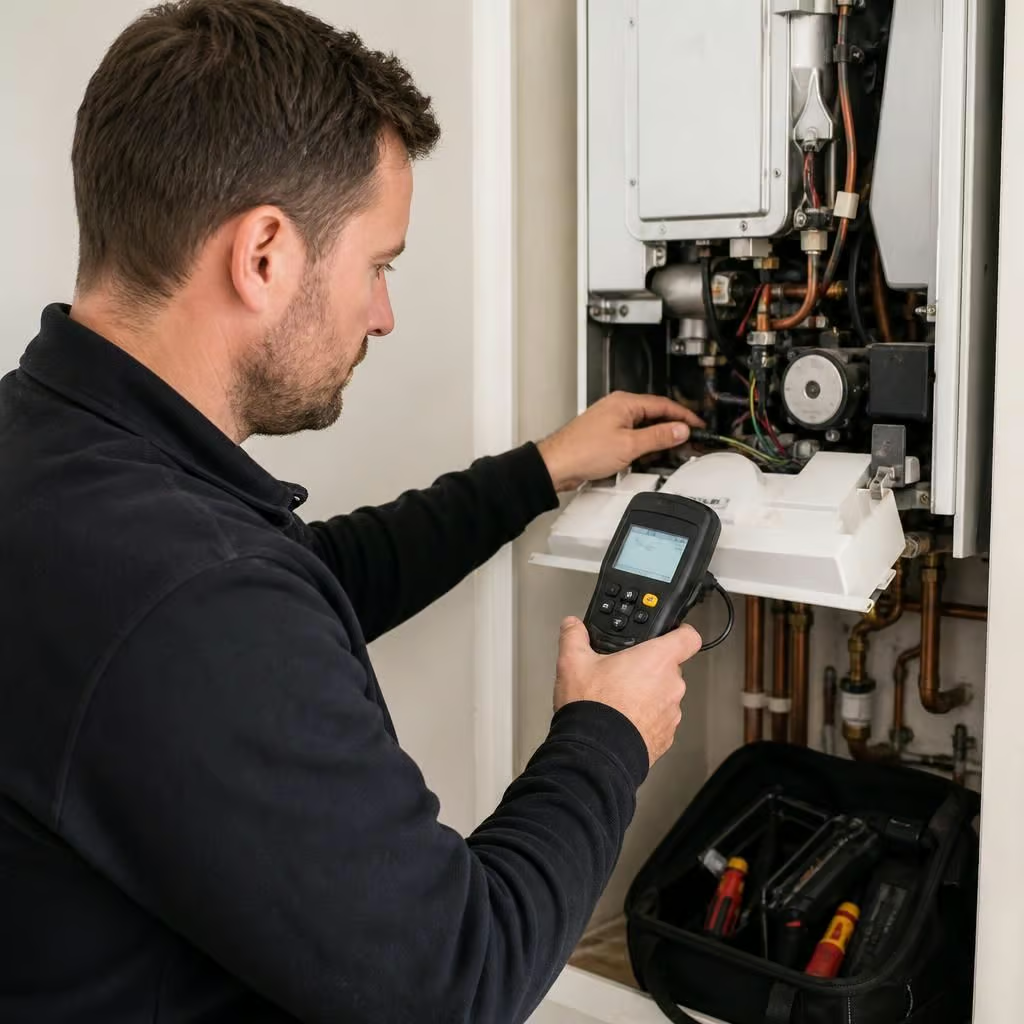
A repair may restore the boiler without making it a reliable long-term system. If that is the case, we explain what to monitor, such as falling pressure, repeated lockouts or unusual noise. Keeping a record of these changes helps you plan a replacement before another fault causes greater disruption.