How much does home EV charger installation cost?
Home EV charger installation cost depends on the charger, cable route, electrical supply and any work needed to connect it safely. We assess those details first, then provide a written quotation before work starts, so you know the full cost.
There is no reliable single price for a home EV charger installation. The total depends on the charger, the distance between the consumer unit and charge point, the condition of the existing electrics and any work needed to protect the supply. A straightforward installation costs less than one involving a detached garage, long cable runs, excavation or an electrical upgrade.
The main parts of the cost
- The charger itself: Prices vary between basic and connected models. A smart charger can schedule charging, respond to tariff periods and work with other household electrical equipment. Tethered models include a permanently attached charging cable, while untethered models use a separate cable and can look neater when not in use.
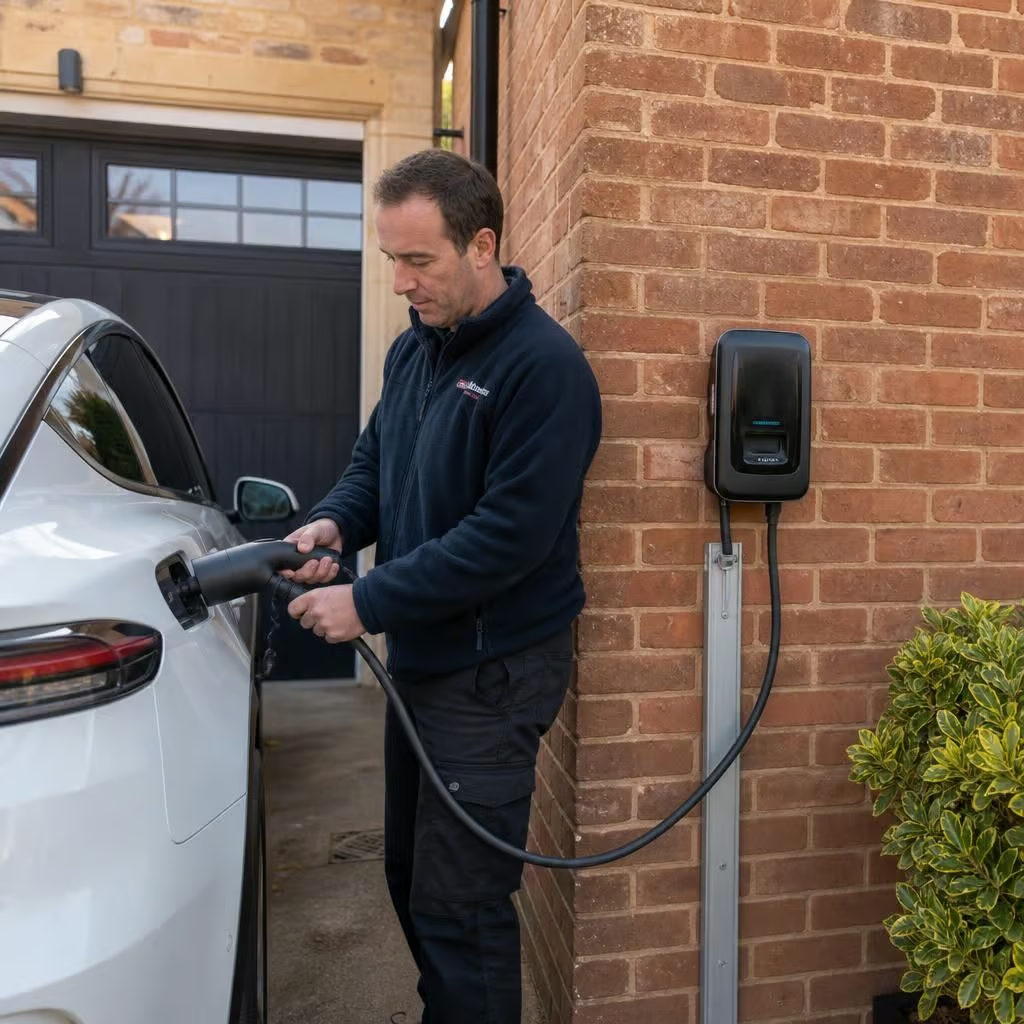
- Installation work: This covers fixing the unit, routing the cable, making the electrical connections and testing the completed circuit. A short route through an accessible garage or external wall is usually simpler than a route around the outside of the house.
- Protection and switching: The installation may need dedicated protective equipment, an isolator or changes within the consumer unit. The exact arrangement depends on the charger and the existing board.
- Cable routing: Surface-mounted cable can often be installed with less disruption. Concealed cable, a route through several rooms or a run beneath paving takes more labour. We explain the practical options before any work starts.
- Additional electrical work: An older consumer unit, limited capacity or signs of overheating can make remedial work necessary. We will not connect a charger to an installation that is unsafe or unsuitable.
What a straightforward installation looks like
If the consumer unit is suitable and the parking space is close to the property, we can usually install a dedicated circuit with a manageable cable route. The work involves positioning the charger, connecting it to the electrical installation, configuring its controls and testing it. We then explain how to use the charger and provide the relevant paperwork.
The lowest quotation is not always the safest comparison. Check that the price includes the charger, protective equipment, installation, testing, configuration and certification. Ask specifically whether making good, cable protection and any consumer unit work are included. An apparently lower price can increase if essential items have been left out.
Why some homes cost more to connect
A detached garage or parking space away from the house usually needs a longer cable route. The cable may need mechanical protection, external containment or a trench. If the route crosses a driveway, garden or outbuilding, the surface and access affect the labour involved.
Older homes can need more investigation before installation. A solid-wall house, barn conversion or property with several previous electrical alterations may have limited routes for cablework. We look at the consumer unit, earthing, cable route and charger position together, rather than pricing the charger in isolation.
If the home has several large electrical loads, we may recommend load management. This allows the charger to reduce or pause charging when the rest of the property is using more power. It can help avoid unnecessary changes to the incoming supply, but it adds equipment and configuration to the installation.
A supply upgrade is not automatically required. We assess the installation and the expected demand first. If the existing supply cannot safely support the proposed charger, we explain what needs to change and what alternatives are available.
Choosing a charger can change the price
A connected charger may cost more than a basic unit, but it can offer useful control from an app, scheduled charging and integration with a time-of-use electricity tariff. Those features only make financial sense if they suit the way the car and home are used.
Solar panels can also affect the choice. If the property has solar generation, a compatible charger may allow surplus electricity to be directed towards the car. We consider the existing electrical equipment and the way the home generates and uses power. We do not assume that charging from solar will always be cheaper, because the result depends on the tariff, driving pattern and available generation.
Installation, certification and ongoing costs
Installation cost is only part of the decision. Home charging is generally cheaper and more convenient than relying entirely on public charging, but the saving depends on the electricity tariff, how often the car is charged and how much energy it uses. We can help you compare the likely running cost using the way your household actually charges, rather than quoting a generic saving.
Some electricity tariffs and support schemes have specific conditions for smart charging equipment. These terms can change, so check the current requirements before choosing a charger. We can confirm whether the proposed installation and equipment meet the technical requirements of the arrangement you are considering, but the tariff provider sets its own terms.
How we establish the actual price
We start with the parking position and work back to the consumer unit. We consider the wall construction, cable route, access, existing protective equipment and the likely demands from the rest of the home. If the charger is going on an outbuilding, we also consider how that building is supplied.
You receive an itemised quotation showing the recommended charger, installation work and any additional electrical tasks. If there is more than one sensible route, we explain the difference in disruption and cost. You can then decide whether a surface route, concealed route, different charger or load-management arrangement is right for the property.
Electrical work is carried out by our directly employed electricians. NICEIC and ECA registration means the installation is assessed against recognised electrical safety requirements, with testing and certification completed as part of the work. We install home chargers across Warwickshire, Oxfordshire, Gloucestershire and the North Cotswolds.
For an accurate figure, the useful information is the charger position, where the car will park, the location of the consumer unit, whether the cable must cross a driveway or garden, and any existing solar or battery system. Those details allow us to price the installation around the actual home rather than applying a misleading standard rate.
The charge point’s position affects both installation cost and everyday use. The shortest cable route may not be the most practical if it leaves the cable across a doorway, path or vehicle access area.
We look at where the car is normally parked, how the charging cable will reach it and whether the unit is protected from passing vehicles or routine garden work. A slightly different position can avoid awkward cable handling or costly alterations later. We include that practical reasoning in the quotation, so the price reflects a charger that works properly for the way the home is used.