
What happens if an appliance fails its PAT test?
Take the appliance out of use and label it clearly so nobody reconnects it. We can inspect the fault, then advise whether repair, retesting or replacement is the safest next step.
A failed PAT test means the appliance should not return to service until someone has established why it failed. The result does not always mean the appliance must be thrown away. Some faults can be corrected, while others make replacement the safer and more economical choice.
Keep the appliance out of use. Unplug it where this can be done safely, attach a clear failed or do-not-use label, and move it to a controlled storage area if practical. Staff, tenants and visitors should not be able to pick it up and use it by mistake. Do not remove covers or attempt an electrical repair unless a suitably competent person is carrying out the work.
The test result should identify the appliance and the reason for failure. Common causes include:
- Damaged, cut, crushed or loose flexes
- Plugs with damaged cases, loose terminals or incorrect wiring
- Exposed conductors or poor strain relief
- Broken switches, cracked casings or signs of overheating
- Excessive leakage current or inadequate insulation
- Defective earthing on a Class I appliance
- A failed fuse or a fuse that is the wrong rating
- Contamination, moisture or physical damage affecting electrical safety
A visual defect may be enough to prevent safe use. An appliance can also fail an electrical test without showing obvious external damage, so bypassing the result because the equipment still appears to work is unsafe.
We assess the cause before recommending the next step. Your appliance may only need a new plug, fuse, flex or other suitable repair. We can then repeat the relevant checks. If it passes, we record the new result and return it to service only when the repair has resolved the fault.
Some repairs are not sensible. An old appliance with several faults, internal damage, heat damage or a failed motor may cost more to repair than it is worth. In that situation, replacement removes the risk and avoids putting an unreliable item back into the workplace. We explain the reason rather than treating every failed appliance as automatically beyond repair.
A failed result must not be changed to a pass simply because the appliance has been cleaned, moved to another socket or fitted with a replacement fuse. Those actions only count if they correct the identified fault and the appliance passes the required checks afterwards. A different socket may reveal a separate supply problem, but it does not make an unsafe appliance safe.
The record should show what happened next. For each failed item, the PAT testing record should normally link the result to the appliance identification, location, test date and observed fault. If we repair and retest it, we record the repair and the later result. If the item is replaced or permanently withdrawn, the responsible person should update the asset list and retain the original failure record.
A failed PAT test does not, by itself, create a universal legal requirement to replace the appliance. UK electrical safety duties require equipment used at work to be maintained so it remains safe. The appropriate action depends on the fault, the equipment, how it is used and the risk to people using it. A business should also follow its own maintenance procedures and any manufacturer instructions that apply.
If the failed appliance is used in a higher-risk setting, take a cautious approach. Equipment used outdoors, in kitchens, workshops, communal areas or places where it may be exposed to water or rough handling needs particular attention. A damaged extension lead or portable heater, for example, can present a more immediate risk than an item used in a clean, dry office.
Where several items fail for similar reasons, the result may point to a wider issue. We may need to look at storage, cleaning methods, cable routing, extension leads, socket condition or how staff move and use the equipment. Replacing individual appliances will not address a repeated cause of damage.
For workplace testing, our electrical team can explain which appliances need repair, retesting or removal and provide records that show the action taken. The testing is carried out by an experienced electrical contractor with NICEIC and ECA credentials, giving the responsible person a clear technical basis for deciding what happens to each failed item.
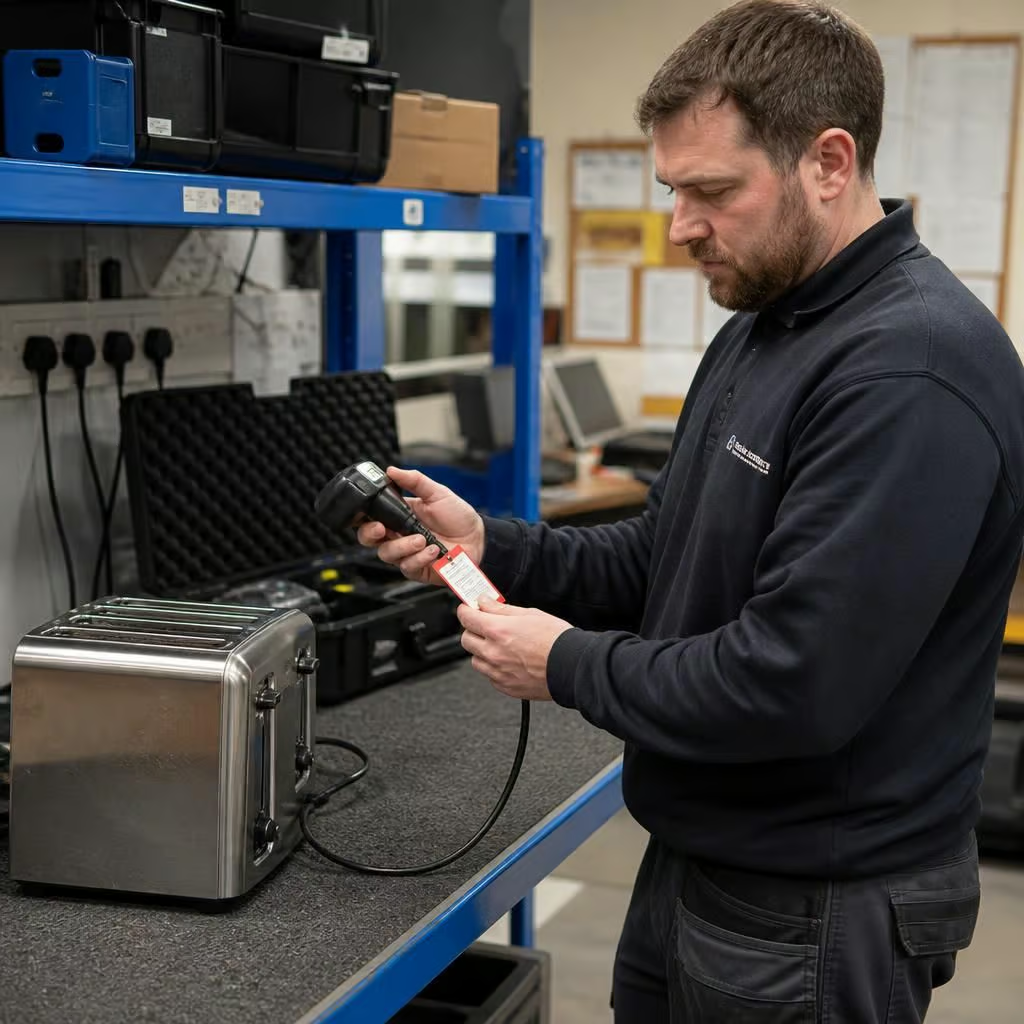
If an appliance fails, ask for the specific reason rather than treating the result as a simple pass-or-fail label. We can explain which check identified the problem, whether the fault is user-accessible or internal, and what action is proportionate.
That gives the responsible person a clear decision to make: authorise a suitable repair, arrange replacement or keep the item withdrawn. It also helps prevent a recurring problem when similar equipment is bought or maintained in future.