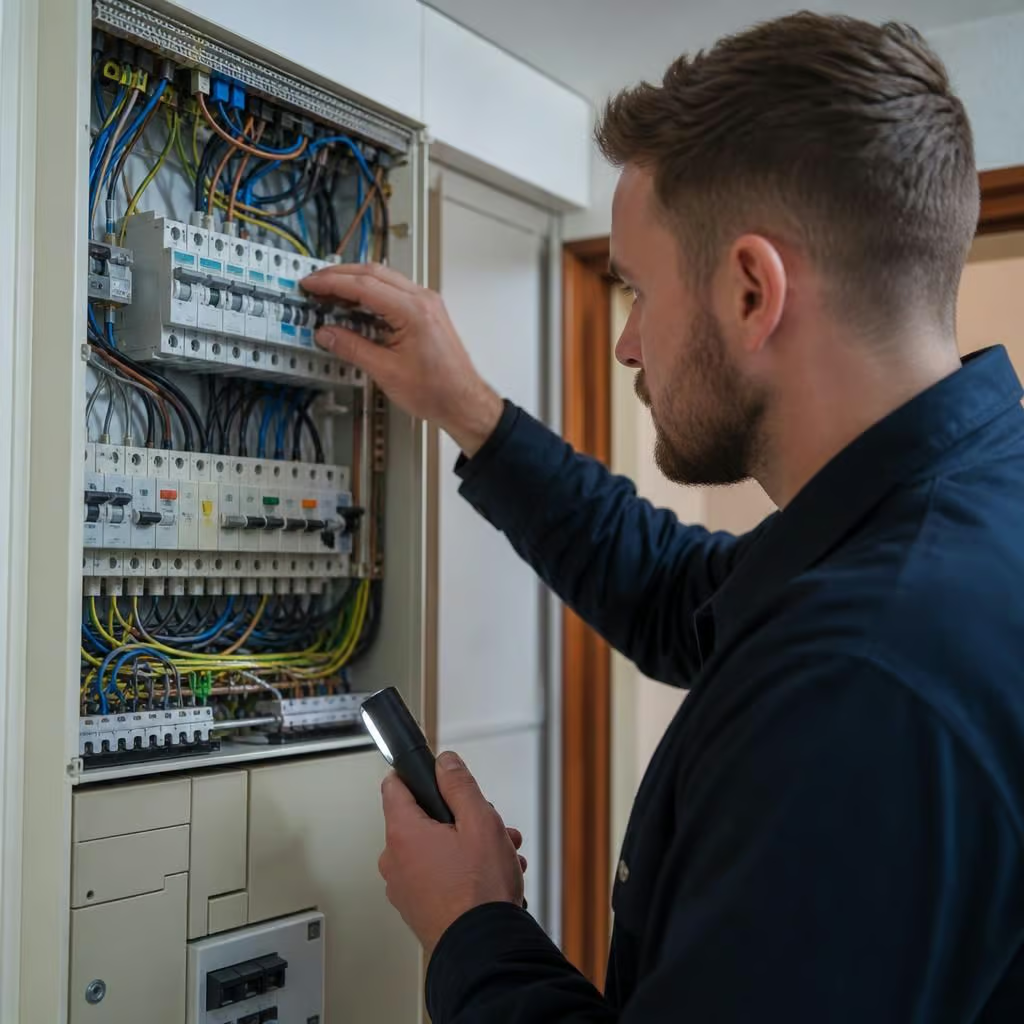
Will an emergency electrician need to switch off the whole property?
Usually not: we isolate the affected circuit while keeping the rest of the property powered. If the fault involves the consumer unit, main supply or damaged wiring, we may need to switch everything off until we make it safe.
Switching off the whole property is a safety measure, not the usual starting point. If we can identify the affected circuit, we isolate that circuit and keep the rest of the installation supplied. If the fault could make the wiring, consumer unit or incoming supply unsafe, we switch off the main switch until we have found the cause.
A circuit may be isolated because it feeds a damaged socket, light fitting, cable or fixed appliance. Your other circuits can then remain in use, provided our tests show that they are safe. For example, the lighting may work while a fault-affected ring final circuit stays switched off.
If the RCD or a circuit breaker has tripped, avoid repeatedly resetting it. A further trip usually means that the underlying fault is still present. Unplug appliances only if you can do so safely, and don’t touch damaged fittings, exposed conductors, scorch marks or anything wet. If there is smoke, burning, arcing or a smell of overheated plastic, move away from the installation and call for professional help.
When we arrive, we establish what happened before operating the switches. We check which protective device has operated, ask what was being used at the time and inspect the consumer unit and accessible parts of the installation. Tests then help us distinguish between a fault on the fixed wiring, a connected appliance and a problem with the supply.
Your property may need a complete shutdown for a short period while we test the main switchboard or work safely inside the consumer unit. We explain this before carrying it out where the situation allows. Power is restored to unaffected circuits once the checks are complete, rather than leaving the whole property switched off unnecessarily.
If one circuit remains unsafe, we label it clearly and leave it isolated while the rest of the installation operates. We then explain what needs repairing or replacing, what you can and cannot use, and whether further work is needed. We don’t re-energise a circuit simply to restore convenience if doing so could expose people or property to danger.
Some faults cannot be resolved at the consumer unit. Damage hidden in a wall, an overheated cable or a supply-side problem may need further investigation. If the issue sits with the electricity network rather than the property’s wiring, we explain that distinction so you know which part needs attention.
Once the fault has been dealt with, we carry out the relevant safety tests before returning the repaired circuit to service. You should be left knowing which circuit was affected, what caused the shutdown and whether any equipment must remain disconnected.
Older properties may have a consumer unit that doesn’t separate circuits as clearly as a newer installation. A fault can therefore affect more than one part of the wiring, even when only one socket or light appears to be causing the problem.
In that situation, we may need to isolate the main supply while we establish which circuits are safe. This can stop electric heating controls, pumps, alarms and internet equipment temporarily. We identify the affected circuits before restoring power elsewhere, so the shutdown is no wider or longer than the testing requires.