
What happens if a gas appliance fails the landlord safety check?
If a gas appliance fails the landlord safety check, we make it safe, explain the defect and advise what must happen next. The appliance may need repair, replacement or disconnection until the work is complete.
A failed landlord gas safety check does not always mean the whole property is non-compliant. The engineer records the appliance’s condition, identifies the defect and explains what must happen next. The landlord must then prevent unsafe use, arrange suitable remedial work and keep the resulting paperwork.
A gas safety record is not simply a pass-or-fail certificate. It should show which appliances and flues were checked, what the engineer found and whether any action is needed. An appliance can be recorded with a safety defect even when other gas appliances at the property are satisfactory.
The engineer’s safety classification matters
The defect is normally recorded using one of three classifications:
- Immediately Dangerous (ID): the appliance or installation presents an immediate danger. The engineer will normally disconnect it or otherwise make it safe, explain the risk and attach a warning notice. It must not be used again until the fault has been repaired and the appliance has been checked.
- At Risk (AR): the appliance is unsafe to use in its present condition. The engineer will explain the restriction and may disconnect it in line with the safety procedure. The landlord should arrange repair before permitting anyone to use it.
- Not to Current Standards (NCS): the installation does not meet a newer standard, but the engineer has not judged it unsafe at the time of inspection. This is not the same as an immediately dangerous fault. The report will show what should be improved, and the landlord should consider the risk, the age of the appliance and the cost of bringing it up to a suitable standard.
The engineer should explain the classification in plain language. If the tenant is present, they should also be told which appliance must not be used and what to do if they smell gas or notice further warning signs.
What the landlord should do next
- Read the defect details. Check whether the problem concerns the appliance, the flue, ventilation, the gas installation or more than one part of the system. A boiler fault may not be limited to the boiler itself.
- Tell the tenant what has been isolated. Give clear instructions about any appliance that has been disconnected or labelled unsafe. Do not ask the tenant to relight it or keep using it while waiting for repairs.
- Arrange a diagnosis and quotation. A Gas Safe-registered engineer can confirm the fault, identify any related defects and explain whether repair or replacement is the more sensible route.
- Complete the remedial work. The engineer may need to repair the appliance, correct the flue or ventilation, replace a failed component or install a new boiler. The work should address the recorded cause rather than simply remove the warning label.
- Have the appliance tested again. After repair, the engineer checks safe operation, combustion and the relevant flue and installation details. The appliance should only return to service when it is safe to do so.
- Keep the updated records. Store the gas safety record and any remedial paperwork with the property’s compliance documents. Provide the required copy to the tenant and keep evidence of what was done.
Can the tenant stay in the property?
That depends on the defect. A single unsafe boiler does not automatically make the whole property uninhabitable, particularly if the gas supply to that appliance has been safely isolated and other services remain available. However, the tenant must not use the affected appliance.
If the defect involves a gas leak, unsafe combustion, carbon monoxide risk or a wider problem with the installation, the engineer may advise that the property or part of it is not used until the danger has been dealt with. The landlord should follow that advice and make suitable arrangements for the tenant rather than treating the matter as an ordinary service call.
Where the failed appliance provides heating or hot water, the landlord should also consider the effect on the tenant while repairs are arranged. The tenancy agreement and general repairing duties may require action beyond the gas safety paperwork. A safety record does not remove the landlord’s responsibility to keep the rented home in a reasonable condition.
Repair or replace the appliance?
Repair is often appropriate when the fault is identifiable and replacement parts remain available. Replacement may be more practical when the boiler is old, several components are failing, the flue arrangement is unsuitable or the repair cost is disproportionate to the appliance’s remaining service life.
We inspect the reported defect and explain the available route before work starts. If replacement is the sensible option, the written quotation should set out the boiler, flue work, controls, installation, removal of the old appliance and any associated changes. That lets the landlord compare the actual compliance and installation cost rather than relying on a headline boiler price.
Older rental properties can have restricted flue routes, poor ventilation or heating controls that no longer suit the building. Those details can affect the work required. Our Gas Safe-registered engineers check the complete arrangement so that a new appliance is not fitted without addressing an underlying safety issue.
What if the appliance belongs to the tenant?
Landlords are generally responsible for gas appliances and flues they provide. A tenant-owned appliance may fall outside the landlord’s appliance-maintenance responsibility, but the landlord still has duties relating to the gas installation and any relevant flue serving the property. The engineer should identify what was included in the check and record the position clearly.
Do not assume that changing ownership removes a safety concern. If the installation, ventilation or flue is unsafe, the defect still needs appropriate action. Ask the engineer to explain which party is responsible for each item and retain that explanation with the property records.
What paperwork should the landlord keep?
Keep the gas safety record showing the defect, the engineer’s advice, invoices or reports for remedial work and evidence of the follow-up test. If the appliance was disconnected, keep the notice or written confirmation showing when it was repaired and returned to service.
Landlords should also record when the tenant was informed and when they received the relevant gas safety documentation. If the repair changes the appliance, flue or gas installation, keep the commissioning or installation paperwork as well as the gas safety record.
If an appliance fails during the check, the important point is not to obtain a clean-looking form at any cost. It is to understand the defect, prevent unsafe use and create a clear record showing how the risk was dealt with.
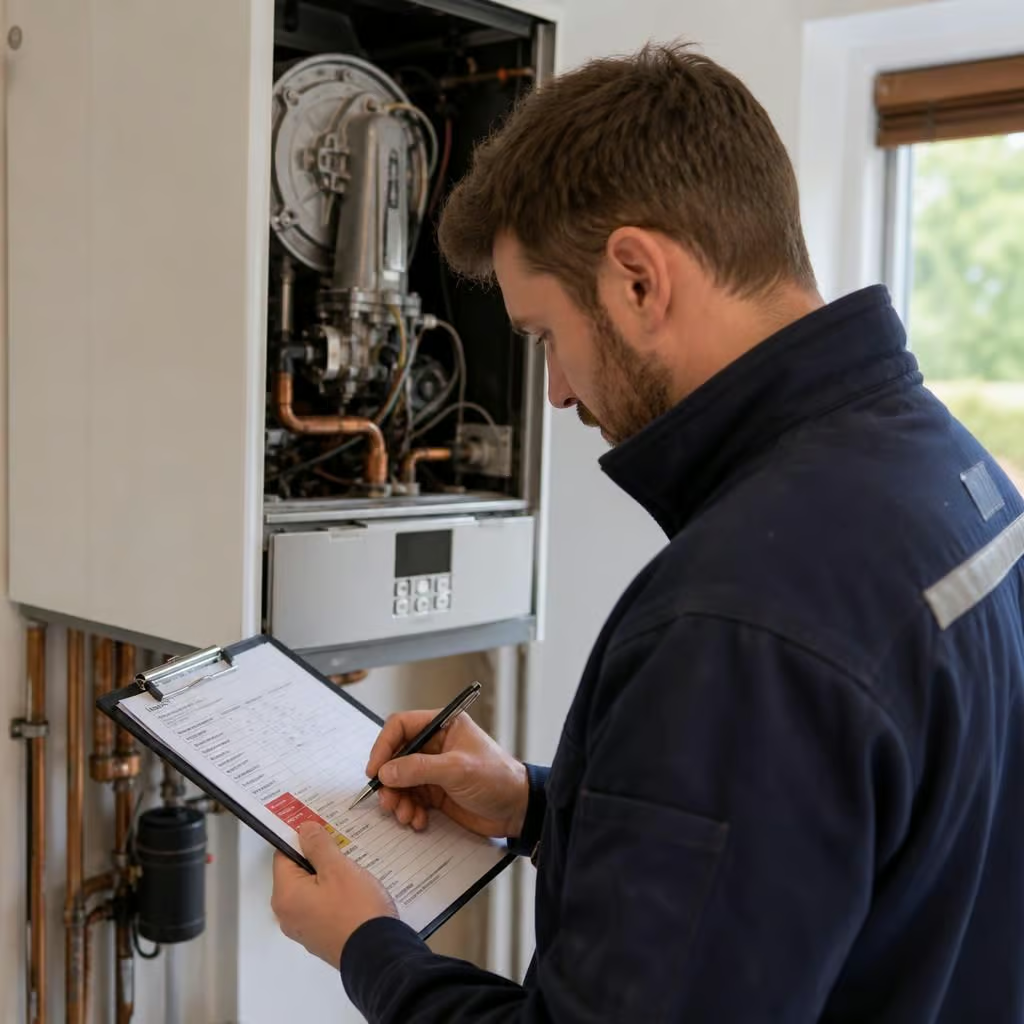
A safety classification should guide the landlord’s decision, not replace it. An NCS finding may not require the appliance to be taken out of use, but it should prompt a recorded decision about its age, condition and future replacement. Keep the engineer’s explanation with the property file so a managing agent, future landlord or contractor can understand why work was or was not commissioned.
If the landlord chooses to defer improvement, the next gas safety check should revisit the issue rather than treating the previous record as a permanent approval. A clear decision trail helps show that the finding was considered and managed responsibly.