Is my property suitable for solar battery storage?
Most properties can accommodate solar battery storage, but suitability depends on available space, the electrical installation and how you use electricity. We assess those factors during a survey and recommend a system only when it can work safely and usefully in your home.
Most homes can accommodate solar battery storage, but suitability depends on how electricity moves through the property rather than on the age or style of the house alone. A battery is most useful when it can be charged from solar generation or a suitable tariff, then discharged when the home needs electricity. We look at the whole electrical installation before recommending a system.
Your electricity use matters. A home that uses power during the evening may benefit from storing daytime solar generation. A home that is empty for much of the day may need a different approach. We look at annual consumption and, where available, half-hourly smart meter data. This shows when the property imports electricity and whether a battery can match that pattern.
Solar panels are not essential. A battery can sometimes charge from the grid on a suitable time-of-use tariff and discharge later. That arrangement depends on the tariff, the battery controls, the meter and the household’s willingness to change when it uses electricity. We explain how the proposed system would operate rather than assuming that a battery will automatically reduce every bill.
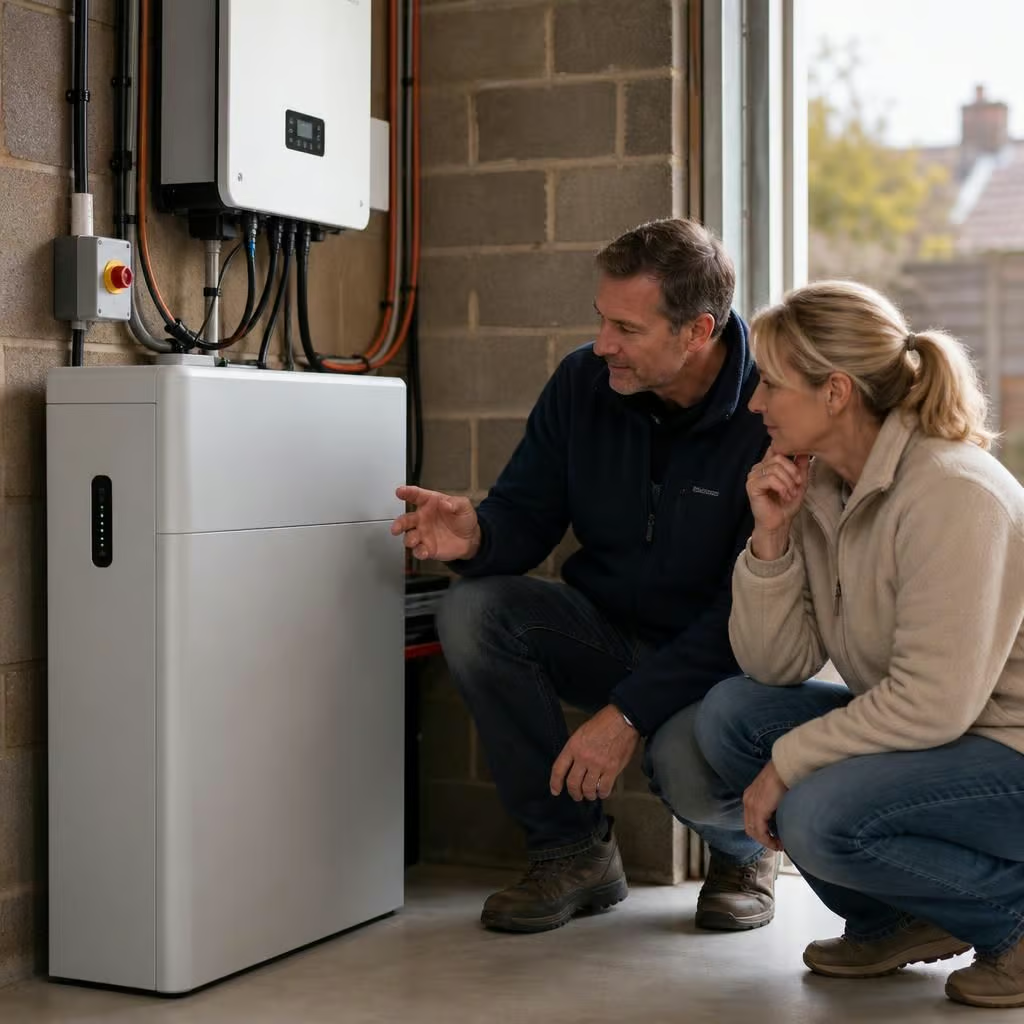
The battery needs a suitable location. We need a dry, well-ventilated position with enough clearance for installation, inspection and future servicing. Garages, utility areas, plant rooms and suitable outbuildings may work, but the best position depends on the battery design and the property. We consider temperature, moisture, access, cable routes and the distance to the consumer unit and inverter.
An outbuilding may be practical, but the cable route can affect the cost and complexity of the work. We check whether the existing supply between buildings is adequate and whether additional protection or cabling is needed. A battery should not be placed wherever there happens to be a spare wall.
Older properties can still be suitable. Solid-wall houses, barn conversions and rural homes often need a closer look at the wiring, consumer unit and incoming electrical supply. Older equipment may not have the protection or capacity required for modern generation and storage. We identify those issues before installation, so any electrical upgrade is included in the plan rather than appearing unexpectedly during the work.
The battery does not need to be connected directly to every circuit in the house. We design the connection around the existing installation and the intended use. If the property needs backup power during a grid outage, that requires specific equipment and circuit planning. Standard battery storage should not be described as an uninterruptible supply.
The size must fit the property. A larger battery is not automatically better. If the solar array cannot charge it, or the home rarely uses the stored energy, part of its capacity may sit unused. A smaller battery may be more appropriate where evening demand is limited. We consider the solar system, household demand, charge and discharge power, usable capacity and the way the battery will be controlled.
Solar generation also depends on the roof, shading, orientation and available panel area. If the panels produce less electricity than expected, the battery may spend more time charging from the grid. We use the available information about the property to explain that relationship before you decide how much storage is sensible.
Planning and property restrictions can affect the design. Many battery installations do not need a full planning application, but permitted development conditions and local restrictions can apply. Listed buildings, conservation areas and some rural properties need particular care. We consider the proposed position, visual impact and any relevant restrictions, while you remain responsible for obtaining any consent that the property requires.
Where the property has solar panels, we check how the existing inverter is connected. Some systems can accept a battery through the existing equipment, while others need an additional or replacement inverter. The age, manufacturer and condition of the solar installation can therefore affect the work. An existing system does not automatically make battery installation straightforward.
The financial case depends on your property. We compare the proposed battery with your electricity use, solar generation and tariff. The calculation should include the battery, inverter or control equipment, electrical work, any changes to the consumer unit and the expected operating pattern. It should also show what happens if your energy use changes.
Export income can form part of that assessment where solar electricity is sent to the grid. Our MCS-certified renewable installers can provide an installation that supports eligibility for the Smart Export Guarantee, subject to the scheme’s current requirements and the arrangement of the system. Tariffs and eligibility can change, so we explain the position that applies when the quotation is prepared.
Installation is usually a contained electrical project. We agree the battery position and cable routes before work starts. On the day, we isolate the relevant circuits, mount the equipment, connect it to the electrical installation and configure the controls. We then test the system and explain the monitoring app, charge settings and isolation points.
Most of the disruption comes from access to the consumer unit, inverter and battery position. If the cable route is short and the existing installation is suitable, the work is more straightforward. Longer routes, difficult access, outbuildings or required upgrades can increase the work involved. We set out those points in writing before work starts and do not add surprise charges.
A property may not be suitable for the battery you first considered. Problems can include no safe location, inadequate electrical equipment, restricted access, an unsuitable existing solar system or electricity use that gives the battery little opportunity to operate. In those cases, we explain the limitation. We may recommend a different battery arrangement, preparatory electrical work or waiting until another part of the system is changed. A clear decision not to install is better than fitting storage that does not suit the property.
Our survey covers the electricity meter, consumer unit, solar equipment, proposed battery position, cable route and household demand. You receive a written quotation describing the equipment, electrical work, controls, testing and commissioning. That gives you enough information to compare the installation properly, not just the battery’s headline capacity.
If you are considering storage, gather recent electricity bills and any available smart meter data before the survey. Details of existing solar panels, the inverter model, planned electric vehicle charging and any future electrical changes will also help us judge whether the battery will still suit the property later.
A battery can be suitable for one purpose but not another. If your priority is using more of your solar electricity, we size the system around your daytime generation and evening demand. If you want backup during a power cut, the design must also cover the circuits you need and include compatible backup equipment.
Tell us what you want the storage to do before we recommend its capacity. That keeps the quotation focused on the way your home will use the battery, rather than on a larger unit that may not provide a practical benefit.