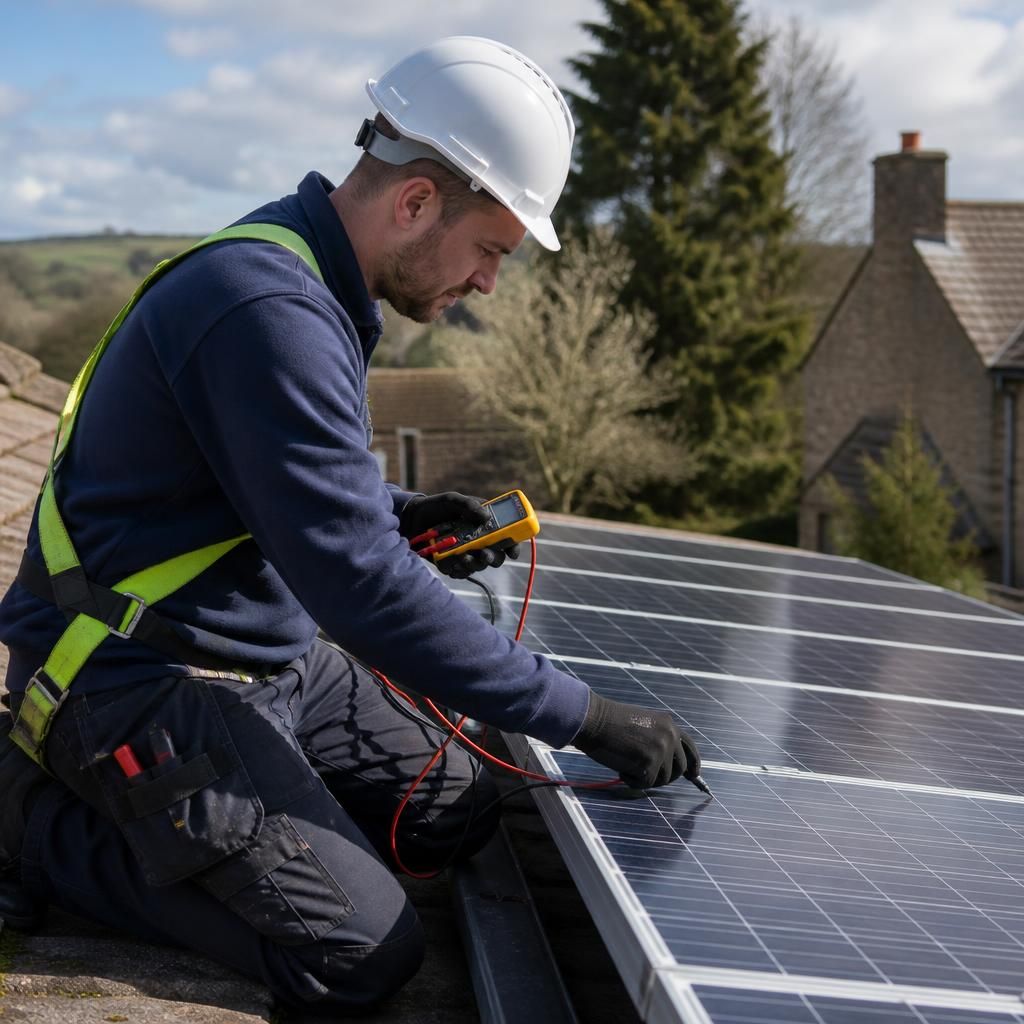
What happens if a solar panel fault is found?
If we find a solar panel fault, we diagnose the affected panel, inverter, cabling or connections and make the system safe before recommending the repair. We then carry out the agreed work and check that the system is operating correctly again.
A solar panel fault usually leads to a planned diagnosis rather than an immediate decision to replace the whole system. We first establish whether the problem is affecting generation, monitoring or safety, then recommend only the work the system needs.
Start with what you can see. If the inverter shows a fault code, note the exact message and when it appeared. A photograph of the display can help, provided you take it from a safe position. Look for obvious signs from ground level, such as damaged panels, loose-looking cables, water around equipment or a tripped switch. Don’t climb onto the roof, open the inverter or repeatedly reset equipment you don’t recognise.
Some apparent faults are caused by a loss of communication rather than a failure in the panels. Your monitoring app may stop updating while the system continues to generate. We compare the app, inverter display and electricity meter readings before treating a monitoring problem as a hardware fault.
We test the system in sections. The diagnosis normally covers:
- the inverter and any stored fault codes;
- the AC supply, consumer unit and isolation equipment;
- the DC cables, connectors and roof-level isolators;
- each panel string and its operating voltage;
- the panels for visible damage, shading or signs of water ingress; and
- the battery, export controls or monitoring equipment where they form part of the installation.
This helps separate a failed component from a wider installation problem. For example, a low reading from one string may point to a connector, cable or panel issue. A completely inactive inverter may have an electrical supply problem rather than a fault with the panels.
Safety affects what happens next. A damaged cable, burnt connector, water ingress or overheating equipment can make the system unsafe to operate. We isolate the affected part and explain what must remain switched off. Solar panels can continue producing electricity in daylight, so turning off a familiar indoor switch does not necessarily remove every electrical hazard.
A fault may also have a straightforward cause. Dirt, temporary shading, a tripped isolator or a failed communication connection can reduce the information shown by the system without requiring panel replacement. We check these possibilities before recommending more invasive work.
The repair depends on the failed part. A monitoring fault may need configuration or replacement communications equipment. An inverter fault may call for a repair or a replacement inverter. A damaged connector or cable can sometimes be replaced without disturbing the panels. If a panel has cracked, suffered water damage or no longer produces correctly, we assess whether replacing that panel is practical and compatible with the rest of the array.
Older systems can have discontinued components or panels that are difficult to match. In that situation, we explain the available options rather than fitting a part that creates a mismatch or leaves the system difficult to maintain. If the repair would cost too much in relation to the system’s condition, we can set out the case for a larger upgrade, but that remains a decision for you.
Access determines how disruptive the work will be. A fault in the inverter or consumer unit may be dealt with from inside the property. Roof access is more likely when we need to inspect panels, connectors or cabling. We discuss access requirements before the work starts, protect the working area and leave the property tidy.
During testing or repair, generation may be unavailable for part of the visit. If the system includes a battery, its charging and export settings may also need checking after the fault is corrected. We confirm which equipment is operating before we finish and explain any readings or warnings that remain.
Replacement work can affect system paperwork. If an inverter, panel or control device is changed, keep the quotation, installation records, warranties and test results with the original solar documents. For an MCS-certified installation, changes may also matter to certification and export arrangements, so we explain any paperwork that needs updating.
The useful information to have ready is the system’s age, the inverter make and model, any fault code, the date generation changed and whether recent electrical work took place. If the fault is intermittent, notes or photographs from different days can help us identify the pattern. We then use the diagnosis to set out the practical next step, rather than treating every loss of output as a reason to replace the array.
A fault found during a service does not automatically mean the whole array needs replacing. We separate an immediate safety issue from a fault that reduces generation and from a component that is simply reaching the end of its serviceable life.
That distinction gives you a practical next step. We explain what needs attention now, what can be monitored, and what may become harder to repair later. You can then decide whether to repair the affected part, plan a replacement or leave a minor issue under review.