
How long does a boiler service take?
A straightforward boiler service is usually completed in one appointment, while older, oil-fired or difficult-to-access systems can take longer. We’ll explain the expected duration when booking and tell you if further checks are needed.
The time needed depends on the boiler type, its condition and how easily the engineer can reach the components. A routine check is relatively simple when the system is clean, accessible and operating normally. Additional time may be needed if the engineer finds poor combustion, corrosion, unusual readings or signs of a fault.
What happens during a service
We begin by checking the boiler, heating controls and visible pipework. If the boiler sits in a cupboard, loft space or tight utility area, we need enough room to remove the relevant panels safely.
For a gas boiler, we check the flue, ventilation, seals, burner and safety controls. We test the boiler’s operation and use combustion readings to confirm that it is burning correctly. Gas work is carried out by Gas Safe registered engineers, as the law requires.
An oil boiler needs different checks. We inspect the burner, oil supply, flue and combustion performance, then clean components where this is appropriate. OFTEC registration covers the work on an oil-fired system, which is particularly relevant for homes away from the mains gas network.
We also look at the condensate route, system pressure, expansion arrangements and signs of leaks. The exact checks depend on the make, model and type of boiler. The manufacturer’s servicing instructions remain the starting point.
What can make the visit longer?
- Restricted access: a boiler behind stored items or inside a cramped cupboard takes longer to inspect safely.
- An older appliance: worn seals, corrosion, soot or previous repairs may need closer examination.
- Unusual test readings: we may need to investigate the cause rather than simply record the result.
- A separate fault: a service checks the boiler’s condition, but repairing a failed component may require additional work.
- Oil-fired equipment: burner cleaning and combustion testing can involve more stages than a straightforward gas boiler check.
If we find a problem, we explain what it means before carrying out chargeable repair work. You receive a written quotation before that work starts, so a service does not turn into an unexpected bill.
What paperwork will you receive?
We record the service findings and explain any recommendations. For a rented property, the landlord or property manager may also need the relevant safety record. A service record helps show when the boiler was checked and what the engineer found, but it does not replace a repair where a defect needs attention.
We may advise against using the boiler if testing identifies an unsafe condition. We explain the reason clearly and set out the next step. Do not restart an appliance that has been identified as unsafe until the required work has been completed.
How can you help the appointment run smoothly?
- Clear access to the boiler, controls and any connected cylinder or storage tank.
- Tell us about unusual noises, pressure loss, error messages or changes in heating performance.
- Have previous service records available if you have them.
- Make sure we can reach the flue terminal, oil tank or other equipment that forms part of the system.
If the boiler is due for its annual check, book a service before a fault develops. If it has stopped working, describe the symptoms when you contact us so we can allow for diagnosis rather than treating the visit as routine maintenance.
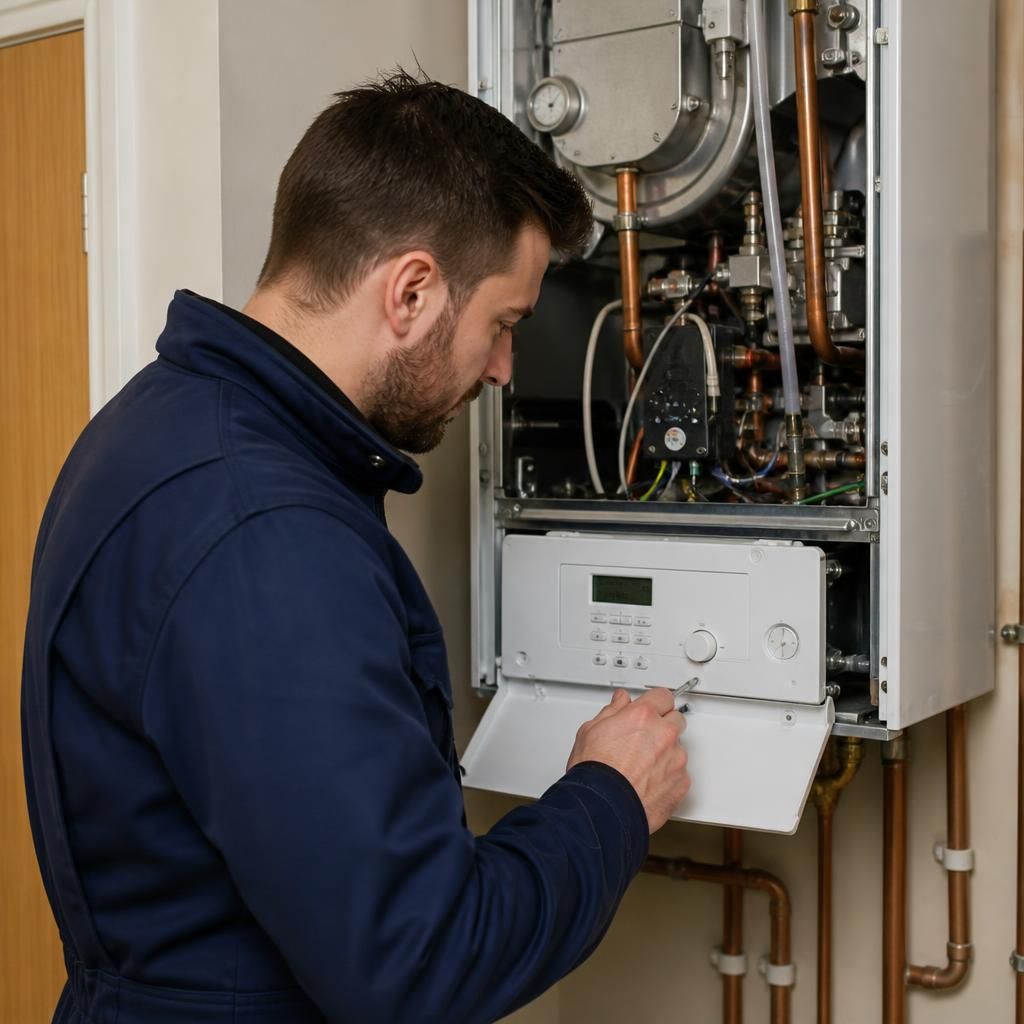
A boiler service covers the appliance and its safe operation, not a full inspection of every part of the heating system. If you also want the cylinder, controls, oil tank or wider pipework checked, tell us when booking so we can allow for the extra work.
This helps keep the appointment focused. We can identify whether a concern belongs to the boiler itself or needs a separate heating repair, without treating a longer investigation as part of a routine service.