
Are air source heat pumps suitable for older homes?
Yes, air source heat pumps can suit older homes, provided the building fabric, heat loss, radiators, pipework and outdoor unit position are assessed first. We use that survey to identify any improvements needed and tell you honestly if a heat pump is not suitable for your property.
Older homes can work well with an air source heat pump when the system is designed around the building rather than fitted as a direct boiler replacement. The main difference is that a heat pump normally heats water to a lower temperature for longer periods. The house, emitters and controls therefore need to work together.
The age of the building is not the deciding factor. A solid-wall house, barn conversion or older cottage may still be suitable. We look at how the property was built, how it has been altered and how it is used. A newer extension may retain heat well while the original part loses it quickly. Treating both areas as if they were the same can leave some rooms comfortable and others cold.
Older homes often have several layers of alteration. We take account of suspended timber floors, exposed stone, solid masonry, converted roof spaces and later extensions. This helps us identify where heat escapes and prevents us from recommending work that will make little difference to comfort or running costs.
Insulation does not have to mean insulating every wall before a heat pump becomes possible. Loft insulation, draught reduction and improvements around windows can often make a useful difference. Solid-wall insulation needs more care, particularly in an older or listed property. The wrong materials or detailing can trap moisture and damage the building fabric.
We separate essential improvements from sensible later work. If a small amount of insulation or draught reduction will materially change the heat requirement, we include it in the recommendation. If a major renovation would be needed before the system could work properly, we explain that clearly rather than treating it as an installation detail.
Existing radiators may need changing, but not automatically. A radiator selected for a boiler’s hotter water may not release enough heat at a heat pump’s normal operating temperature. We calculate the requirement room by room and compare it with the output of the existing emitters. Some radiators may remain; others may need to be larger or replaced with a different type.
Pipework matters as well. Narrow or poorly arranged circuits can restrict water flow, while old valves and balancing problems can make rooms heat unevenly. Where changes are needed, we plan them alongside the heat pump rather than leaving you to coordinate separate heating and plumbing work.
The hot-water arrangement is another important difference. Many older properties have a traditional boiler and cylinder arrangement, while others use a combination boiler with no separate cylinder. Most heat pump installations need a suitable hot-water cylinder because the system produces domestic hot water differently from a combi boiler. We check where a cylinder could go, how the pipework would run and whether the available electrical supply is adequate.
That can affect homes with limited cupboard space or properties where the boiler is in a small kitchen. We explain the practical choices before any work starts. The result may involve changing the cylinder, moving controls or reorganising part of the airing cupboard, rather than simply swapping one appliance for another.
Heat pumps suit steady heating better than short bursts of high-temperature heat. A homeowner who normally turns the heating off for long periods may need to change how the property is controlled. Weather-compensating controls can adjust the system as outdoor conditions change. Correct balancing and room controls then help each part of the house receive the heat it needs.
That does not mean an older house must be heated continuously at the same setting. It does mean we consider the household routine, preferred temperatures and occupancy when we design the controls. A system that looks suitable on paper may be inconvenient if it ignores how the home is actually used.
Off-gas-grid homes are often practical candidates for this type of change. If your property currently relies on oil or LPG, an air source heat pump can remove the need for fuel deliveries and an on-site combustion appliance. The existing boiler, tank and heating circuit still need careful assessment. We do not assume that every oil or LPG system can transfer directly without changes.
Older rural properties can also have unusual electrical arrangements, detached plant rooms or long pipe runs between buildings. We check the supply, cable routes and location of the main equipment during the survey. If the electrical installation needs an upgrade, we identify it before the installation is scheduled.
Listed status or a conservation area does not automatically rule out an air source heat pump. Planning requirements depend on the property, the equipment and its proposed position. Restrictions may affect the external unit, pipe routes or other visible changes. We discuss the likely requirements at the assessment stage so you can check the position with the relevant planning authority before committing to the work.
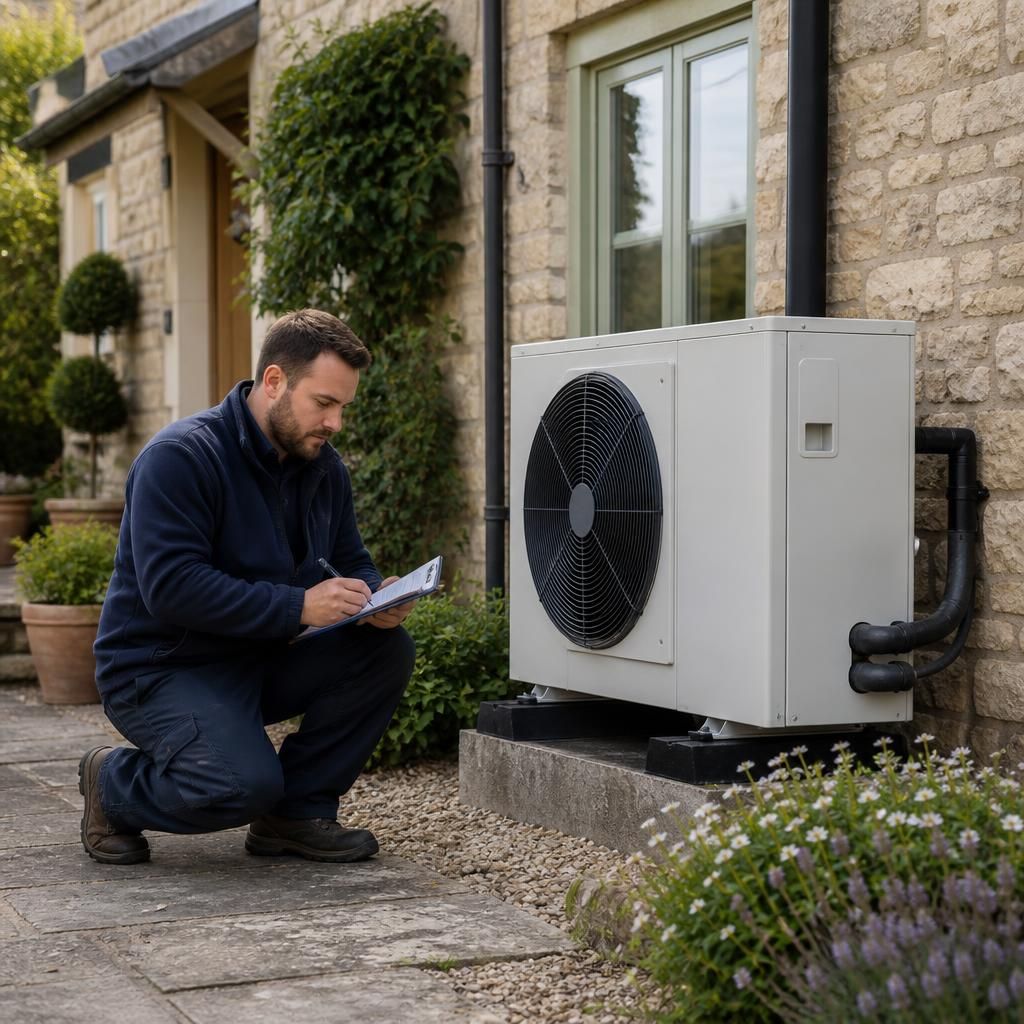
The setting also affects how the system should be planned. We consider the position of the outdoor unit, the route into the house, access for installation and the location of neighbouring rooms. A technically suitable property may still need a different layout to avoid unnecessary noise or visual impact.
Installation disruption depends on how much of the existing heating system can stay. A straightforward replacement may involve the outdoor unit, internal equipment, controls and some associated pipework. An older house needing larger radiators, altered circuits or a new cylinder will involve more work inside the property. We set out those changes in the quotation so the scope is clear before you decide.
We also plan around floors, exposed beams, finished walls and fitted furniture. Where pipework must pass through an older structure, we explain the route and the making-good required. Our engineers work tidily and leave the property as they found it, but the survey should still identify any areas where access will be needed.
Some properties should not have a heat pump fitted yet. We may advise against proceeding if the heat loss is too high for the available system, if essential electrical work has no practical route, if there is nowhere suitable for the equipment or if the required internal alterations are disproportionate. We can also recommend improving the building first and reviewing the heating choice afterwards.
That assessment protects you from paying for an installation that depends on unrealistic room temperatures or extensive remedial work. It also gives you a clearer comparison with keeping or replacing an oil, LPG or gas boiler. The right choice depends on the whole property, not just the appliance being replaced.
We start with a room-by-room survey rather than a quick appliance recommendation. We record the construction, dimensions, windows, insulation, existing emitters, pipework, controls and hot-water arrangement. We then use those findings to explain the likely equipment, changes to the heating system and any work that should happen first.
If the proposed installation qualifies for support under the Boiler Upgrade Scheme, our MCS certification allows us to make the grant application on your behalf. MCS certification also makes the installation eligible for the Smart Export Guarantee where the wider system meets the relevant requirements. Grant rules and export terms can change, so we confirm the current position for your property rather than relying on an old figure.
You should receive a written quotation before work starts. It should distinguish the heat pump installation from optional fabric improvements, radiator changes, electrical work and any planning-related costs. That gives you enough information to decide whether the property is ready now, needs staged preparation or is better served by another heating arrangement.
If an older home feels draughty, sealing every gap is not automatically the right first step. We look at where air enters, how moisture leaves and whether kitchens, bathrooms and utility areas have adequate ventilation.
That distinction matters in solid-wall houses and converted buildings. We can recommend sensible draught reduction while avoiding changes that trap moisture or damage older materials. The result is a clearer view of which improvements support a heat pump and which could create a new problem.