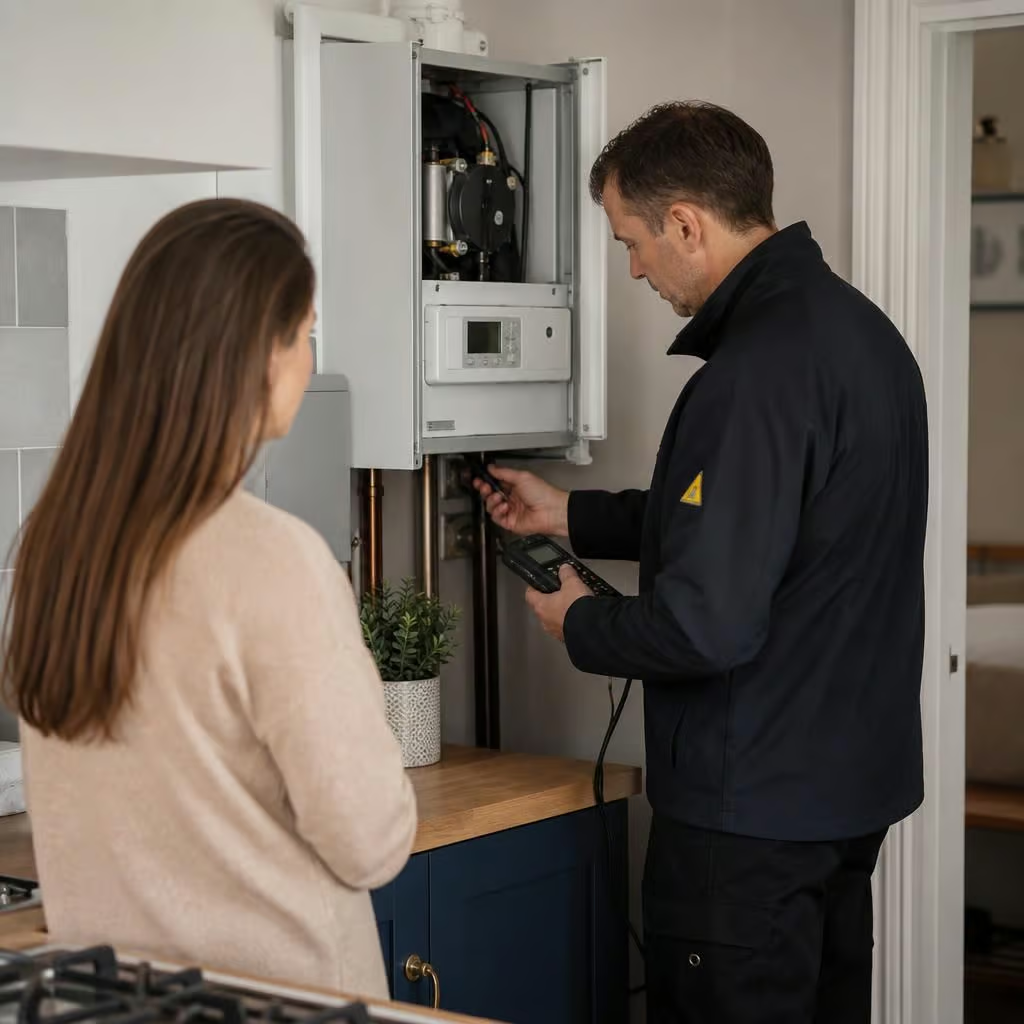
Can tenants remain at home during a landlord gas safety check?
Yes. Tenants can usually remain at home during a landlord gas safety check, provided they give the engineer access to every gas appliance and stay clear while the inspection is carried out.
If the engineer finds a gas escape or an unsafe appliance, they may ask everyone to leave while the danger is dealt with.
Staying at home is normally straightforward, but the engineer needs uninterrupted access to every gas appliance, its controls and the associated flue or ventilation. The check usually takes place while the tenant remains elsewhere in the property.
Before the appointment, clear the area around the boiler, cooker, fire and any other gas appliance. The engineer may need to inspect pipework, ventilation openings, the flue route and the appliance controls. Access to cupboards, loft spaces or external flue terminals may also be necessary.
It helps to keep children and pets away from the work area. The engineer may need to light appliances, run them for a period and carry out tests that produce noise or warm air. The tenant can carry on with normal activities in another room, provided the engineer can work safely.
A tenant does not usually need to stay with the engineer throughout the visit. Someone aged 18 or over may be asked to provide access, depending on the landlord’s instructions and the tenancy arrangement. The tenant should agree access in advance rather than leaving the property open or asking the engineer to enter without permission.
Landlords must arrange the check with a Gas Safe registered engineer. This is a legal requirement for anyone working on gas appliances, and it means the inspection is carried out by someone authorised to assess gas safety.
During the inspection, we check the appliances are operating safely and look for problems such as:
- unsafe combustion or signs that gas is not burning correctly
- blocked or inadequate ventilation
- unsafe flue arrangements or signs that products of combustion may not escape properly
- gas leaks or defects in accessible pipework
- appliances that are damaged, poorly installed or not suitable for continued use
The tenant can ask what we are checking and raise any concerns about the boiler, fire or cooker. It is useful to mention unusual smells, staining, soot, repeated faults or carbon monoxide alarm warnings before the inspection begins.
If an appliance passes, the landlord receives the gas safety record. The landlord must provide the tenant with a copy of the record within the required legal timescale. Keeping it with the tenancy documents gives the tenant a clear record of what was checked and when.
If an appliance is unsafe, the engineer may need to turn it off or disconnect it. That can happen even if the tenant would prefer to keep using it. We explain the defect, record the action taken and tell the landlord what needs to happen next. The tenant should not reconnect the appliance or use it again until it has been made safe.
If testing reveals an immediate danger, the engineer may ask everyone to leave the affected area, or the property, until the risk has been dealt with. That is different from the normal inspection, where remaining at home is usually acceptable.
If the tenant cannot be present, they should contact the landlord or managing agent as soon as possible. Repeatedly preventing access can leave the landlord unable to meet the annual safety requirement, so agreeing another appointment is better than simply refusing entry. The tenancy agreement may also set out how access for safety checks is arranged.
For a smoother visit, the tenant should:
- confirm the appointment and how access will be provided
- clear belongings from around each gas appliance
- tell the landlord about any known faults or access restrictions
- keep pets and children away from the engineer’s working area
- avoid using an appliance while it is being inspected
The inspection is intended to confirm that the landlord’s gas appliances and installation remain safe to use. It is not a general repair visit, so faults that fall outside the safety check may need separate work and approval from the landlord or managing agent.
Check which appliances are included before the visit. A landlord gas safety check normally covers gas appliances and flues provided as part of the tenancy. It is not automatically a service of a cooker or other appliance supplied by the tenant.
If you own a gas appliance, tell the landlord or managing agent before the appointment. We can then confirm the scope of the inspection and explain whether any separate check is needed. This prevents the tenant from assuming that the landlord’s gas safety record covers equipment it does not include.