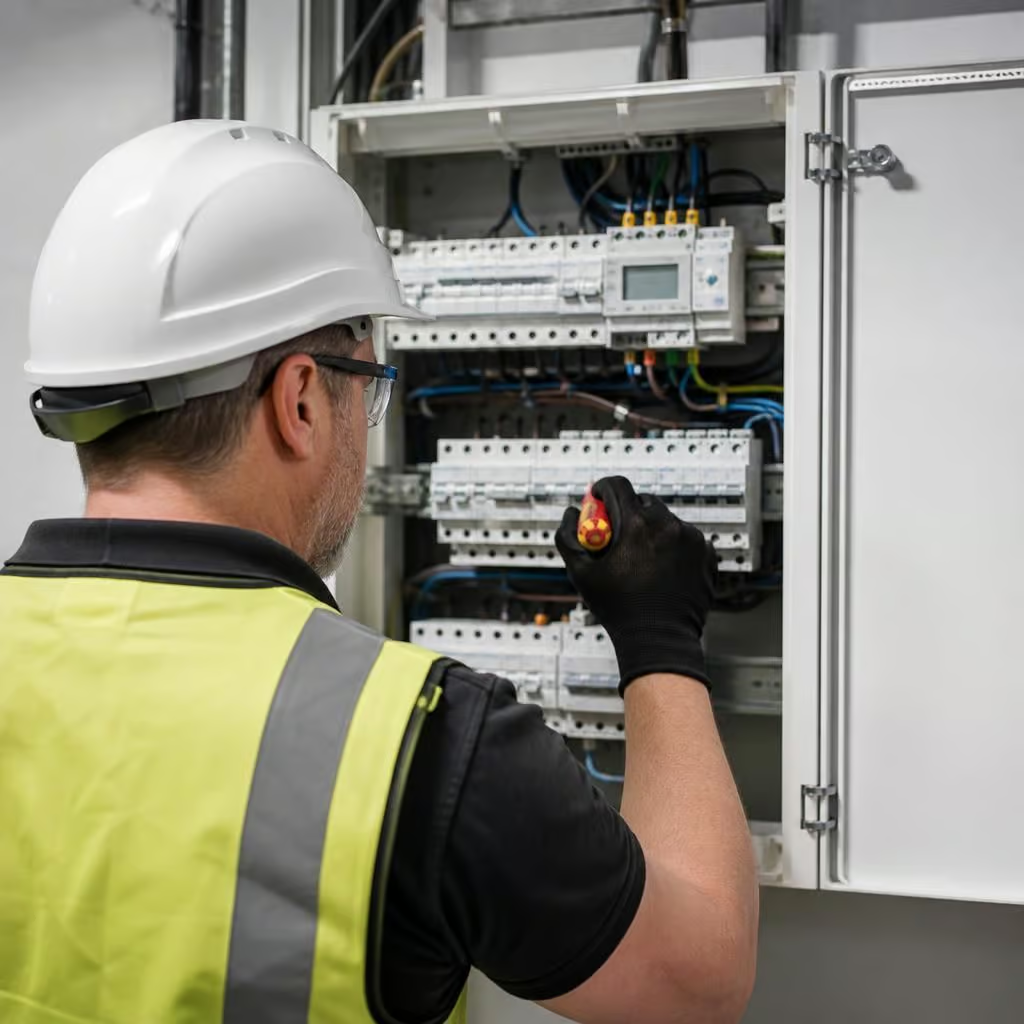
How much does commercial electrical work cost?
Commercial electrical work has no standard price: the cost depends on the job, the condition of the existing installation, access and the testing or certification required. We assess the work and provide a written quotation before it starts, so the budget is clear and there are no surprise charges.
A realistic commercial electrical budget comes from separating the work into survey, installation or repairs, materials, testing and certification. The final cost depends less on the size of the premises than on what the existing installation can safely support and what the building needs to remain compliant.
The main cost factors are:
- The condition of the existing installation. Older cables, overloaded circuits, damaged accessories or an outdated distribution board may need attention before new equipment can be connected. Bringing these items up to a safe standard can cost more than the original installation.
- The amount of new electrical work. Additional sockets, lighting, power supplies, machinery connections, external equipment and data-related containment each add labour and materials. A new circuit may also require changes at the distribution board.
- Capacity and load requirements. A business adding equipment, heating, kitchen appliances or vehicle charging may need more capacity than the existing supply provides. We assess the demand rather than assuming the current system can accept it.
- Access to the wiring routes. Surface-mounted containment is usually easier to install than concealed cabling. High ceilings, roof spaces, thick walls, suspended ceilings and restricted areas can all affect the time needed to complete the work neatly.
- The building’s use. A shop, office, workshop, farm building, rental property and public-facing premises have different risks and operating requirements. The cost reflects the precautions needed for the people, equipment and activities within the building.
- Working around occupied premises. If staff, tenants, customers or members of the public need to remain on site, we may need to divide the work into stages. Isolations, temporary supplies and protection of occupied areas can affect the overall labour involved.
- Documentation and testing. Inspection, testing, circuit schedules, certificates and records take time. They are part of the finished job, not an optional extra when the work affects safety or compliance.
Testing can change the budget. An inspection may find a fault that was not visible when the work was first discussed. Examples include poor earthing, damaged insulation, inadequate bonding, loose connections or a distribution board that cannot safely accommodate additional circuits. We explain what the finding means, which items need attention and which improvements can be planned separately.
This gives a landlord or property manager a clearer choice. Essential remedial work can be dealt with first, while non-urgent upgrades can be scheduled around the property’s maintenance plan. For a business owner, it can also prevent money being spent on new equipment before the supply and protective devices have been checked.
Installation work is often priced by the completed scope rather than by the number of accessories. Two premises with the same number of sockets may need very different amounts of cable, containment and making-good. A short, accessible cable route is not comparable with a route through several occupied rooms or a separate building. The location of the distribution board and the position of the incoming supply matter too.
For planned work, we look at the intended use of each area and the equipment that will be connected. Your quotation should then make clear what is included, such as new circuits, protective devices, containment, labelling, isolation, testing, certification and removal of redundant materials. If another contractor is responsible for decorating, building work or making good, that boundary should be clear before work begins.
Maintenance costs depend on the purpose of the visit. A routine inspection is different from fault-finding, emergency repair, remedial work or a planned replacement. A maintenance arrangement may be suitable for premises where regular checks help identify defects before they interrupt trading or affect tenants. The right frequency depends on the installation, the environment and how the building is used.
For landlords and managing agents, the important cost is not only the visit itself. The paperwork must identify the installation inspected, record defects clearly and show what action is required. If remedial work follows, we can explain whether the price covers only the listed items or whether further investigation may be needed once an area is opened up.
Commercial electrical quotes should be compared by scope, not just by the total. A lower figure may exclude testing, certification, access equipment, making good, disposal or work needed to bring an existing circuit up to standard. Ask each contractor to confirm:
- which areas and circuits are included;
- the type and quantity of equipment or accessories allowed for;
- how isolations and access will be managed;
- what testing and certification will be supplied;
- which remedial items are included and which are excluded;
- whether any parts of the work depend on information from another contractor; and
- how changes to the agreed scope will be handled.
We provide a written quotation before work starts, so the agreed scope and price are clear before the installation or repair begins. Our NICEIC and ECA registration relates to the standards and competence expected for commercial electrical work, while the completed documentation gives the property owner, landlord or manager a record of what has been inspected or installed.
If the work is for a managed property, send us the latest electrical certificate, any previous defect report and details of the equipment being added. That information helps us identify the likely scope before the survey and gives you a more useful budget for the work that the premises actually needs.
If a site includes several units, outbuildings or separate distribution boards, a single total can hide where the money is going. We can separate the quotation by building, circuit or work stage, so a property manager can approve essential work first and plan later upgrades properly.
Some costs cannot be confirmed until we trace a cable route, access a ceiling void or investigate a fault. The quotation should identify those assumptions clearly. That gives you a usable budget without presenting an uncertain allowance as a fixed price.