How can I tell if my house needs rewiring?
Your house may need rewiring if it has outdated accessories, damaged cables, repeated electrical faults, signs of overheating, or too few sockets for modern use. A qualified electrician can inspect the installation and advise whether you need a complete rewire, targeted repairs or a consumer unit upgrade.
The dependable way to decide is to have the fixed wiring inspected and tested by a qualified electrician. Age alone does not prove that a rewire is necessary, and a modern-looking consumer unit does not prove that the cables behind the walls are safe. The condition of the whole installation matters.
Your house is more likely to need substantial electrical work if the wiring has been altered in stages over many years. Older extensions, converted lofts and replaced kitchens can leave several generations of cable, switches and protective devices connected together. That does not automatically call for a complete rewire, but it gives us a reason to examine the installation as a whole rather than repair one visible fault.
We also look at the type and condition of the wiring. Rubber, lead or fabric-insulated cables may have deteriorated, particularly where they have been exposed to heat or damp. PVC cables can also become unsafe if they have been damaged, overloaded or poorly jointed. Wiring clipped loosely across surfaces, hidden under unsuitable finishes or joined without accessible junction boxes needs closer investigation.
A previous alteration can be a more useful warning than the age of the property. If an extension, kitchen or heating system was added without upgrading the rest of the installation, the newer work may be relying on outdated circuits. DIY alterations, abandoned cables and missing covers can create further risks that are not obvious during everyday use.
What we check during an inspection
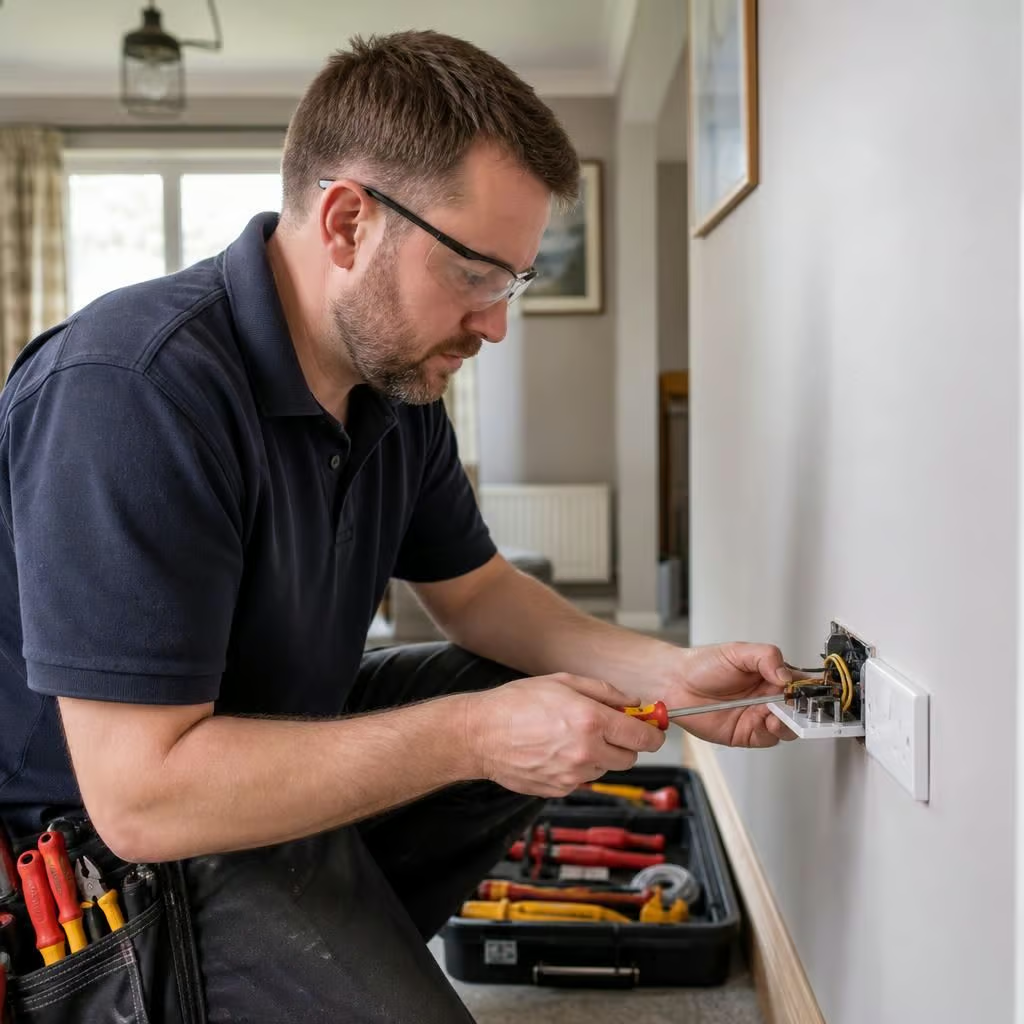
Your installation needs more than a glance at the fuse box. We trace the circuits, inspect accessible cable routes and accessories, and check that the system has suitable earthing and bonding. We test insulation resistance, polarity, continuity and the operation of protective devices. We also check whether the circuit design matches the way the house is used now.
A formal Electrical Installation Condition Report records defects using safety classifications. An item requiring urgent attention does not always mean that every cable in the house must be replaced. Some problems can be made safe with a repair, while others point to a wider failure of the installation. We explain the findings in plain terms and separate essential work from improvements that can wait.
When a full rewire is more likely
- Several circuits contain deteriorated or unsuitable cable.
- The earthing or bonding arrangement cannot provide the required protection.
- Past alterations have left inaccessible, unsafe or poorly documented connections.
- The installation cannot support necessary repairs or sensible additions without extensive alteration.
- Testing shows faults across multiple circuits rather than one isolated section.
- The wiring has been exposed to water, excessive heat, building movement or significant damage.
A consumer unit replacement may improve protection, but it does not replace defective cables in the walls. Equally, adding sockets or changing light fittings will not correct an installation that has wider faults. We recommend the work that addresses the cause, not simply the most visible part of the problem.
Older houses need a practical assessment. Solid walls, timber floors, plaster finishes and listed features can affect cable routes and access. We can discuss less disruptive routes where they are technically suitable, but concealing cables neatly must not take priority over safe installation and future access. On a rural property, later additions such as pumps, outbuildings, electric heating or renewable equipment may also need consideration when we assess capacity.
What happens if the report recommends rewiring?
We explain which circuits need attention, what access is required and where the work will affect rooms, floors or decoration. A complete rewire normally involves removing or isolating old circuits, installing new cables and accessories, testing each circuit, and providing the relevant certification when the work is complete. The exact disruption depends on the construction of the house and how much of the wiring can be reached without lifting floors or opening walls.
Some homes need a staged rewire rather than all the work at once. That can be appropriate when the installation allows safe separation of circuits and the highest-risk sections can be dealt with first. We will not present phased work as a substitute for necessary safety work, and we will make clear what remains outstanding.
If you notice a burning smell, arcing, electric shock or damage to a cable or accessory, stop using the affected circuit if it is safe to do so and arrange an inspection. Do not remove covers or attempt repairs yourself. We can identify the immediate risk, make the installation safe where possible and advise whether the next step is a local repair, further testing or a complete rewire.
If every socket works, that does not prove the wiring is safe. A plug-in socket tester can identify some faults, but it cannot assess insulation, earthing continuity or damaged cables hidden behind walls.
We test the fixed installation rather than relying on visible fittings or appliance performance. The results show whether a fault is limited to one circuit or points to wider deterioration, helping us recommend a repair, further investigation or a complete rewire.
If you are buying an older house, ask for its latest electrical report and records of alterations. Missing paperwork does not prove the installation is dangerous, but it does make an independent inspection sensible before you commit to the property.