
What should an EV charger installation quote include?
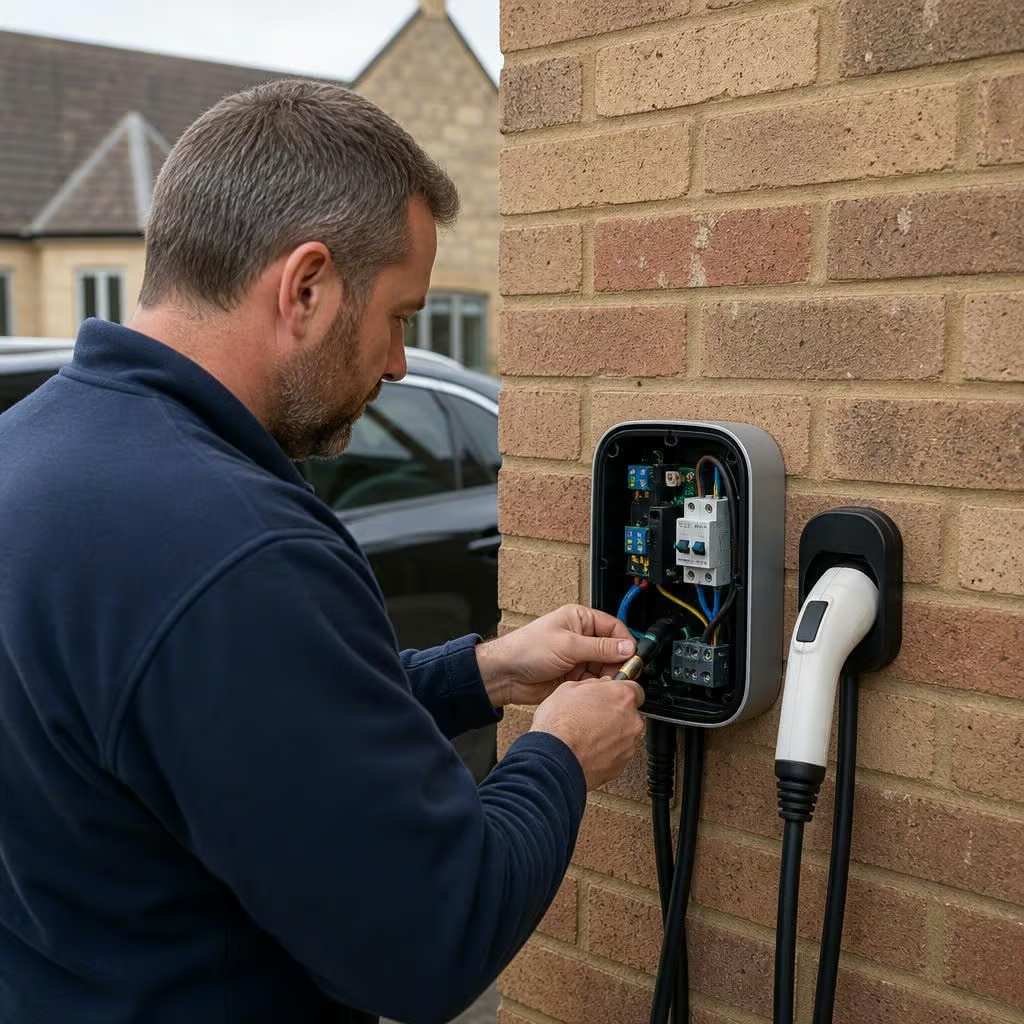
An EV charger installation quote should itemise the charger, cable route, protective equipment, labour, any consumer unit or supply upgrades, testing and certification. It should also explain the proposed installation, its assumptions, expected disruption and what is included in the final price.
A useful EV charger installation quote lets you compare the same scope of work, not just the price of the unit. It should show what is included, what depends on the site survey and what could cost extra.
The charger and its functions
The quote should identify the proposed charger, including whether it is tethered or untethered and the charging power it can provide. It should also explain the features that affect the price and your day-to-day use, such as app control, scheduled charging, user access controls and solar charging.
If you have solar panels or a battery, the quote should say whether the charger can work with that system. It should not assume that every charger can use surplus solar power or coordinate with battery storage.
The electrical work
Your existing electrical installation may need more than a cable run. The quote should identify any likely work to the consumer unit, earthing, protective devices or cable capacity. If the installer cannot confirm this until seeing the property, the quote should state that clearly rather than presenting an uncertain item as fixed.
We assess the available electrical capacity and the condition of the existing installation before confirming the work. If an upgrade is needed, we explain why it is necessary and price it separately. That gives you a clear choice instead of leaving an unexpected cost until installation day.
The cable route and parking position
The quote should describe where the charger will be mounted and how the cable will reach it. A short route through an attached garage is different from a longer run around the outside of a house, across a driveway or through a wall.
Look for details about:
- the approximate cable route and length;
- the position and height of the charge point;
- wall drilling, cable clips, conduit or protective trunking;
- trenching or ducting where the parking space is away from the building;
- access through rooms, lofts, garages or outbuildings; and
- repairs to surfaces after the cable has been installed.
Listed buildings, rendered walls, barn conversions and properties with detached parking can need a more careful route. We discuss the practical options during the survey, so the quoted work matches the building rather than assuming a standard modern house.
What the price includes
A quote should separate the charger from the installation work and list the equipment included with both. Check whether it covers the mounting hardware, cable, protective equipment, isolation switch, commissioning and removal of packaging.
It should also say whether the price includes a site survey, parking or access costs, and making good after drilling or cable installation. If a survey has already taken place, the quote should reflect what was found rather than relying on a generic installation allowance.
Possible extra charges
Extra charges are not automatically a problem. The important point is that they are identified before work begins. A clear quote should explain the circumstances that could change the price, such as:
- a consumer unit or earthing upgrade;
- a longer or more difficult cable route;
- trenching, ducting or work across a private access route;
- repairs needed because the existing electrical installation is unsafe; or
- changes requested after the agreed charger position or route has been confirmed.
We put the agreed scope and any assumptions in writing before starting. If the site differs from the information available when we quote, we explain the change and its cost before carrying out additional work.
The survey and installation arrangements
The quotation should say whether the price is based on photographs, a remote assessment or a visit to the property. A physical survey is particularly useful where the consumer unit is old, the parking space is some distance from the house or the property has unusual construction.
It should also record who supplies the electricity connection, where the vehicle normally parks and whether access will be available to every part of the proposed cable route. These details reduce the risk of a charger being placed somewhere that is inconvenient to use.
Paperwork and responsibility
The quote should name the installer responsible for the electrical work and explain which documents you will receive when the installation is complete. For our electrical installations, NICEIC and ECA registration supports a properly documented installation carried out by qualified electricians.
Ask for the quote to state the arrangements for notifying the installation where required, registering the charger or setting up its app, and dealing with any manufacturer registration. The paperwork should relate to the charger that was actually installed and the work carried out at your property.
How to compare two quotes
Compare the charger specification, cable route, electrical upgrades, making-good work and paperwork line by line. A lower figure may exclude the work needed to make the installation safe or may allow only for a short, simple cable route.
Before accepting a quote, check that it shows the total price, the assumptions behind it, the treatment of any extra work and the agreed charger position. That leaves you comparing like with like and gives you a written record of what the installation is expected to include.
Check what happens after the installation is complete. The quote should explain who owns the charger, whether the app or any connected service has an ongoing charge, and what support is included if the app will not connect.
It should also show the VAT position, how long the quoted price remains valid and when payment is due. These details help you compare the real cost rather than choosing a lower figure that carries different terms.