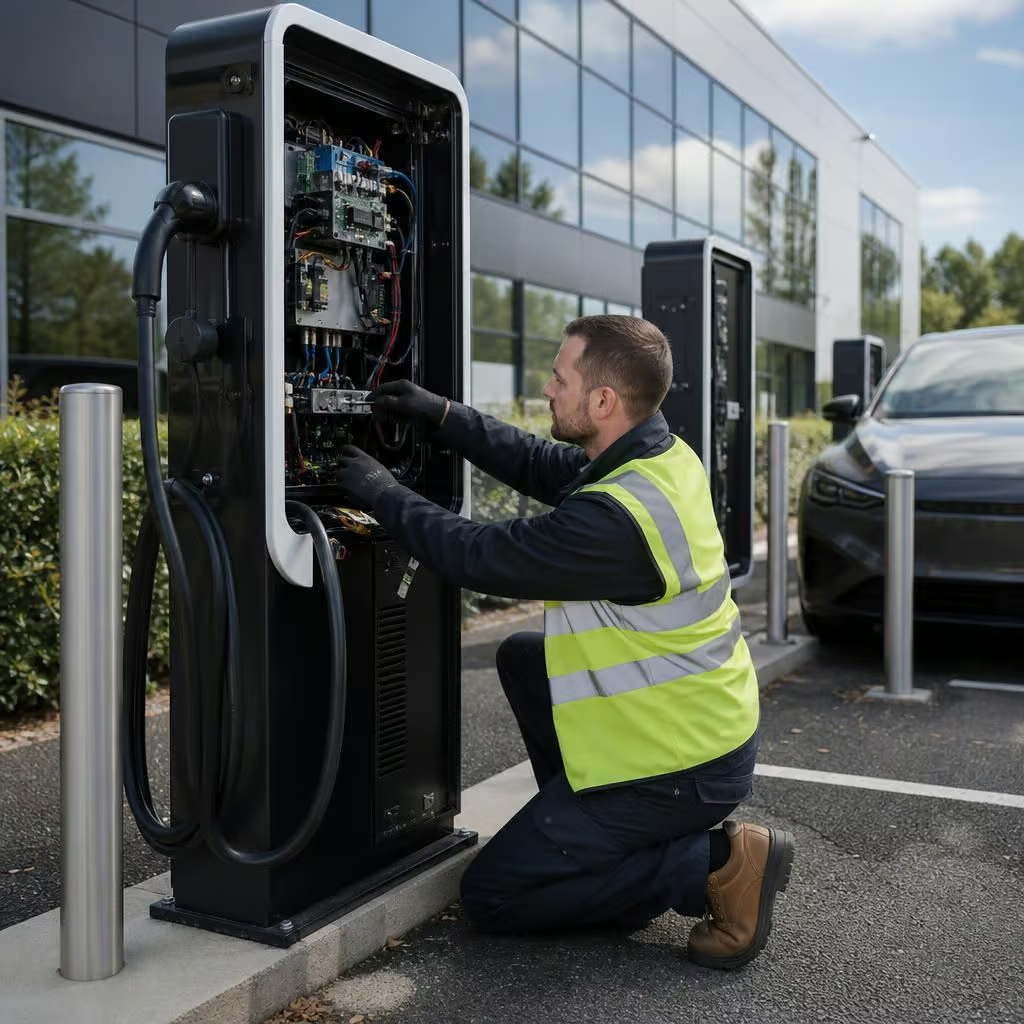
What ongoing maintenance does commercial EV charging need?
Commercial EV chargers need planned inspections, electrical testing, software checks and prompt attention to faults. We record the work and identify issues before they disrupt charging or leave your site’s safety documentation incomplete.
Commercial EV charging maintenance should combine routine site checks, electrical inspection, equipment servicing and software support. The aim is to keep each charger safe to use, available to drivers and supported by records that show how the site is being managed.
The right maintenance plan depends on how the chargers are used. A small workplace installation may need a different approach from a public car park, depot or fleet site. We consider charging demand, exposure to weather, vehicle movements, vandalism risk, the electrical installation and the consequences of a charger being unavailable.
Routine checks on site
Staff or site managers can identify many problems before an engineer attends. A simple visual check should look for:
- Cracked or damaged charger housings.
- Loose, crushed or cut charging cables.
- Damaged plugs, sockets, holsters or cable supports.
- Water ingress, impact damage or signs of overheating.
- Obstructions around the charging bay.
- Warning lights, error messages or an unresponsive screen.
- Unauthorised use, vandalism or damage caused by vehicles.
A charger that has been struck, shows heat damage or has a damaged cable should be taken out of use until it has been checked. Staff should not open the equipment or attempt electrical repairs. Clear reporting arrangements help prevent a small fault becoming a safety issue or a longer outage.
Electrical maintenance
Commercial chargers form part of the building’s electrical installation, so maintenance must include the equipment supplying them. We check the relevant distribution board, isolators, protective devices, earthing and cable routes as part of the planned work. We also look for loose terminations, signs of heat and damage caused by water, vehicles or building work.
Protection against residual current is particularly important. The arrangement must suit the charger and the vehicle fault protection it provides. Testing confirms that the protective devices operate as intended, rather than relying on a light on the front of the charger.
Where the installation has changed since the chargers were fitted, we review the effect on the system. Additional chargers, solar generation, battery storage or changes to the site’s maximum demand can affect load management and protective settings. Electrical work on the site may also leave a charger isolated or incorrectly reconnected.
We carry out this work as NICEIC-registered and ECA members, giving the site a documented electrical maintenance process rather than a visual check alone.
Charger condition and cleaning
Dirt, standing water and blocked ventilation can affect equipment in exposed locations. Chargers should be cleaned using the method allowed by the manufacturer. Pressure washing or unsuitable chemicals can damage seals, screens and connectors.
We check the condition of covers, seals, mounting points and cable management. On a fleet site, repeated use can wear connectors and holsters faster than occasional workplace charging. A damaged holster may leave the cable on the ground, where it can be driven over or become a trip hazard.
Software, communications and payment checks
A charger can be electrically sound but still unusable if its network connection, user authentication or payment service has failed. Maintenance should therefore include the functions drivers rely on, such as:
- Starting and stopping a charging session.
- RFID cards, apps or other access controls.
- Contactless payment where the site offers it.
- Remote monitoring and fault notifications.
- Load management between charge points.
- Energy and session records.
- Firmware and security updates supported by the manufacturer or network provider.
We separate an equipment fault from a communications or account problem. That helps identify whether the charger, network connection, back-office platform or payment service needs attention. Records should show the fault, the action taken and the point at which the charger returned to service.
Records and compliance
Commercial operators should retain maintenance and repair records for each charge point. Useful information includes the charger location, identification number, inspection date, test results, defects found, remedial work and the person who completed it.
These records support the site’s electrical safety arrangements and help a facilities manager demonstrate that faults are being managed. They also make recurring problems easier to spot. For example, repeated protective-device trips may point to a wider issue with the supply, cable routing or charging demand.
We provide written findings after maintenance and explain any defect that needs further work. If a repair or upgrade is required, we quote for it before work starts, so the site has a clear decision to make rather than an unexpected charge.
How often is maintenance needed?
There is no useful universal interval for every commercial charger. A maintenance plan should reflect the site risk, usage and equipment guidance. Public-facing chargers, busy fleet depots and exposed installations usually need closer oversight than lightly used staff parking.
Maintenance should also be reviewed after a new charger is added, the electrical supply is altered, the site use changes or a recurring fault appears. A planned visit does not replace visual checks by site staff. Both are needed: the first identifies obvious damage, while the second tests the electrical and operational condition in more detail.
For a commercial site, the practical outcome is a known inspection routine, clear fault reporting, tested electrical protection and records that match the equipment in use. We can assess the existing installation and set out the maintenance work needed for its actual charging pattern.
A maintenance plan should distinguish planned servicing from repairs after a fault. That tells the site manager what is checked during a scheduled visit and what happens when a charger stops working between visits.
We can record each charge point, its location and its condition, then separate routine defects from faults that affect safe operation. The site is left with a clear list of actions, rather than uncertainty about which chargers can remain in use.