
How disruptive is commercial solar panel installation?
Commercial solar installation is planned in stages to limit disruption to your staff, customers and daily operations. We survey the roof, plan access and agree any required electrical shutdowns with you before work starts.
For most occupied commercial premises, solar installation does not require the whole business to close. The disruption is usually managed in stages, with the greatest impact coming from roof access, deliveries and the electrical connection rather than from the panels themselves.
The first practical question is how people, vehicles and stock move around the site. A warehouse, farm building, office, retail unit and industrial premises will each need a different arrangement. We map delivery routes, fire exits, customer entrances, loading areas and staff access before work starts. That allows the site team to separate installation activity from normal operations wherever the building permits it.
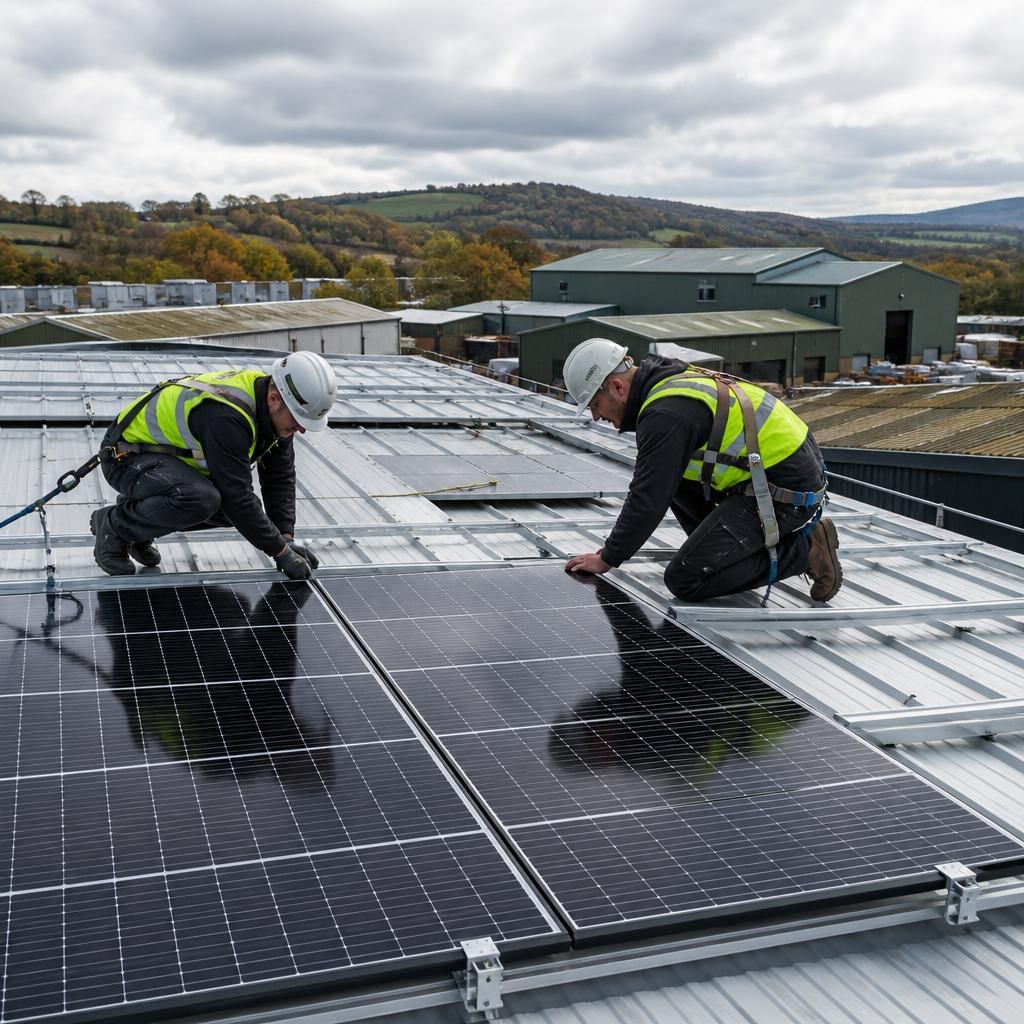
Roof work creates the main visible activity. Depending on the building, we may need edge protection, a scaffold, a mobile elevating work platform or another form of access equipment. This can temporarily occupy a yard, car park or loading bay. If a crane is needed to lift panels or equipment, the lifting area must be kept clear while the lift takes place. We agree those arrangements in advance so the affected space can be included in the site’s daily planning.
Roof condition can also affect the sequence. If the covering needs repair, cleaning or a separate structural assessment, that work should be dealt with before panels are installed. Removing and reinstating panels later creates more disruption and can add cost. Older commercial roofs therefore need careful checking rather than a rushed installation programme.
Inside the building, the cable route may pass through roof spaces, service risers, plant rooms or occupied areas. We identify where containment, inverters, isolators and monitoring equipment will sit, then plan the route to avoid unnecessary disturbance. A ceiling void may need limited access, while a factory or agricultural building may allow most cabling to remain out of working areas.
The electrical connection is the part most likely to interrupt normal operations. Connecting the solar system to the distribution board requires a controlled isolation. During that period, affected equipment will not operate. We establish which circuits are involved and coordinate the isolation with the person responsible for the premises. Critical equipment may need a separate plan, such as temporary operation from another circuit or carrying out the work in stages.
That planning matters for businesses with refrigeration, pumps, servers, production machinery, security systems or medical equipment. Solar panels do not normally keep a building powered during a grid outage unless the system has been designed with suitable battery and backup equipment. We therefore distinguish between an ordinary grid-connected installation and a system intended to support selected loads during an outage.
Installation activity is normally divided into clear stages:
- Preparation of the working area, access equipment and delivery route.
- Panel installation and roof cable work.
- Installation of inverters, protection equipment and any battery system.
- Connection to the building’s electrical system.
- Testing, commissioning and handover of the operating information.
These stages do not all affect the same part of the business. Roof work may take place while offices remain occupied, while electrical work may require a planned interruption in one area. On a larger or more complicated site, separating the work into zones can keep unaffected parts of the building in use. The final arrangement depends on the roof layout, electrical distribution, access and the activities taking place there.
Noise and dust are usually associated with fixings, drilling, cable containment and access equipment. We identify sensitive areas such as offices, classrooms, customer spaces and food-handling areas before work begins. Internal work can then be timed around meetings, deliveries, trading periods or production tasks where the site allows it. Work areas are kept controlled, and we remove installation materials rather than leaving them for the business to manage.
Planning and safety paperwork also form part of reducing disruption. The site’s responsibilities, access arrangements, risk controls, isolation procedure and emergency contacts should be clear before installers arrive. Landlords and facilities managers may also need records for tenants, insurers or future maintenance. A commercial installation should leave the business with more than functioning panels: it should have the test results, system information and operating guidance needed to manage the equipment.
Weather can change the order of roof work, particularly when wind, rain or icy conditions make access unsafe. That does not mean the entire project has to stop. Internal preparation, cable work or equipment installation may sometimes continue, but the safe sequence depends on the building and the planned method of work. We explain any change to the programme rather than asking site staff to work around an unsafe activity.
Commercial solar installers should also consider what happens after the panels are fitted. The monitoring equipment needs a suitable connection, the responsible person needs to know how to read the system, and future access should not obstruct normal maintenance. MCS certification can support the relevant export arrangements where the installation meets the scheme requirements, while the handover information helps the business understand what the system is doing.
The least disruptive project is not necessarily the one with the shortest installation period. It is the one that accounts for the building’s structure, electrical loads, staff, visitors, deliveries and critical equipment before work starts. A proper programme makes clear which areas remain available, when an isolation is needed and what the business must do before each stage.
Internal finishes can cause more inconvenience than the panels. If cables pass through a ceiling, service riser or fire compartment, we agree the route before work starts. We keep cables in suitable containment, protect fire separation where it is penetrated and record the route for future maintenance. That leaves staff with clear access and gives the building manager useful information after the installation is complete.