What happens if my boiler is unsafe to use?
If your boiler is unsafe to use, switch it off and don’t use it until a qualified heating engineer has inspected it. We’ll identify the fault, explain whether a safe repair is possible and advise you if the boiler needs replacing.
An unsafe boiler should stay out of use until a qualified engineer has assessed it. The engineer may isolate the appliance, identify the failed component or installation fault, and tell you whether a repair can return it to service.
“Unsafe” does not automatically mean “beyond repair”. It means that continuing to run the boiler could expose people or the property to a risk. The risk may come from combustion, the flue, gas or oil supply, electrical parts, overheating, leaking water or a failed safety control.
Warning signs can include:
- Repeated lockouts or the boiler shutting down without a clear reason.
- Scorch marks, soot or staining around the appliance or flue.
- An unusual flame appearance on an appliance where the flame is visible.
- Water leaking from the boiler, pressure repeatedly dropping or the system overheating.
- A damaged flue, loose casing or signs that the boiler has been affected by frost or corrosion.
- A carbon monoxide alarm sounding or showing a fault condition.
A fault code alone does not prove that a boiler is unsafe. Some codes relate to low pressure or a temporary control problem. Others indicate a combustion, flue or overheating fault that needs attention before the boiler runs again. We check the appliance rather than relying on the display alone.
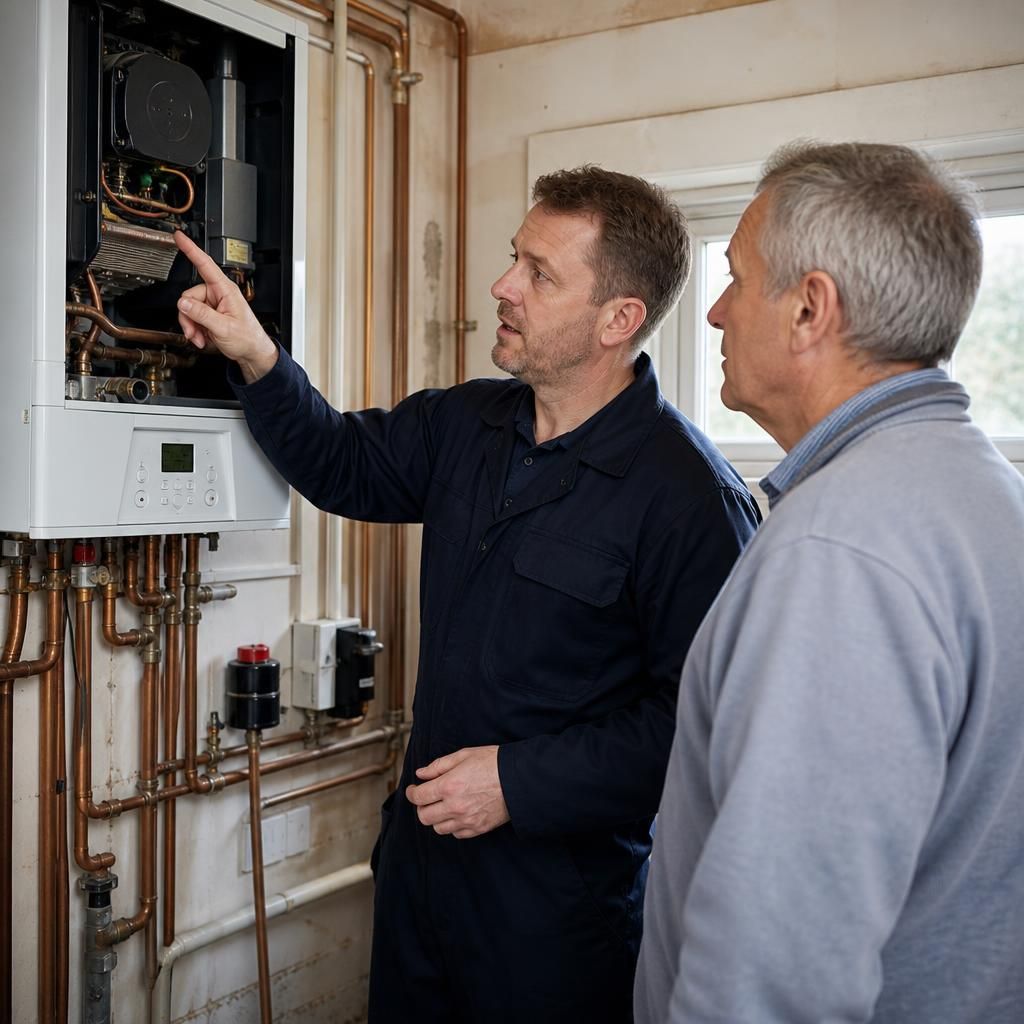
During the assessment, we examine the boiler, its controls, pipework and visible flue components. We test the combustion where appropriate and check that the appliance is receiving the correct supply. We also look at ventilation, condensate drainage, safety devices and the condition of the surrounding installation. These checks help us separate a repairable fault from a wider installation problem.
Your boiler may be taken out of service if a safety control has failed, combustion readings are not within the required range, or the flue cannot safely remove products of combustion. We explain what we have found and record any action needed. Do not remove a warning label, reset an isolated appliance or attempt to relight it before the fault has been dealt with.
A repair may be suitable when the boiler is otherwise sound. We can replace the failed control, valve, fan, pump, seal or other relevant component, then test the appliance again. The repair is not complete until the boiler operates safely and the original cause of the fault has been addressed.
Replacement becomes more likely when the boiler has extensive corrosion, repeated safety faults, obsolete parts or a damaged heat exchanger or flue arrangement. We look at the condition of the whole system, not just the failed part. That helps avoid spending money on a repair that leaves an unreliable appliance in place.
If replacement is needed, we explain the available boiler type and the work around it before anything starts. That may include changes to the flue, condensate pipe, controls, radiators or heating pipework. Older homes and properties heated by oil or LPG can need particular care because access, existing pipework and fuel storage all affect the installation. For an oil-fired boiler, an OFTEC-registered engineer can assess the appliance and associated oil system.
You receive a written quotation before replacement or repair work begins. It sets out the recommended work and expected cost, so you can make the decision without unexpected charges being added later. If the safest option is to leave the boiler isolated until further work is approved, we explain that clearly.
For a rented property, an unsafe boiler needs prompt attention from the landlord or managing agent. We can explain the defect and provide the relevant service or safety paperwork for the property records. Do not ask a tenant to keep using an appliance that has been isolated or identified as unsafe.
Once the work is complete, we test the boiler and its safety controls again. We explain any settings the household needs to know and leave the work area tidy. If the appliance cannot be made safe economically, you will have a clear explanation of why replacement is recommended rather than simply being told that a new boiler is required.
If the boiler has stopped, note the fault code, any unusual noises, leaks, smells or changes to the flame before switching it off. A photograph of the display can help us understand what happened without asking you to reset the appliance.
Tell us whether the boiler runs on gas, oil or LPG, and whether it supplies hot water as well as heating. That information helps us bring the right testing equipment and assess the appliance without making assumptions from the fault code alone.