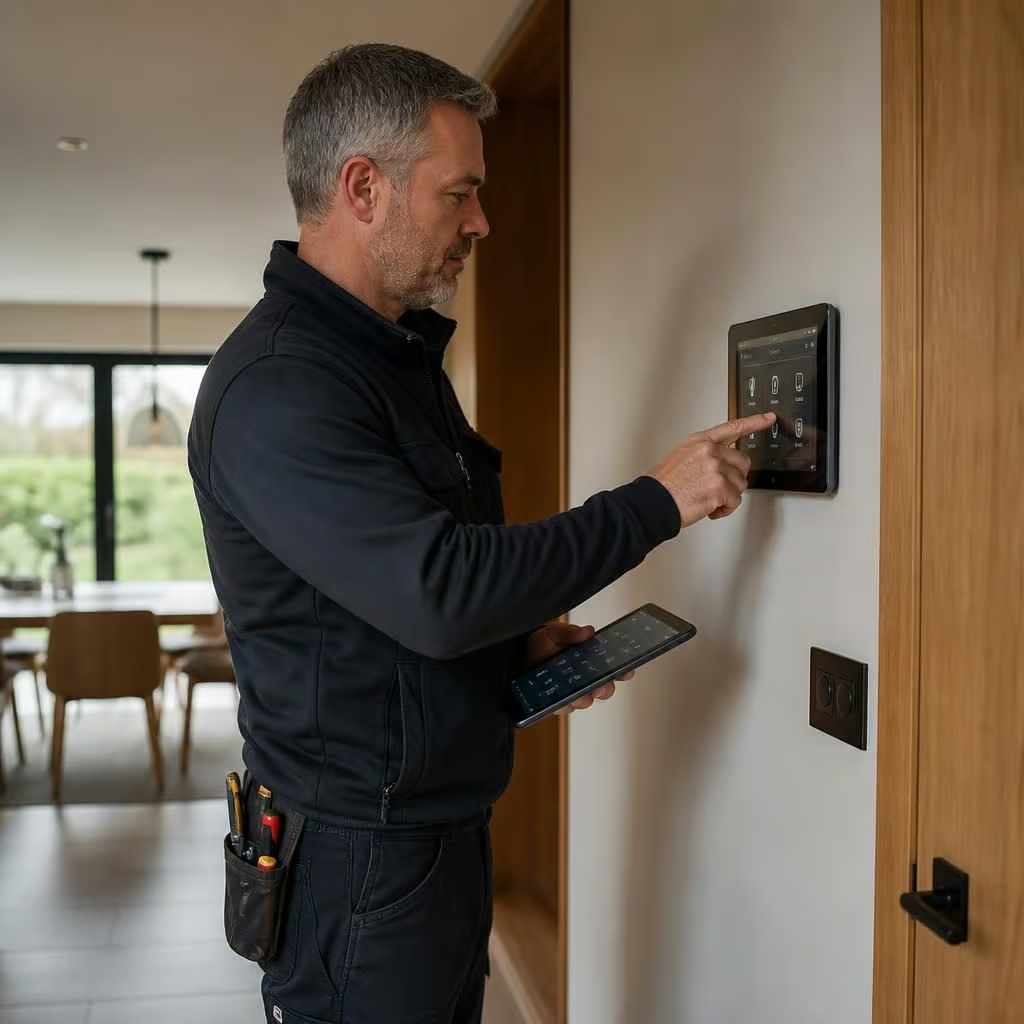
Who maintains a smart home automation system after installation?
The installer or a suitably qualified electrician should maintain the system after it’s fitted. If we installed it, we can inspect the electrical equipment, replace failed devices and make supported changes as your needs develop; app, cloud or broadband faults may need the manufacturer or internet provider.
The best person to maintain a smart home automation system is usually the installer who designed and commissioned it. They know how the devices are linked, which controller runs each function and what should happen when a component fails. A suitably qualified electrical and automation engineer can also take over, provided they first map the system rather than changing settings blindly.
Different faults may need different expertise. An automation engineer deals with scenes, schedules, controllers, sensors and device communication. An electrician investigates lost power, faulty circuits, damaged cabling and changes to the consumer unit. The manufacturer or platform provider may need to deal with account access, firmware and cloud services. If the system controls heating, ventilation, gates or security equipment, the relevant appliance or equipment engineer may also be involved.
That division matters because a smart home fault is not always a failed smart device. A light that stops responding could have a tripped circuit, a loose connection, a failed relay, a network problem or an incorrectly edited automation. Replacing the visible device without finding the cause can leave the same fault elsewhere in the system.
Routine maintenance normally involves checking the parts that allow the system to operate reliably:
- the controller, hubs and power supplies;
- switches, relays, sensors and connected lighting;
- network connections between devices;
- automation rules, schedules and scenes;
- user accounts, permissions and remote access;
- backup arrangements and system documentation; and
- the electrical circuits supplying connected equipment.
Some of this work is planned. A review can be useful after a renovation, rewire, change of broadband equipment or addition of solar panels, battery storage, an EV charger or a new heating system. The aim is to make the new equipment work with the existing controls without creating conflicting schedules or unnecessary routes through the network.
Other maintenance starts with a specific symptom. If several devices fail together, we trace the common power or control path first. If one room behaves differently from the rest, we check that device, its wiring and the rule controlling it. If the system works from a wall switch but not from an app, we separate the local electrical fault from the network or account issue.
When another installer is no longer available, the first step should be an audit. We identify each device, record its location and purpose, trace the relevant wiring and establish which controller or platform manages it. We then check the configuration against the way the home is actually being used. This avoids deleting working settings while trying to correct one fault.
A clear handover makes future maintenance much easier. Useful records include a device schedule, circuit information, controller details, login ownership, network information, automation rules and any changes made after installation. The homeowner should control the main account rather than relying on an installer’s personal login. Passwords should be transferred securely, and old user access should be removed when someone no longer needs it.
Software updates also need some judgement. An update may fix a security issue or improve compatibility, but it can also alter menus, integrations or device behaviour. We check what the system controls before applying significant changes and test the important functions afterwards. A heating schedule, door alert or lighting scene should not be assumed to work simply because the controller appears online.
Maintenance does not replace servicing for the equipment connected to the system. A smart thermostat does not service a boiler, and an automation controller does not replace inspection of an electrical installation. Gas, oil, heating and electrical equipment still needs attention from the appropriate qualified engineer. The automation layer is checked alongside that equipment where the two systems interact.
Older homes can need extra care because extensions, converted rooms and later alterations may have different wiring arrangements. Wireless signals can also be affected by thick walls, metalwork and the position of the router. We take those physical constraints into account before recommending another device or moving the controller.
After maintenance, you should know what was tested, which fault was found, what was changed and which functions still depend on an internet service or third-party platform. If replacement equipment is needed, we explain the effect on existing scenes and controls before work starts. Planned changes are set out in writing so you can decide whether to repair, simplify or extend the system.
If an app or voice command stops working, the home should not become impossible to operate. During a maintenance visit, we check the physical controls and manual overrides as well as the app. That shows whether the problem affects the whole system or only its remote access.
We also explain which functions remain available if a connected service changes or becomes unavailable. You’re then left with clear instructions for operating essential lighting, heating or security equipment while the wider issue is being resolved.