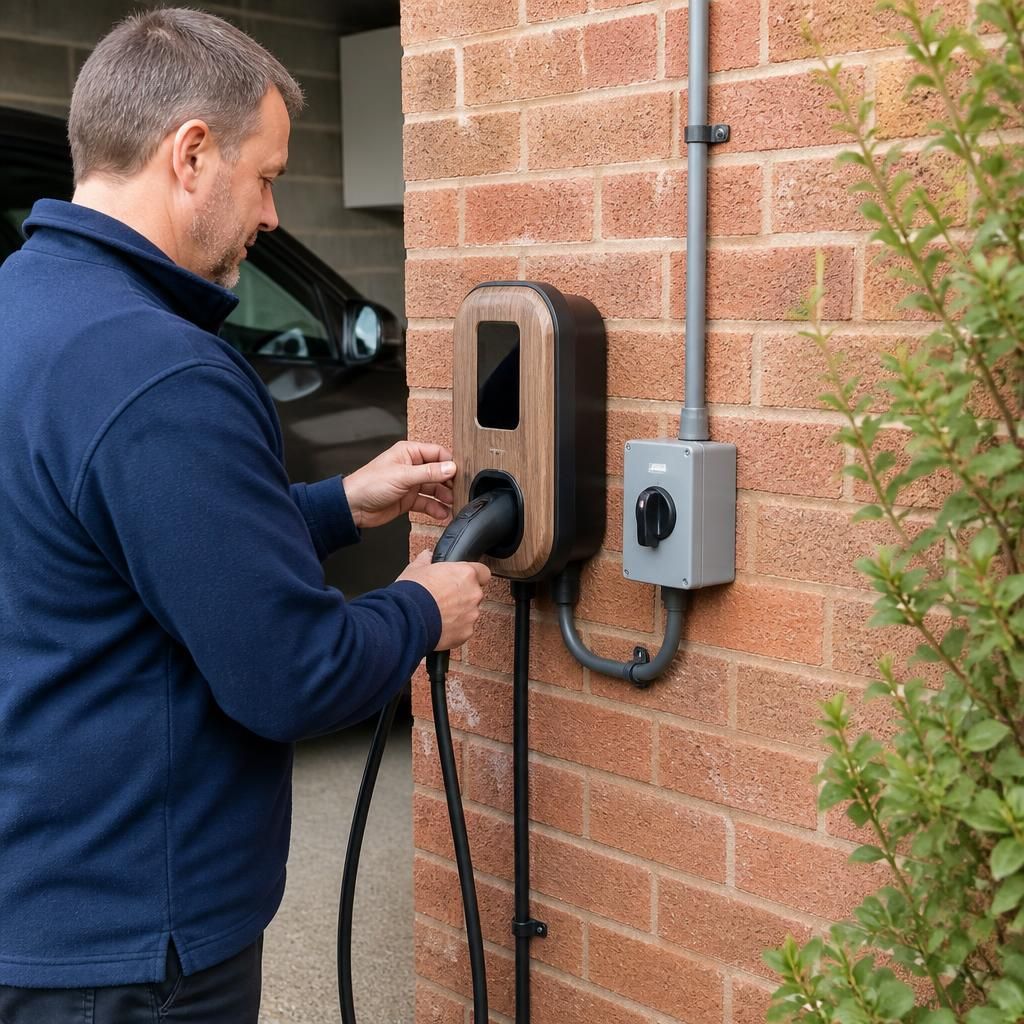
What maintenance does a home EV charger need after installation?
Most home EV chargers need little routine maintenance: keep the unit clean and dry, check the cable and connector for damage, and follow the manufacturer’s software guidance. If charging becomes unreliable, the casing is damaged or the charger shows a fault, stop using it and ask a qualified electrician to inspect the installation.
Most home EV chargers do not need a boiler-style annual service. They do need sensible checks, current software and occasional electrical inspection, particularly if the charger is outdoors, heavily used or connected to an older installation.
Follow the manufacturer’s maintenance instructions first. They may specify how to test protective devices, update the charger or report fault codes. Keep the installation certificate, commissioning information and user manual with the property records. These details help an electrician diagnose a problem without starting from scratch.
Check the charger’s operation through its controls and app. A smart charger may need firmware updates to maintain communication with the vehicle, tariff settings or energy-management equipment. An update can also resolve connection problems. If scheduled charging stops working, check the vehicle, charger and app settings before assuming the electrical installation has failed.
Do not remove the charger cover or attempt to tighten internal terminals yourself. The enclosure contains electrical connections that remain hazardous, and opening it may affect the manufacturer’s warranty. An electrician should carry out internal checks and repairs.
Protect the cable and connector from mechanical strain. A tethered lead should not hang heavily from the charger or remain where vehicles, doors or garden equipment can catch it. For a socketed unit, the charging lead should lock firmly into place without forcing the connector. A damaged locking mechanism, loose socket or repeated failure to start charging needs investigation rather than repeated attempts to make it work.
Use the protective-device test only as instructed. Some installations have a dedicated residual current device or built-in protection. The installation paperwork or charger instructions should explain the available test procedure. If a test fails, the device will not reset, or the charger repeatedly disconnects the supply, stop using the charger and arrange an inspection.
A single trip can have several causes, including a fault in the vehicle, charging lead, charger or electrical circuit. Repeatedly resetting the breaker can hide the warning rather than fix it. Make a note of any displayed code, when the fault occurs and whether another vehicle or charging lead produces the same result. That information gives the electrician a useful starting point.
Arrange an electrical inspection when the circumstances change. This is sensible after:
- alterations to the consumer unit or electrical supply;
- addition of solar panels, battery storage or other high-demand equipment;
- damage to the charger, cable or mounting point;
- water ingress, impact or signs of heat around the connection;
- persistent communication, charging or protective-device faults; or
- work that may have disturbed the cable route or isolation point.
An inspection is also useful when buying a property with an existing charger and no installation records. We can check the charger, isolator, cable terminations, earthing and protective devices, then explain any remedial work before it is carried out. The right checks depend on the installation and its condition, so there is no universal annual service interval for every home charger.
Older properties deserve particular care because the existing consumer unit, earthing arrangement and available supply capacity may not have been designed around EV charging. A charger can work initially and still expose a weakness elsewhere in the installation. An electrician should assess that wider circuit rather than treating the charger as an isolated appliance.
Landlords should keep the installation certificate, inspection records and any repair paperwork with the property documents. If a tenant reports repeated trips, heat, damage or charging failure, the charger should be taken out of use until a qualified electrician has identified the cause.
When we inspect or maintain a home charger, we start with the reported symptom and the installation history. We then test the relevant circuit and protective equipment, check the charger’s connections and review its settings where appropriate. If a part needs replacing, we explain why before proceeding and provide written details of the work. Our NICEIC and ECA electrical registration supports the inspection and remedial work, so the charger is left with clear records rather than an unexplained reset.
Keep the charger and its isolation switch accessible after installation. Garden work, garage storage, new rendering or cladding can leave the equipment difficult to reach when it needs checking.
If the charger becomes boxed in or the isolation switch is hidden, ask us to review the arrangement before making changes. We can confirm that an electrician can still inspect, isolate and maintain the equipment safely.