
Can the installer certify the EV charger installation?
Yes. Our NICEIC-registered electricians test the completed EV charger circuit and issue the relevant electrical installation certificate, giving you documented confirmation that the work meets current safety requirements.
Certification shows that the installation has been designed, installed and tested to the required electrical standard. It applies to the wiring and protective equipment connected to the charger, not just to the charger unit itself.
Your installation may involve a new circuit from the consumer unit, cable protection, earthing, residual-current protection and controls that manage the charge load. We assess those parts together rather than treating the charger as a standalone appliance.
Before work starts, we look at the existing consumer unit, the cable route, the earthing arrangement and the available electrical capacity. If the supply cannot support the proposed charging load safely, we explain the limitation before installation. The answer may involve load management, a different cable route or an upgrade to part of the electrical installation.
That assessment matters particularly in older homes. A consumer unit may have limited space or outdated protective devices, while a long cable run to a driveway can affect the installation design. We include any necessary changes in the written quotation, so the certification reflects the work actually carried out.
During installation, we check the charger circuit against the requirements that apply to electric vehicle charging equipment. This includes the selection of protective devices, cable sizing, disconnection arrangements and protection against residual and direct current faults where the charger design requires it. The equipment must also be positioned and secured appropriately for its location.
After the charger is connected, we carry out electrical tests before it is handed over. These tests can include checks on continuity, insulation resistance, polarity, earth fault loop impedance and the operation of protective devices. The results form part of the installation record.
The certificate should identify the work completed and record the test results. Keep it with the charger instructions and any warranty documents. It can help an electrician understand the circuit later, particularly if you add solar panels, battery storage or another high-load appliance.
- Electrical Installation Certificate: records the installation work and the results of the required tests.
- Building regulations notification: where the work is notifiable, the relevant notification is handled through the appropriate route.
- Handover information: explains the charger’s controls, isolation point and any load-management settings that affect charging.
A NICEIC-registered electrical contractor can provide a clear record of the work and test results. Our electrical work is carried out by our directly employed team, rather than passed to an unrelated installer. That gives you a named contact who understands the circuit if further electrical work is needed later.
Certification does not mean that every electric vehicle can charge at the same speed, or that the charger will work with every tariff or energy system. Those points depend on the vehicle, charger settings, electricity supply and any connected solar or battery system. We explain the operating limits as part of the handover.
It also does not replace the charger manufacturer’s product warranty. The certificate covers the installation and its compliance at the time of testing. The manufacturer’s terms cover faults with the charger itself.
If another contractor installed the charger, ask for the electrical certificate, test results and building regulations record before accepting the work as complete. A receipt alone is not a substitute for installation certification. You should also be able to identify the circuit’s isolation point and understand whether the charger uses automatic load management.
For a new installation, ask to see the proposed certificate details in the quotation. It should be clear who is responsible for the electrical work, what is included in the price and what happens if the existing consumer unit or earthing arrangement needs attention.
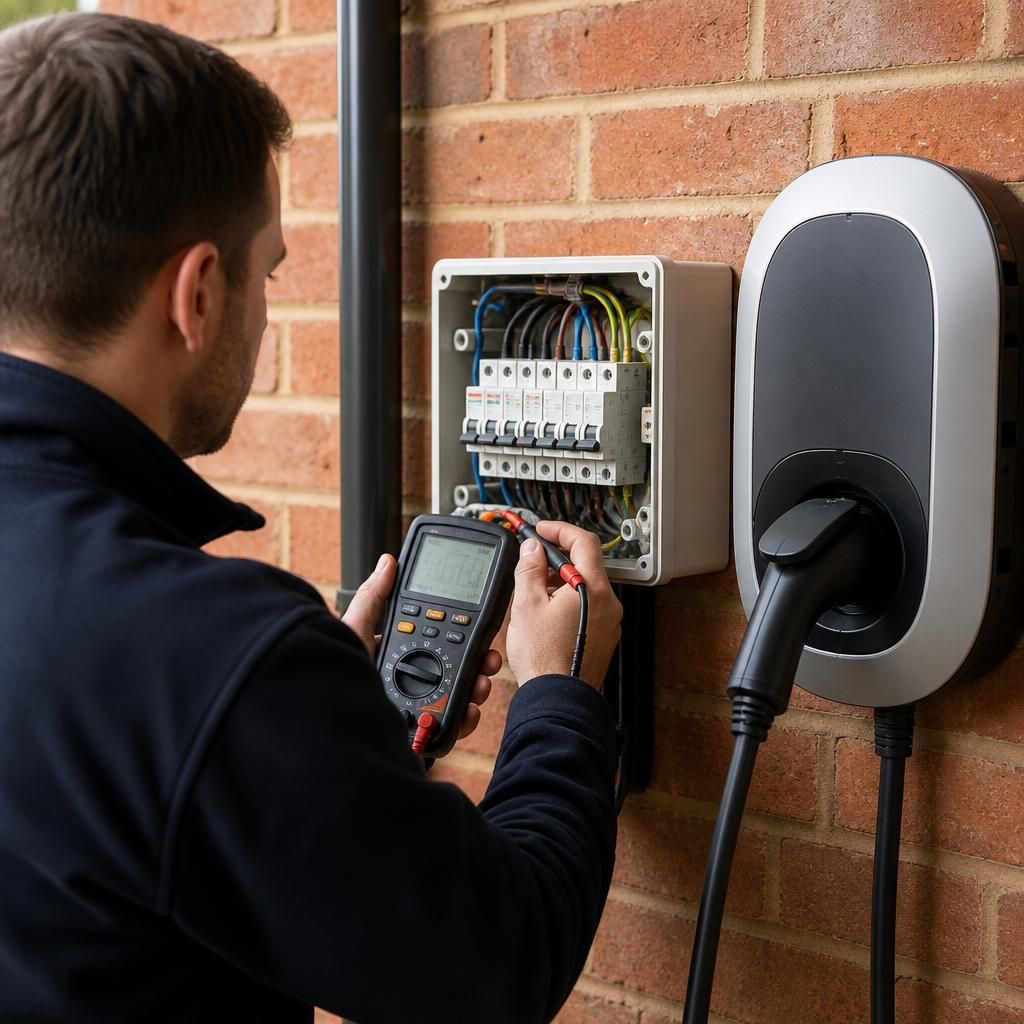
If testing identifies a problem with the existing electrical installation, we explain what needs attention before the charger is put into service. That might mean correcting an earthing issue, replacing unsuitable protection or changing the cable route. We record the work included in the quotation, then test the completed installation rather than certifying an unfinished circuit.
This gives you a clear distinction between necessary electrical work and optional charger features. You can see what was checked, what was changed and which parts of the installation the certificate covers.