
What warranty should a solar hot water system include?
A solar hot water system warranty should clearly cover the collectors, cylinder, controls, pumps and installation workmanship, with separate terms for each component. It should also explain what performance is covered, how to report a fault, who handles the claim and which maintenance or installation conditions could invalidate it.
The useful test of a solar hot water warranty is not its length alone. It should tell you exactly which part is covered, what the manufacturer or installer will do when it fails, and what you must do to keep the cover valid.
Ask for the warranty information before accepting a quotation. A solar thermal system contains several separate components, and they may not all have the same terms. The collectors, hot water cylinder, pump station, controller, sensors, expansion vessel and roof fixings can each have different manufacturers and conditions.
- Collectors: The documents should identify the collector model and explain cover for manufacturing defects, leaks and damage to the absorber or glazing.
- Cylinder: The cylinder warranty should state what is covered inside the tank, including corrosion or failure of the internal coil where applicable. It should also explain whether valves, immersion heaters and temperature sensors have separate cover.
- Controls and pump equipment: The controller, pump, sensors and associated wiring need clear terms. A failed sensor can stop the system operating correctly even when the panels and cylinder are sound.
- Installation work: The installer should give separate cover for the fitting work. This should address pipe joints, insulation, system filling, commissioning and the roof penetrations made during installation.
Check whether the warranty provides repair, replacement parts, a replacement unit or labour as well. A component warranty may cover the part but leave you paying for diagnosis, removal and refitting. That distinction matters when equipment is mounted on a roof or connected to a full hot water system.
The paperwork should also say who deals with the claim. Some faults are handled by the installer, while others must be reported directly to the manufacturer. You should not have to work out which company is responsible after the cylinder has stopped heating or the collector circuit has lost pressure.
Look for a clear claims process. It should give you the contact details, the information required, and any registration deadline. Keep the quotation, invoice, commissioning record, product serial numbers and maintenance records together. Those documents can establish what was installed and show that the system was set up correctly.
A warranty may depend on correct installation and commissioning. The handover record should show that the system was pressure-tested, filled with the correct heat-transfer fluid, checked for leaks and set to the right operating temperatures. It should also record the cylinder temperature, pump settings and safety controls. Without that information, it can be harder to distinguish an equipment fault from a setup problem.
Maintenance conditions should be practical and specific. The terms may require periodic checks of the fluid, pressure, expansion vessel, pump and safety valves. They should say what happens if you miss a service, rather than using a broad statement that allows every claim to be rejected. We explain the checks the system needs and keep the service requirements with the installation paperwork.
Exclusions deserve as much attention as the covered items. Read how the warranty treats frost damage, limescale, corrosion caused by unsuitable water, accidental damage, unauthorised alterations and failure to maintain the system. On a rural property, also check whether the wording covers the actual roof type and access arrangement used for the installation.
A performance promise needs careful wording. Solar hot water output changes with roof direction, shading, weather, hot water demand and the way the cylinder is controlled. A responsible warranty will distinguish between a manufacturing defect and a system producing less heat than an estimate. It should state what measurement or test would demonstrate a performance failure, and what remedy would follow.
Do not treat an estimate of annual solar contribution as a guaranteed saving. The hot water you use, the temperature you choose and the backup heating available all affect the result. We can explain the assumptions behind the design and record them with the quotation, so the expected operation is clear before work starts.
Check whether the warranty can pass to a future owner. This matters if you may sell the property, particularly where the solar system forms part of a wider heating upgrade. The terms should state whether transfer is allowed, whether the manufacturer must be notified, and whether the new owner receives the same protection.
A manufacturer warranty may also depend on the manufacturer continuing to support the product. The installer should explain who remains your contact if a supplier changes its range or stops trading. We provide the installation record and component details needed to identify the system and arrange the appropriate investigation.
The warranty does not replace your legal rights as a consumer. It is an additional promise from the manufacturer or installer. A short written warranty should not be presented as permission to disregard faulty workmanship or defective goods.
Before you compare quotations, ask each installer for a sample warranty pack or a plain explanation of:
- which components have separate cover;
- how long each term lasts, as stated in the actual documents;
- whether labour, access and replacement fluids are included;
- who diagnoses the fault and receives the claim;
- which maintenance and commissioning records are required;
- what exclusions apply to the roof, cylinder and solar circuit;
- how performance concerns are assessed; and
- whether the protection can transfer if the property changes hands.
We set these points out in the quotation and handover paperwork rather than leaving them to a verbal explanation. That gives you a usable record of the equipment, the installation responsibility and the steps to follow if something goes wrong.
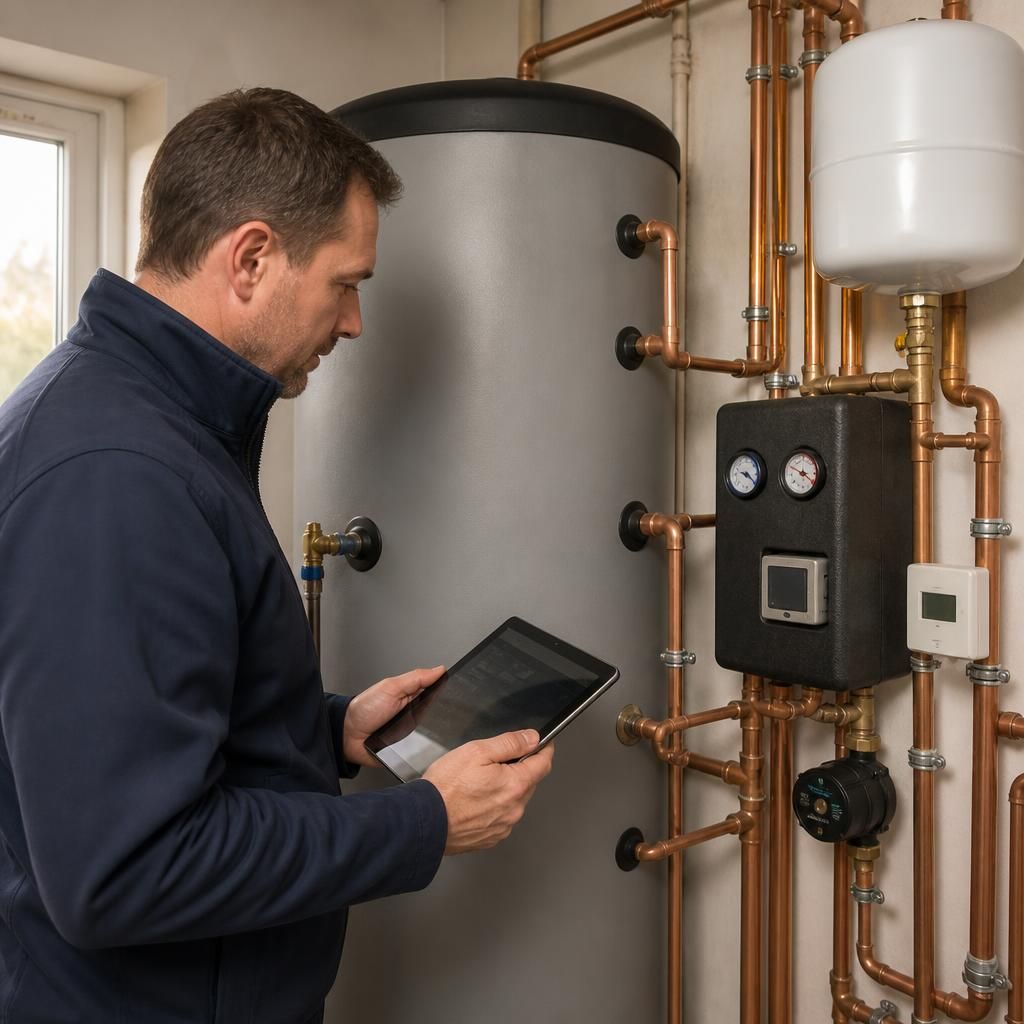
When solar hot water works alongside an existing boiler or immersion heater, the warranty should define where responsibility changes. A fault may involve the solar controller, cylinder sensor or backup heating controls, rather than the collectors themselves.
We record the existing equipment and the connections we alter, so the warranty identifies which parts belong to the solar installation. That prevents a later fault being passed between the solar installer and the heating engineer without a clear starting point for investigation.