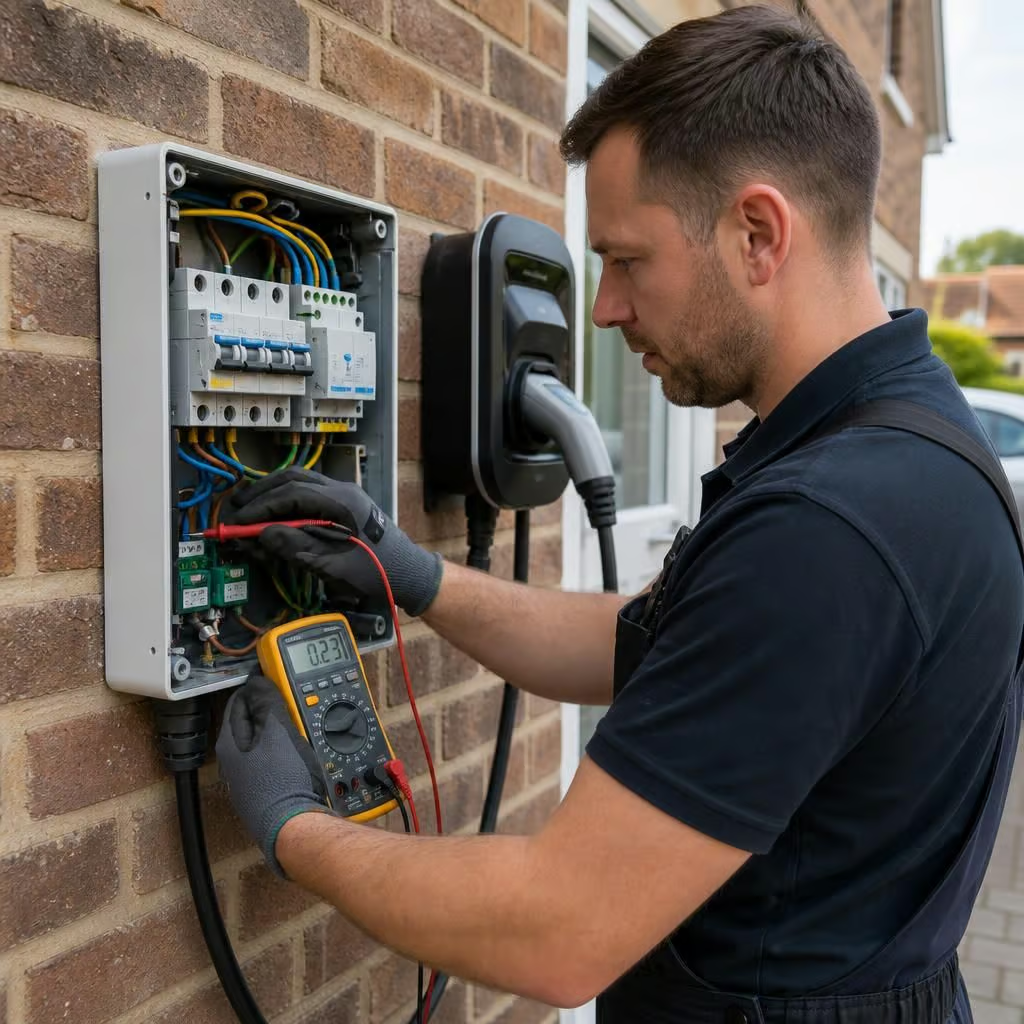
Is planning permission needed for an EV charger at my home?
In most homes, an EV charger does not need planning permission because it can be installed under permitted development rights, provided it meets the relevant conditions. Planning permission or listed building consent may be needed for a listed property, a property in a conservation area, or an installation affecting the appearance of the building or street.
For most houses, an EV charger is covered by permitted development rather than a full planning application. That only applies when the charger, its position and the property meet the relevant conditions. Planning rules are separate from the electrical requirements, so a charger can be permitted development but still need a compliant installation and certification.
Key permitted development conditions
- The charger must serve the home and be installed within its curtilage.
- A wall-mounted unit must not be more than 1.6 metres above ground level.
- A standalone unit must also remain within the permitted height limit.
- The installation must not be positioned within two metres of a highway.
- The charger must not be installed on or near a scheduled monument where the permitted development restrictions prevent it.
These conditions can be affected by the property’s location and planning history. Some homes also have an Article 4 direction or another restriction that removes permitted development rights. Our site assessment identifies the proposed mounting position, cable route and charger height. If the position falls outside the rules, we explain what needs checking before any work starts.
Listed buildings and conservation areas
A listed building may need listed building consent even where the charger would otherwise qualify as permitted development. Fixing equipment to historic stone, timber or an important elevation can affect the building’s character. The cable route may also need careful planning to avoid visible or damaging work.
Being in a conservation area does not automatically mean that planning permission is required. However, additional restrictions can apply, particularly where equipment would be visible from a road or installed on the principal elevation. The local council’s planning records and any Article 4 direction need to be considered. We can flag the issue during the assessment, but the council decides whether formal consent is required.
Driveways, parking and the public highway
A charger on private land is much simpler than one positioned at the edge of a pavement. The unit must not project over the highway, and a charging cable must not create a trip hazard or obstruct pedestrians. If a new vehicle crossover, dropped kerb or altered access is needed, that is a separate highways matter from planning the charger.
Where the parking space is away from the house, we look at whether a post-mounted charger, wall route or underground cable is suitable. The longer cable route can affect excavation, drainage, outbuildings and shared boundaries. Those details do not automatically require planning permission, but they can change the safest and most practical installation method.
Flats and shared properties
In a flat, planning permission is only one part of the decision. The external wall, parking space, communal electrical supply and cable route may belong to the freeholder or management company. Their written consent may be needed before equipment is fixed or cables pass through shared areas. Lease terms can also control where a charger may be installed.
For a rented home, the landlord should approve the proposed equipment and installation before work is arranged. If the charger is connected to a communal supply, the building manager may also need to confirm how electricity use will be measured and charged.
Planning permission is not the same as building compliance
Even when no planning application is needed, the installation still has to meet the electrical rules for an EV charging point. We assess the consumer unit, earthing arrangement, cable route and available supply before quoting. If the existing installation needs upgrading, we include that work rather than treating the charger as an isolated appliance.
Once the position and permissions are clear, we provide a written quotation showing the proposed route and any additional work. That gives you a chance to check planning or freeholder requirements before installation begins, rather than discovering a problem after the charger has been fitted.
The charger itself is rarely the planning issue. The proposed position and cable route usually matter more. A unit fixed to a front wall, boundary wall or detached garage may have a different planning position from one installed discreetly beside the house.
Before you commit to a location, check how visible the equipment will be from the road and whether the cable crosses a shared boundary or protected part of the property. We can suggest a practical position that keeps the installation within the permitted development limits and avoids unnecessary work to the building.