
Will my site need an upgraded electricity supply for a rapid EV charging station?
Possibly, but not every rapid EV charging station needs an upgraded electricity supply. We assess the charger’s power demand, your existing incoming supply and the site’s available capacity before confirming whether a supply upgrade is needed.
The charger’s stated power is only one part of the decision. The important question is whether the incoming electricity supply can provide that power alongside everything else operating on the property. A rapid charging station may work from the existing connection, operate with managed charging, or require a larger supply from the local electricity network.
“Rapid” does not describe one fixed electrical requirement. Some higher-rate chargers use a standard single-phase connection. Others need three-phase electricity or more capacity than a domestic connection can provide. The charger rating, how long it will run at full output and the number of vehicles charging at once all affect the assessment.
Your site may already have a suitable three-phase connection, particularly on a commercial, agricultural or industrial property. A home or smaller premises may have a single-phase supply with limited spare capacity. That does not automatically rule out rapid charging, but it may affect the charger selected and the way it is operated.
We assess the complete electrical demand, not just the charger. During the survey, we consider:
- the incoming service head, cut-out, meter and available supply capacity;
- whether the property has single-phase or three-phase electricity;
- the existing consumer unit, distribution boards, earthing and protective devices;
- the cable route between the supply and charging station;
- other significant loads, such as electric heating, hot water, machinery, pumps or refrigeration; and
- whether several chargers could operate at the same time.
This matters because a charger can be installed on a supply that appears adequate until other equipment starts operating. The result may be nuisance tripping, an overloaded installation or a charger that cannot maintain its intended output.
A supply upgrade is not the only way to increase usable charging capacity. Where the connection has limited spare capacity, we can assess load management. This monitors the property’s demand and adjusts the charger’s output when other equipment is using electricity. Charging can then use available capacity without treating the charger as a permanently unrestricted load.
Load management may suit a home with one vehicle or a workplace where charging can take place over several hours. It may be less suitable where vehicles must charge at the highest rate simultaneously, or where the site has a large and unpredictable demand. We explain the effect on charging performance before you choose the equipment.
If the existing connection cannot support the proposed station, the local network operator must assess the change. This can involve confirming the available capacity, approving the proposed maximum demand and carrying out work to the service or wider network. On some sites, the operator may require a larger service, a three-phase connection or network reinforcement.
That process is separate from replacing a consumer unit. A consumer unit upgrade can make the installation safer and provide suitable protection for the charger, but it cannot create more capacity in the incoming electricity supply. Similarly, installing a larger cable between the board and the charger does not increase what the network can deliver.
Network work can also affect the programme and total cost. We identify the electrical work at the property and explain any network operator requirements before installation proceeds. Our quotation sets out the work involved, so you can compare the cost of a supply upgrade with a lower-output charger or managed charging arrangement.
Older properties need a particularly careful survey. A rural or semi-rural home may have a long supply route, an older service head or several outbuildings fed from the same connection. A property that has recently added electric heating, solar generation or battery storage may also have a different demand profile from the one originally allowed for. We take those existing systems into account rather than assessing the charging station in isolation.
Solar panels and a battery can change when electricity is available on site, but they do not automatically remove the need to check the incoming supply. A rapid charger may still draw more power than the property can import at one time. The proposed charger, export controls, battery operation and site demand need to work together.
For a commercial site, the number and use of vehicles usually determine the right approach. A station for occasional staff or visitor charging has different requirements from one used continuously by a fleet. We look at the charging timetable, the available parking bays, future expansion and the building’s existing electrical loads. That helps establish whether the site needs a higher-capacity connection now or a staged installation with managed charging.
The survey outcome should leave you with a clear choice:
- use the existing supply with the proposed charger;
- use a controlled charging system that limits demand;
- choose a different charger rating or charging arrangement; or
- apply to the electricity network operator for additional capacity.
We carry out the electrical assessment and installation work in line with the requirements for the site. Our NICEIC and ECA electrical registration reflects the competence expected for the associated installation work. You receive the findings and a written quotation before work starts, including any changes needed to the consumer unit, distribution equipment, cable route or incoming supply.
The right answer is therefore based on how the site operates, not on the word “rapid” alone. A survey tells you what the existing connection can support, what charging speed is realistic and whether an upgraded electricity supply is genuinely necessary.
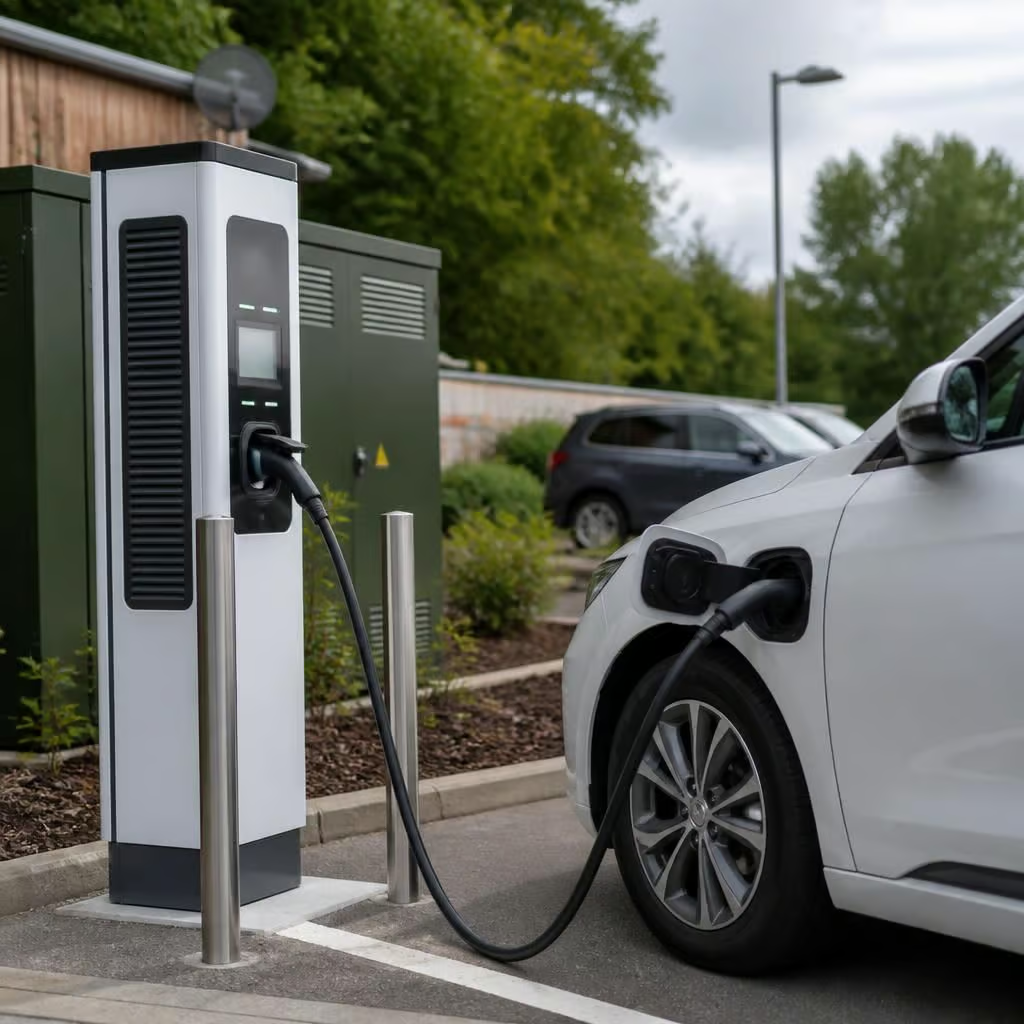
The proposed charging speed should match how the vehicle is actually used. If it usually remains parked for several hours, a lower import demand may meet the same daily need without changing the site connection. We compare the charging requirement with the time available, so the decision reflects real use rather than the charger’s maximum rating.