Is my driveway suitable for an electric car charger?
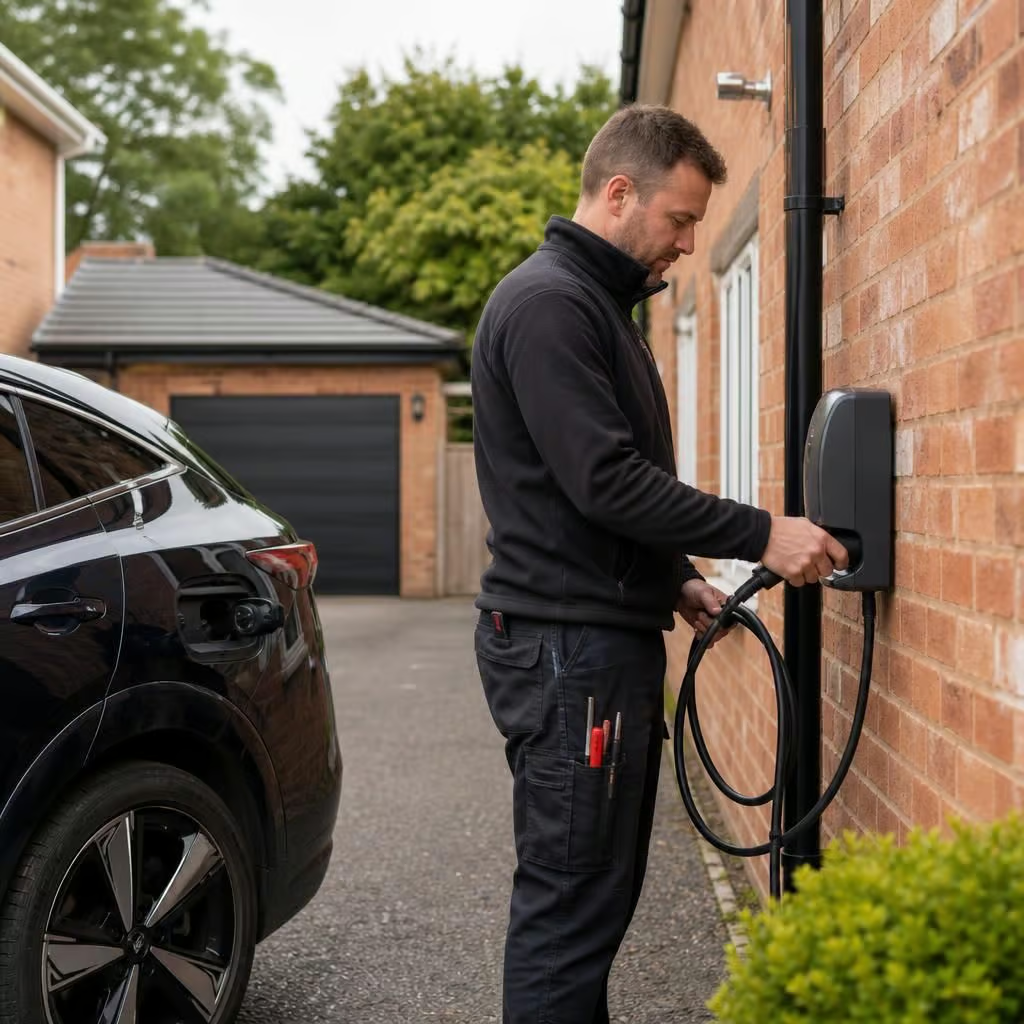
Most driveways are suitable if your car can park close enough to a suitable wall or mounting post for the charging cable to reach safely. We assess the parking position, cable route, charger location and electrical supply before confirming the installation plan.
Most driveways are suitable when the car can park on private land and the charging cable can reach it without crossing a public footpath, road or neighbouring access. The important question is not simply whether there is space for a charger. It is whether the charger, cable and parking position can work safely every time you charge.
The car’s usual parking position matters. A wall-mounted charger works well when the car parks alongside or directly in front of the installation point. If the car reverses onto the drive, the charging socket may need to face the vehicle’s charging port. We consider how you actually park rather than choosing the nearest wall.
A longer lead can sometimes reach a different parking position, but it must not create a trip hazard or hang across a route used by pedestrians. If the car can park in several places, we plan around the position that gives the safest and simplest cable path.
A wall is not essential. A suitable post can support the charger where the nearest building wall is too far away or faces the wrong direction. We check that the post can be installed securely and that it will not obstruct doors, gates, bins, planting or vehicle movements. The charger should remain easy to reach without forcing the cable around a corner.
Where a post is needed, the ground below it affects the work. Tarmac, concrete, block paving and gravel each need a different approach for bringing the electrical cable to the charger. We discuss the route before work starts and explain any excavation, surface lifting or reinstatement that the installation requires.
Shared drives need extra care. Your parking space may be private while the route to it is shared with neighbours, tenants or visitors. A charger should not encourage anyone to walk or drive over the cable. We look at who uses the access and where vehicles are likely to stop before recommending a wall or post position.
If your car parks on the road because the drive is too short, a home charger may not be practical. Running a cable over a pavement or across a public highway creates a hazard and is not an arrangement we would recommend. We can assess whether another private parking position gives the cable a safe route, but the charger must serve a usable parking space.
Garages can work, but the doors and parking position must be checked. The car needs to sit close enough for the lead to reach while the garage remains usable. We consider whether the cable would pass through a doorway, whether the door could close safely, and whether the charger would be exposed to vehicle impact or stored items.
The route into the charger affects the appearance and the cost. Some homes have a wall facing the drive, while others need cable runs around a corner or beneath a path. We choose a route that protects the cable, avoids unnecessary visible runs and keeps access to the building practical. If a surface must be opened, the written quotation explains that work before installation begins.
Older houses, barn conversions and properties with thick or solid walls may need more thought around the entry point. We avoid treating the shortest route as automatically the best one. The cable must enter without damaging features that matter to the building or leaving an awkward route through rooms and outbuildings.
Drainage and ground conditions also form part of the assessment. We look for inspection covers, drainage channels, buried services and areas that collect water. The charger needs a position that remains accessible and protected from avoidable knocks, standing water and regular vehicle manoeuvres.
At the same time, we assess the electrical supply serving the proposed charger. The position of the consumer unit, the cable route and the available capacity can affect where the charger can go. If the existing installation needs work before it can support charging, we explain that separately rather than assuming the driveway alone determines suitability.
The charger should be convenient, not merely possible. You should be able to connect the car without moving another vehicle, opening a gate across the cable or walking through a planted border. We also consider where the lead will be stored when charging is complete, so it does not lie across the drive or become damaged by vehicles.
Homes in conservation areas or with listed features may need additional care over the charger’s position and visible cable runs. We can identify placement issues during the assessment, but any planning or listed-building requirements depend on the property and local rules. We will not assume that a standard wall location is acceptable.
Our NICEIC and ECA electrical work covers the installation itself, with the charger fixed, connected, tested and explained as part of the job. You receive a written quotation before work starts, including any post, trenching, surface work or other electrical changes that we have identified.
The result should be a charging point that suits the way you park, keeps the cable away from public and shared routes, and remains practical as part of your driveway. If the proposed position fails one of those tests, we will explain why and look at a safer alternative rather than forcing the installation into an unsuitable location.
If you rent the property or share access with other owners, the parking space may be physically suitable but still need permission before installation. Check with the landlord, freeholder or management company before fixing a charger to a wall or placing a post on shared land. We can then assess the agreed position and include any extra cable protection or surface work in the quotation.