
Will my home's electrical supply support a 7kW home charger?
A 7kW home charger may be suitable, but your electrical supply needs checking first. We assess the incoming supply, consumer unit, earthing, existing demand and cable route, then tell you if the installation can proceed as planned or if an upgrade is needed.
A 7kW home charger is suitable for many properties, but the charger’s rating is only part of the assessment. The important question is whether the incoming supply and the rest of the installation can carry the charger’s maximum demand safely alongside the appliances already in use.
A charger may draw a substantial load for several hours. An electric oven, immersion heater, electric heating system, shower or heat pump could be running at the same time. The supply may cope with each appliance individually but have too little spare capacity when several operate together. That is why a charger cannot be approved from the consumer unit alone.
The incoming supply matters first. We look at the service head, meter tails, main switch and earthing arrangement. The service fuse belongs to the network operator, so we cannot simply replace it if it is too small. If the proposed charger would exceed the available capacity, we explain what the network operator needs to assess and whether the installation can proceed with a different arrangement.
Older homes can have other limitations. The consumer unit may not have suitable spare ways, residual-current protection or room for the protective equipment required by the charger. Older cable, worn connections, an outdated earthing arrangement or signs of overheating need attention before a new high-load circuit is added. A charger should not be used as a reason to overlook defects elsewhere in the installation.
The cable route affects the design as well. The charger needs a dedicated circuit from the consumer unit, sized for the route, installation method and distance involved. A long run to a detached garage or a charger mounted away from the house can require larger cable or additional protection. We also check how the cable will be supported and protected, so the finished installation is practical rather than merely connected.
Some properties can use load management instead of a supply upgrade. This monitors the home’s demand and reduces the charger’s output when other appliances are drawing heavily. Once that demand falls, charging can increase again. The car may therefore charge more slowly at certain times, but the system avoids asking the incoming supply to deliver more than it can safely provide.
Load management is not the same as a smart charging schedule. A timer chooses when charging starts. Dynamic load management responds to the electricity being used in the property at that moment. A smart charger can also adjust its charging times, but scheduling alone does not protect the supply if several high-demand appliances run together.
A 7kW charger also works at up to its rated output rather than at that output constantly in every situation. The vehicle controls how much power it accepts, and charging can reduce or stop when the battery is full. The installation still needs to be designed for the charger’s maximum possible demand, even if normal use is lower.
Solar panels and batteries can affect the assessment, but they do not remove the need for it. Generation may reduce the electricity taken from the grid while the car is charging. A battery may also supply some of the demand, depending on its settings and available charge. We consider these systems as part of the wider installation, but we do not assume they will always be generating or available. The supply and protective equipment must remain safe when they are not operating.
For an older or rural property, the survey may uncover a straightforward installation or a need for several coordinated changes. A consumer unit upgrade, earthing work or alterations to the meter tails may be needed before the charger circuit can be added. If the property has an outbuilding, we also consider the existing supply to that building rather than treating it as an automatic extension of the house installation.
We explain the available routes in writing before work starts. These may include a standard 7kW installation, a charger with managed load, a lower charging rate or an application concerning the incoming supply. If the existing installation needs remedial work, the quotation separates that work from the charger itself, so you can see what is necessary and what is optional.
The electrical work is carried out by our directly employed team, with the installation completed to the required electrical standards. NICEIC and ECA registration means the work is assessed against recognised requirements, while the completed installation includes the relevant test results and certification. You are left knowing the capacity decision, the protective measures and any limits placed on charging.
The right outcome is not always the fastest charger available. It is a charging arrangement that suits the supply, the property and the way you use electricity. A survey gives you that answer before a charger is fitted, rather than discovering a limitation after the installation is complete.
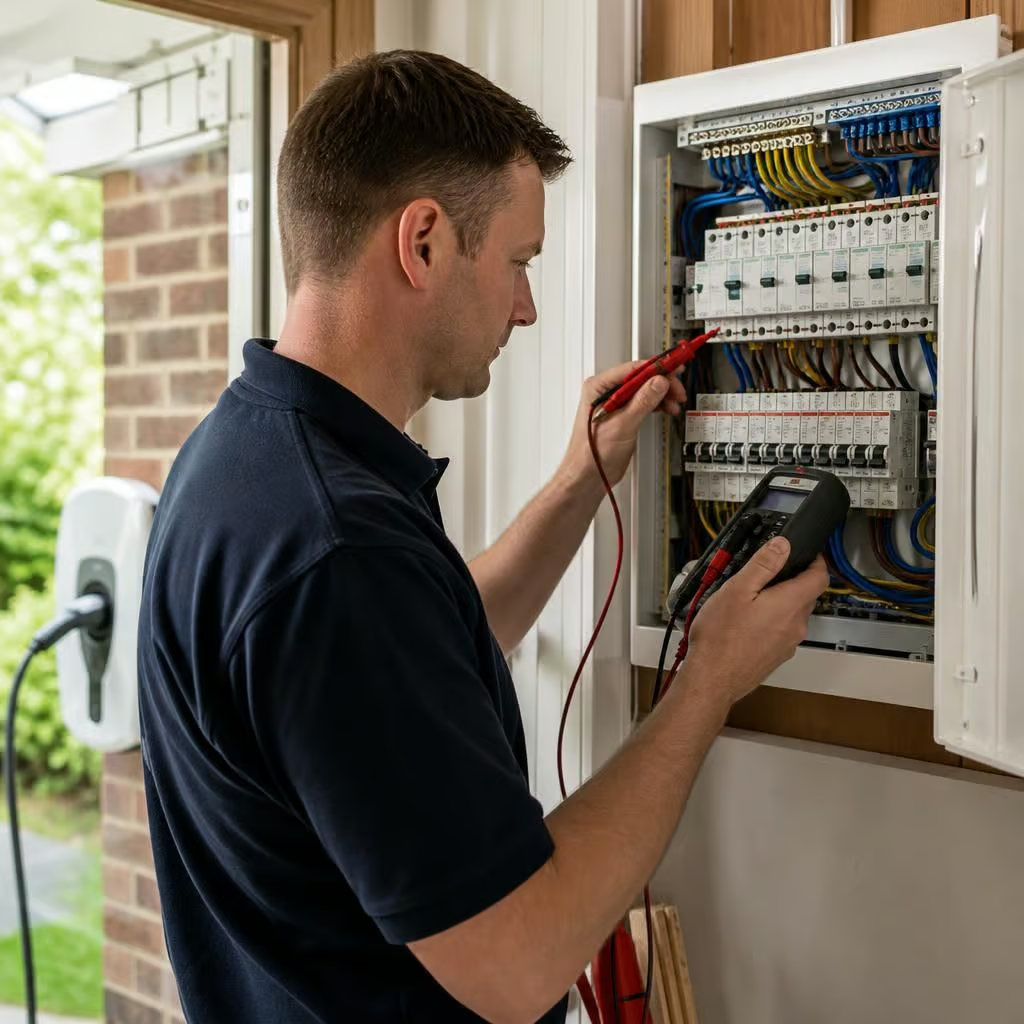
If your home regularly uses an electric shower, oven or immersion heater while the car is parked, the charging arrangement needs to reflect that routine. We look at when those demands overlap and explain whether managed charging would affect the times your vehicle can charge.
That gives you a practical choice rather than a simple pass or fail. You may be able to charge at the full rate, use managed charging during busy periods, or choose a lower output that matches the available capacity. We set out the effect of each option before you decide.