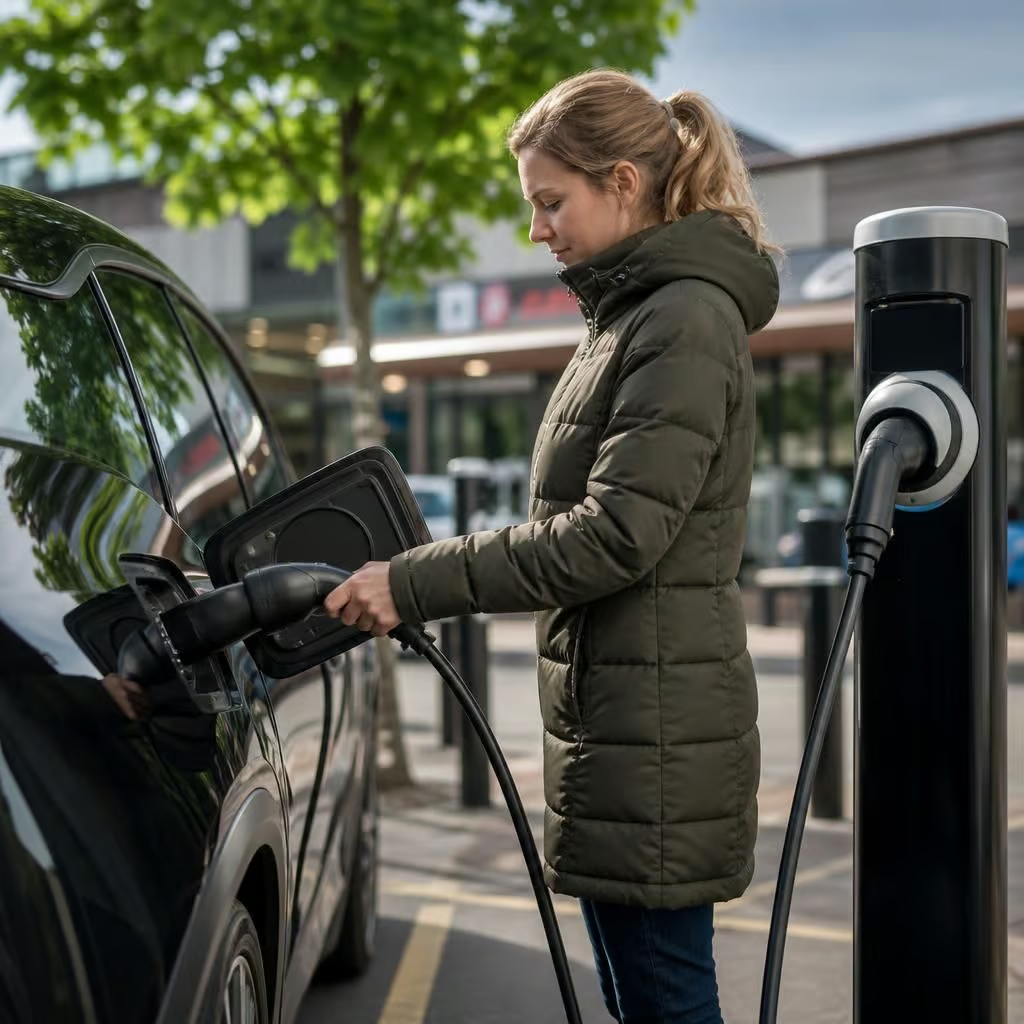
Is public charging cheaper at slower EV charging stations?
Often, yes: slower AC public chargers usually have a lower price per kWh than rapid or ultra-rapid stations, but this isn’t guaranteed. Check the total cost, including any connection or time-based fees, and allow for the longer charging time before choosing.
A slower public charger is often the lower-cost choice, but charging speed alone does not set the bill. The tariff structure, parking rules, session fees and the amount of energy your car needs can matter just as much.
Slower chargers are usually intended for longer stops. You might use one while shopping, working, visiting someone or leaving the car overnight. The operator can charge for the electricity without needing the high-power equipment and grid connection used by rapid charging sites. That can result in a lower price per kWh.
Rapid and ultra-rapid chargers are designed for a short stop. Their higher price may reflect the cost of the equipment, the available electrical capacity and the location. A motorway service area, for example, may have a different tariff from a supermarket car park, even when both provide a similar amount of energy.
Look at the complete cost of the session rather than the advertised charging rate. Check for:
- A price per kWh for the electricity supplied.
- A fixed connection or session fee.
- A parking charge that applies from the moment you arrive.
- An overstay or idle fee after the car has finished charging.
- A minimum charge for starting the session.
- Different prices for app payments, contactless payments and network memberships.
A slower charger can therefore become more expensive if you occupy a charged bay for too long or pay a separate car park fee. A rapid charger can sometimes cost less overall when it lets you leave before a parking charge starts. That is a comparison of the whole visit, not just the electricity price.
Your planned stop also affects the sensible choice. If the car will be parked for several hours, a slower unit may provide all the energy needed before you leave. Paying for rapid charging would then add speed you do not use. If you need to continue your journey soon, the higher rapid-charging price may be justified by the shorter stop.
The car itself sets another limit. An AC charger cannot deliver more power than the vehicle’s onboard AC charger can accept. A station labelled as faster may therefore provide little extra benefit for a car with a lower AC charging limit. DC rapid charging connects differently and can usually deliver energy at a higher rate, but the car controls how much it accepts.
Charging speed can also fall as the battery fills. Many vehicles accept energy quickly at a low state of charge, then reduce the rate as the battery approaches full. A rapid session can become less efficient in both time and cost if you stay connected for the final part of the charge when you do not need it.
Cold weather, battery temperature and the vehicle’s charging settings can affect the time needed. Two cars using the same public charger may not receive energy at the same rate. The station’s maximum output is only one part of the calculation.
To compare two stations, start with the amount of energy you expect to buy. Multiply that amount by each station’s published kWh price, then add any session, parking or time-based charges. Check the operator’s terms before travelling, because a price shown in a map service may not include every additional charge.
It also helps to compare chargers on the same basis. A lower kWh price is not a genuine saving if one site adds a large connection fee. Equally, a higher price may be reasonable if it includes convenient parking and avoids a separate charge elsewhere. Consider the time you will spend at the site as part of the decision.
Network memberships can change the result. Some reduce the energy tariff in return for a recurring fee, while others apply only to selected chargers. A membership is worth considering when you regularly use the same network, but occasional users should include the membership cost in their comparison.
Public charging is usually easiest to control when you decide how much energy you need before connecting. The vehicle’s range display can help, but allow for weather, road speed and heating or cooling use. Stopping when you have enough charge may avoid extra parking or idle fees.
If public charging forms a regular part of your driving, compare it with the cost and convenience of charging at home. A home charge point lets you select an electricity tariff and charge while the car is parked, although the right comparison depends on your home energy price, installation costs and driving pattern. Public charging remains useful for journeys, visitors without off-street charging and households that cannot install a private point.
The cheapest public charger is not always the one with the lowest advertised kWh price. The better choice is the station whose tariff, charging speed and parking conditions fit the length of your stop and the energy your car needs.
A public AC charger may need you to bring a compatible Type 2 cable. Check whether the cable is supplied before choosing a slower station.
The cable can also limit the power your car receives. A charger may advertise a higher output than the cable or vehicle can use, so the extra capacity will not necessarily shorten the stop.
That matters when comparing cost. If both stations charge by the kWh, the cable changes how long you stay rather than the price of the electricity. A suitable cable helps you use the planned charging period without paying for a faster service you cannot use.