
What do you need to know before recommending smart EV charger controls?
Before recommending smart EV charger controls, we need to understand the vehicle, charger, electricity tariff, solar system and how the household uses power. That checks the controls will work with the existing installation and deliver useful charging without unnecessary upgrades.
A suitable smart EV charging control must work with the vehicle, charger, electricity tariff and the property’s electrical system. We recommend controls only after checking how those parts interact, because a feature that looks useful may not work reliably with every installation.
Start with the charging equipment
The charger needs to support the control functions being considered. Some controls are built into the charger, while others operate through a separate app, energy platform or home energy management system. We check which method applies and whether it allows scheduled charging, tariff-based charging, solar-led charging or automatic load management.
We also check how the charger communicates with other equipment. A stable internet connection may be needed for app-based or cloud-based controls, while local monitoring equipment may be needed to measure the home’s electricity use. If the control depends on a particular connection or data service, we explain that before recommending it.
Check the vehicle’s charging behaviour
Your vehicle may accept different charging schedules from the charger. Some vehicles can follow a schedule set in their own system, while others rely more heavily on the charger’s controls. We check where the schedule should be managed so that two systems do not conflict.
We also consider how often the vehicle is available at home, when it normally needs to be ready and whether charging needs to start immediately after connection. A tariff-based schedule may suit a vehicle parked overnight, but it may be unsuitable if the car is regularly needed at short notice.
Match the controls to the electricity tariff
A smart tariff may offer cheaper charging periods, but the control must be able to identify those periods correctly. We check whether the tariff uses fixed time bands, changing prices or another scheduling method, and whether the charger or app can receive the relevant information.
The control should also have a clear fallback. If the internet connection or tariff data is unavailable, we want to know whether the vehicle can still charge manually and whether a basic schedule remains available. We explain any dependence on an app or online account before you choose the system.
We do not present a tariff as automatically cheaper for every household. The useful comparison depends on the vehicle’s battery size, driving pattern, charging times and the rest of the property’s electricity use. We can help identify what needs to be checked, but the final calculation belongs to your actual bills and usage.
Consider solar panels and battery storage
If the property has solar panels, we check whether the proposed controls can read generation and household demand separately. That determines whether the charger can respond to genuine surplus generation rather than drawing electricity from the grid at the same time.
A battery changes the calculation. Depending on its settings, the battery may store solar energy, support the home’s demand or charge from the grid during a cheaper period. We check which equipment has priority, because an EV control that simply sees available power may not understand the battery’s operating plan.
Where solar charging is important, we establish whether you want to use only surplus generation or a mixture of solar and grid electricity. The control needs to support that choice, and the installation needs suitable monitoring equipment. We do not assume that an existing solar or battery system will automatically work with a new charger.
Check the home’s electrical capacity
The charger’s maximum output is only one part of the assessment. Your home may be using an electric cooker, immersion heater, heat pump, battery, workshop equipment or other high-demand appliances at the same time. We look at the supply, consumer unit and normal electricity demand before recommending a control strategy.
Dynamic load management can reduce the risk of several large appliances drawing power together. It needs accurate measurement, suitable equipment and a charger that can respond correctly. It is not a substitute for checking whether the existing supply and wiring are suitable.
An older property may need electrical work before smart controls can be added. We check the consumer unit, earthing, cable route, protective devices and the proposed charger position. If the installation needs an upgrade, the quotation sets out that work separately rather than hiding it within a control package.
Check the data and privacy arrangements
Smart controls can record charging times, energy use and the behaviour of connected equipment. Before recommending a system, we explain which app or account is needed, what information it uses and who controls access to it.
This matters if several people use the vehicle, if a landlord manages the property or if the charger is linked to other household equipment. The account should be set up in a way that leaves the owner able to manage the charger and change authorised users.
Allow for the physical installation
The control may need a current sensor, communications cable, internet connection or a suitable position near the consumer unit. We check the route and access before work starts, especially where the charger is detached from the house or the property has thick walls, outbuildings or a long driveway.
The cable route can affect both the price and the control’s reliability. We explain where equipment will sit, how cables will be protected and whether any work is needed inside the house. For listed or older buildings, we take care with the route and discuss any practical restrictions before recommending an arrangement.
Make sure the recommendation is supportable
A control system should be understandable after installation. We look for clear settings, usable manual charging and a way to identify basic faults. If the system depends entirely on a phone app or remote service, we explain what happens if that service is unavailable.
We also consider who will maintain the system. A homeowner may want simple controls, while a landlord or property manager may need access to charging records and a clear handover. The recommendation should fit the person managing the charger, not just the technical specification.
What we need before giving a recommendation
- The vehicle make, model and charging requirements.
- The existing or proposed charger and its available control functions.
- The electricity tariff and preferred charging times.
- Details of solar panels, battery storage or other generation equipment.
- The consumer unit, supply arrangement and major electrical loads.
- The charger position, cable route and quality of the internet connection.
- Who will use and manage the charger after installation.
We use those details to separate useful controls from features that would add complexity without helping your household. The written quotation then sets out the recommended equipment, installation work and any limitations before you decide.
Our electrical work is carried out by NICEIC- and ECA-registered electricians. That gives you a recommendation based on the charger’s controls and the installation that has to support them, rather than on the app alone.
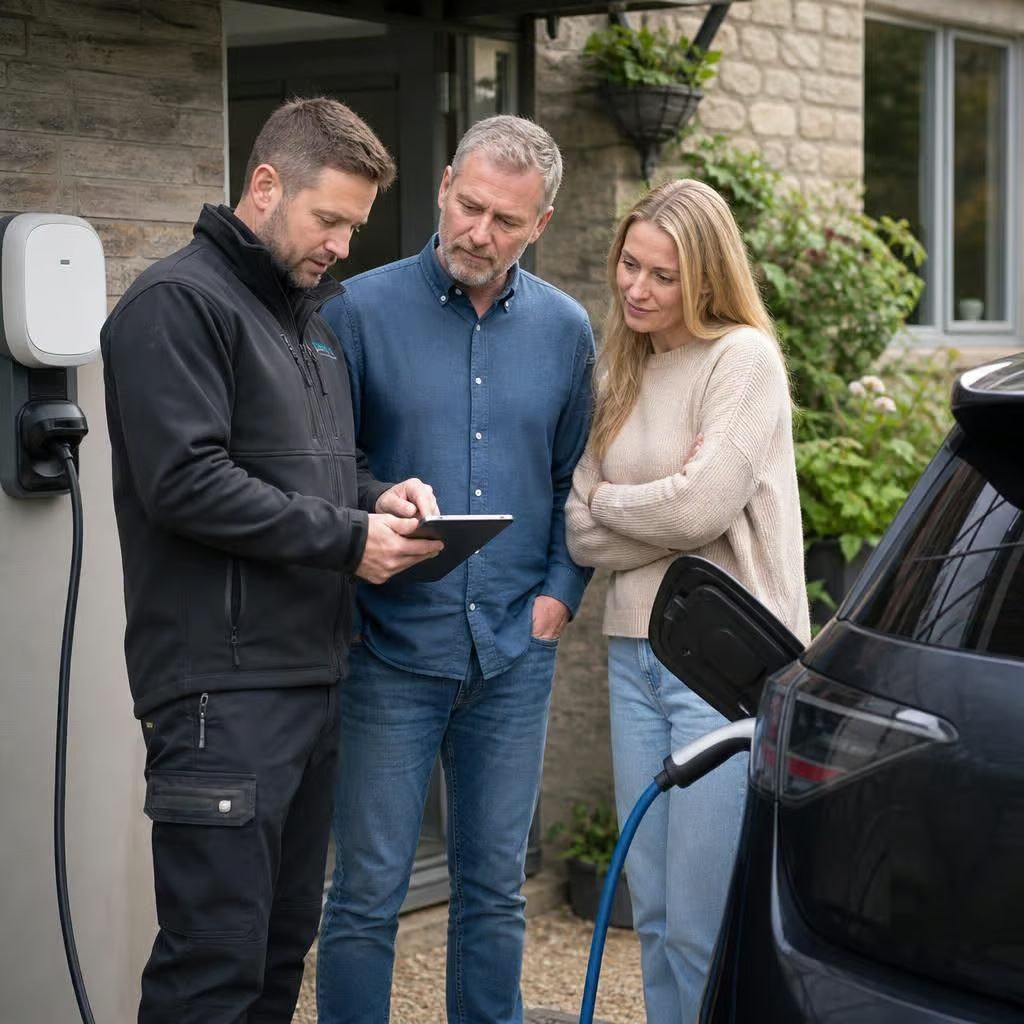
The right recommendation also depends on who will use the charger. A household with one regular driver may need a simple charging schedule, while a shared vehicle may need clearer access and control for several users.
We discuss how charging is managed in practice, not just which features appear in the app. That helps us avoid adding controls that make everyday charging harder, particularly where the charger is used by family members, tenants or visitors.