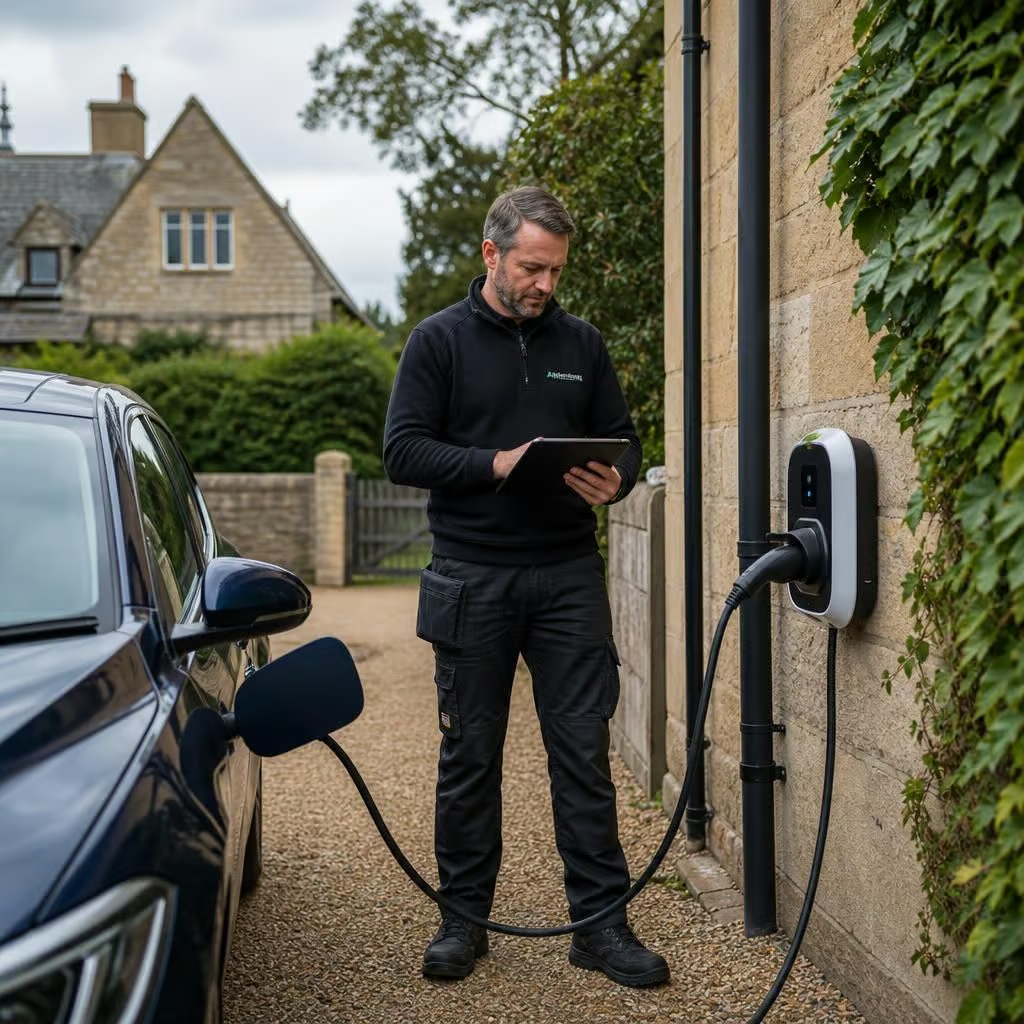
Is my home suitable for an EV charger installation?
Most homes are suitable for an EV charger, provided the electrical supply, consumer unit, earthing and cable route can support the installation. We assess these points, along with where you park, before recommending a safe charging option for your property.
Most properties with suitable private parking can have an EV charger, but the right installation depends on more than the wall where you want it mounted. The parking arrangement, cable route, earthing arrangement, available electrical capacity and condition of the existing installation all matter.
Private parking is usually the first practical consideration. A charger can serve a driveway, carport, attached garage or detached garage. It does not have to sit beside the front door. If the car is parked some distance from the house, we plan a route that protects the cable and avoids trip hazards. A permanent cable across a public pavement is not an acceptable arrangement.
A detached garage may need a longer cable run, additional protection or groundwork between the property and the garage. We discuss that route before we quote, so you know whether the charger belongs on the house, the garage or a separate mounting post. The cable length also affects the charger position and the appearance of the finished installation.
Older homes can still be suitable. Solid walls, barn conversions and properties with limited modern wiring may need more careful planning. We choose a route that limits visible conduit and avoids damaging important features where possible. Listed or sensitive buildings may also have restrictions affecting the position or appearance of the equipment. We raise those points before work begins rather than assuming a standard route will suit the property.
The charger needs its own properly protected circuit. During the assessment, we look at the consumer unit, earthing arrangement, cable routes and the protective devices already installed. Some older installations need an upgrade before they can safely support EV charging. If that applies, we explain what needs changing and why.
Electrical demand is another part of the decision. A home with electric heating, a heat pump, an immersion heater, an electric cooker, solar panels or a battery may have several large loads operating at the same time. We consider how those systems work together. Where appropriate, we can discuss load management or scheduled charging to help control demand without treating the charger as an isolated addition.
The charger itself should match how you use the car. We discuss the vehicle connection, whether you want a fixed charging cable or a socketed unit, the position of the charging socket and exposure to weather. A driveway installation may need equipment and cablework suitable for rain, frost and accidental knocks. A garage installation may allow a shorter, more protected route.
If you already generate electricity from solar panels, you may want the charger to work alongside that system. We look at the existing equipment and explain what integration is possible. Solar generation varies during the day, so charging controls need to be set up around the way you use the car rather than assuming all charging will come directly from the panels.
The assessment normally considers:
- where the car is parked and how often that position changes;
- the distance between the parking space, meter position and consumer unit;
- whether the cable can run inside, outside, through a garage or underground;
- the condition and capacity of the existing electrical installation;
- earthing and protection requirements for the property;
- the effect of other high-demand appliances;
- the charger position, cable storage and protection from weather; and
- whether solar panels, battery storage or other controls need to work with it.
We can then give you one of three clear conclusions: the property is ready for the proposed charger, it is suitable once specific electrical work is completed, or the proposed location is not sensible without a different arrangement. That last answer matters. Moving the charger, changing the cable route or reconsidering the parking position may be safer than forcing an unsuitable installation.
Our NICEIC-registered electricians carry out the electrical work and test the installation before it is put into use. We explain how to use the charger, confirm what protection has been fitted and provide the relevant electrical paperwork. The quotation sets out any required upgrades separately, so you can make an informed decision about the full installation rather than discovering extra work during the job.
If you park on a shared drive or in communal parking, the electrical work is only part of the decision. We first need to understand who owns the parking space, where the cable would cross shared areas and whether other people need access to the route.
That information helps us identify a workable charger position before installation starts. If a shared route cannot be used safely, we’ll explain the practical alternatives rather than fit equipment that creates an obstruction or relies on a loose cable.