What electrical supply does a 7kW EV charger need?
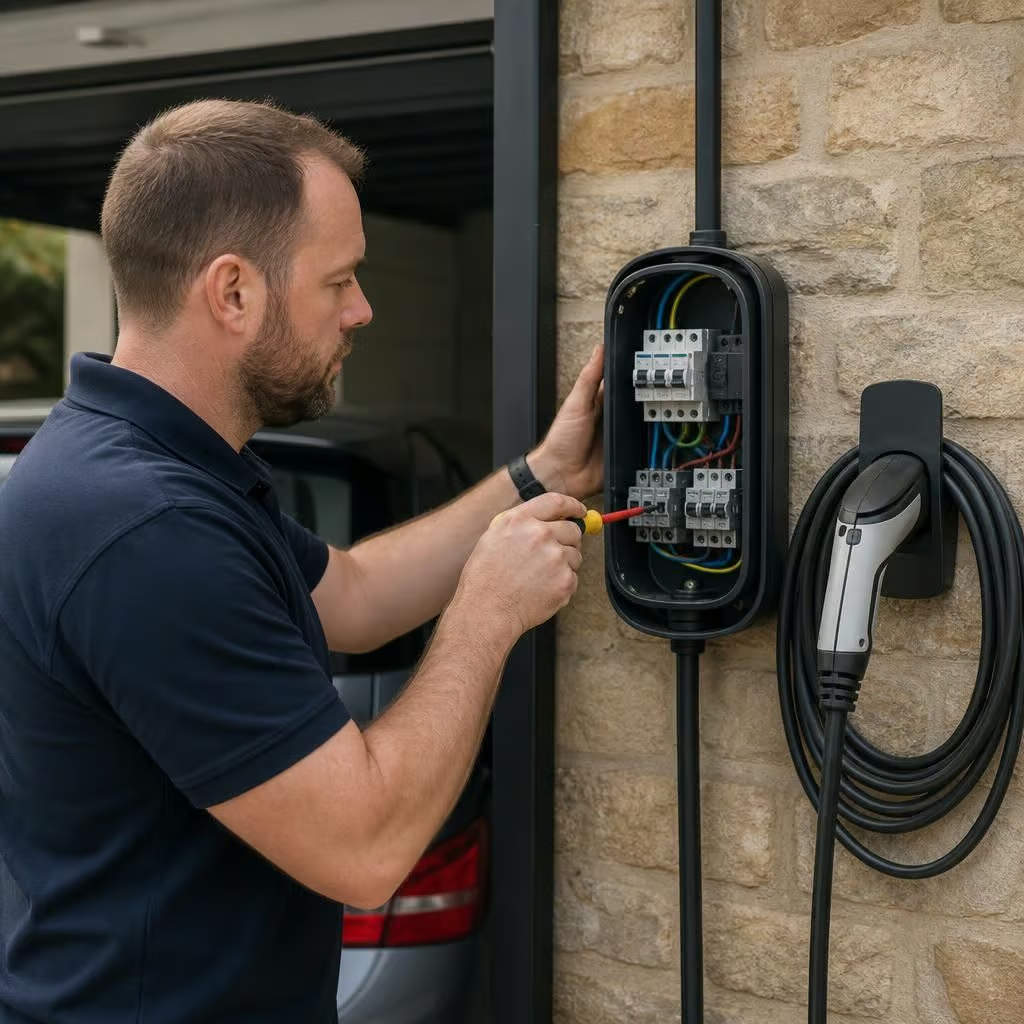
A 7kW home EV charger normally needs a 230V single-phase supply capable of delivering around 32 amps, with suitable cabling, protective devices and earthing. We check the incoming supply, consumer unit and cable route before confirming that the property can support safe charging.
A domestic 7kW charger is treated as a high-load appliance and needs its own properly protected connection to the home’s electrical installation. The supply must also have enough capacity for the charger alongside the oven, immersion heater, heat pump and other large loads.
The incoming supply matters
Most houses have a single-phase supply, which is suitable for a 7kW charge point. A three-phase supply is not normally needed for this output. If the property has three-phase electricity, we still select the most suitable phase and check how the existing loads are distributed.
The size of the main service fuse can limit how much electricity the property can draw at once. That does not automatically mean the supply needs upgrading. We assess the likely combined demand and can specify dynamic load management where appropriate. This allows the charger to reduce its output temporarily when the house is using more electricity, rather than relying on an unnecessarily large supply upgrade.
The cable run affects the design
A charger on the outside wall may have a short route from the consumer unit. A detached garage, outbuilding or parking area can need a much longer cable run. The cable is sized around its length, installation method, current-carrying capacity and voltage drop.
For a buried route, we consider the trench, cable protection and the position of any outbuilding distribution board. A cable clipped to a wall, installed in insulation or run through a loft has different electrical characteristics. Getting this wrong can cause excessive voltage drop or overheating, so the cable size is not selected from the charger’s output alone.
Protection must match the charger
The charge point needs suitable overcurrent protection and residual-current protection. The exact arrangement depends on the charger’s built-in protection and the characteristics of the installation. Some equipment includes protection against smooth DC leakage; other arrangements require additional protective equipment in the consumer unit.
We also check the earthing arrangement, including whether the property uses a PME supply. Where a fault on the supply neutral could create a dangerous voltage on exposed metalwork, the installation needs the appropriate protective measure. This may be provided through the charger, the earthing arrangement or another compliant method. It is not safe to assume that every house can use the same connection.
The consumer unit may need work
A modern consumer unit with available space may accept the new circuit without major alteration. Older boards may have limited capacity, outdated protection or no suitable way to accommodate the required equipment.
In that situation, we explain what needs changing before installation starts. The work might involve replacing protective devices, adding a suitable enclosure or upgrading the consumer unit. We do not leave an additional circuit connected to a board that cannot protect it correctly.
If the existing installation has faults, inadequate earthing or damaged cabling, those issues need resolving before the charger is commissioned. An electrical inspection can identify this early, which is particularly useful in older homes and properties with extensions or converted outbuildings.
What happens during the assessment
- We inspect the meter position, incoming supply and main protective bonding.
- We check the consumer unit, available ways and existing protective devices.
- We measure or establish the cable route, including any external or buried section.
- We assess the likely household demand and decide whether load management is appropriate.
- We select the cable and protective equipment to suit the charger and the installation.
- We test the completed circuit and provide the relevant electrical certification.
The local electricity network operator may also need to be notified, depending on the installation and supply characteristics. We deal with the technical requirements as part of the electrical design rather than leaving you to work out which notification applies.
Older properties need a closer look
A period house, barn conversion or rural property may have long cable routes, older consumer units, unusual earthing arrangements or several additions to the original wiring. These features do not rule out a 7kW charger, but they can change the work needed to install one safely.
We set out any required remedial work and the reason for it in the quotation before work begins. Our electricians are NICEIC- and ECA-registered, so the installation is designed and tested as electrical work rather than treated as a simple appliance connection.
The final result should be a charger with a correctly designed circuit, suitable protection and a supply that works alongside the rest of the property. If the home cannot support the full output at all times, load management can provide a safer alternative to an immediate supply upgrade.
A 7kW rating is the charger’s maximum output, not a constant demand from the house. The electrical design must account for what happens when charging overlaps with cooking, immersion heating or other high-load appliances.
Where those demands could coincide, we can configure load management to balance them. The charger then uses the available capacity without making an unnecessary change to the incoming supply. Your quotation will explain whether that control is needed and how it affects the installation.