
Will my home’s electrical supply support a Zappi or Ohme charger?
Usually, yes, but a Zappi or Ohme charger needs a supply check before installation. We assess the incoming supply, main fuse, consumer unit, earthing and existing electrical demand, then confirm whether the charger can be fitted as it is or needs load management or an electrical upgrade.
Most homes can support a Zappi or Ohme charger, but the answer depends on the whole electrical installation rather than the charger alone. A supply check shows whether the charger can run at its intended power, whether dynamic load management is suitable, or whether the installation needs an upgrade first.
Your main fuse limits how much electricity the property can draw from the network at one time. The charger adds a substantial new load, so we consider it alongside the heating, cooker, immersion heater, showers, electric vehicle and other high-demand equipment. A home may have enough capacity for normal use but still exceed its limit when several appliances run while the car is charging.
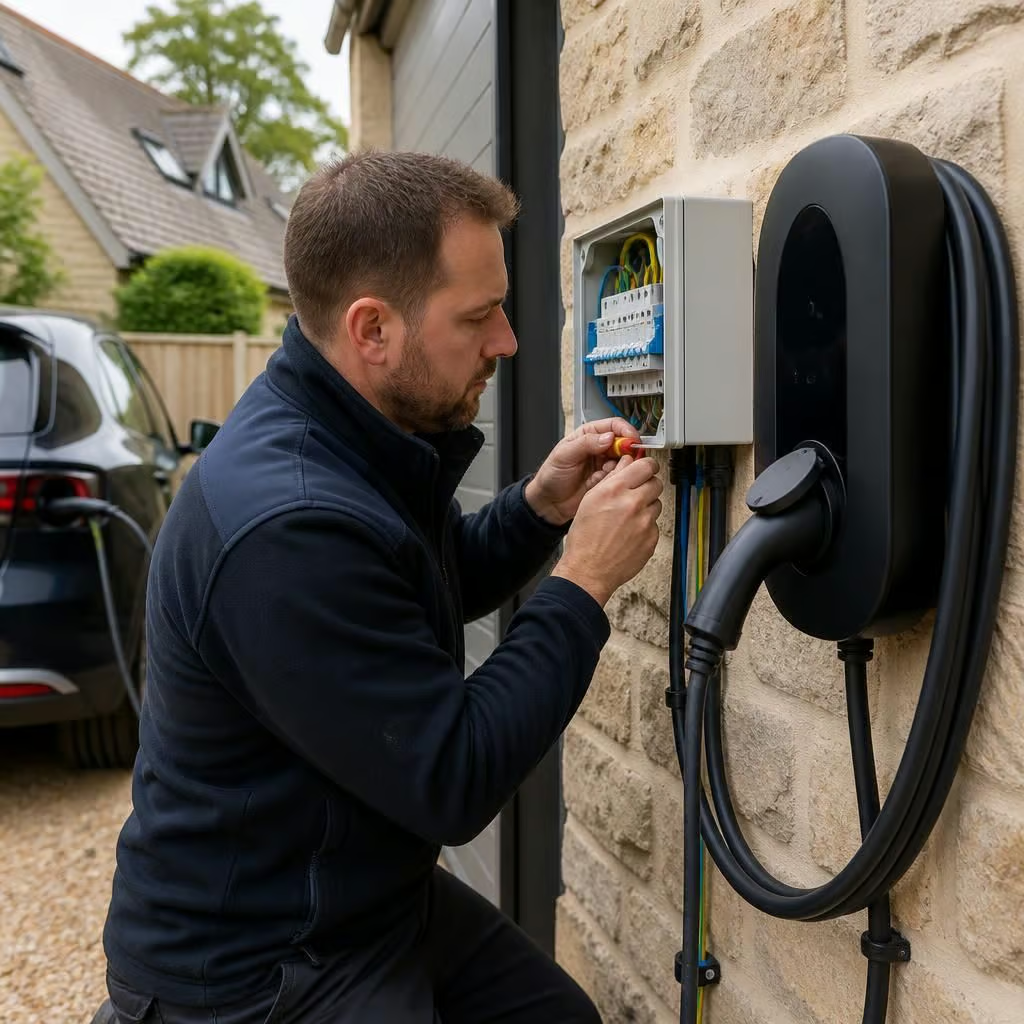
We inspect the service head, meter tails, consumer unit, earthing arrangement and the proposed cable route. We also check the condition and capacity of the existing installation. An older consumer unit, unsuitable cable, poor connections or missing protective devices can prevent a charger from being installed safely, even when the incoming supply itself is adequate.
Where the available capacity is limited, load management may allow the charger to work without a new supply. The system monitors the electricity being used elsewhere in the home and reduces the vehicle’s charging rate when demand rises. It can increase the rate again when other appliances switch off.
This means charging may be slower at busy times, but the charger does not continue drawing its maximum load regardless of what the house is using. We confirm how the selected Zappi or Ohme charger handles this and explain what charging performance you can reasonably expect.
A load-management device is not a way to overlook a defective installation. The incoming supply, consumer unit, earthing and cabling still need to meet the requirements for an EV charge point. We also check the communications and sensor arrangements needed for the load control to work reliably.
Your consumer unit may need additional protection or modification before the charger can be connected. In some homes, the board has no suitable spare way, has outdated protective equipment or cannot accommodate the required EV protection. If an upgrade is needed, we explain what has to change and why before any work starts.
The earthing arrangement matters particularly on properties with older electrical systems or certain network supplies. We assess the installation and specify the appropriate protective measures rather than assuming that the existing arrangement is suitable. This helps prevent a fault on the supply network from creating a risk through the charger or vehicle.
Some properties have a three-phase supply, although most domestic charging arrangements use a single-phase connection. If your home has three-phase power, we assess whether it offers a useful advantage and whether the chosen charger and vehicle can use it. Having three-phase power does not automatically make every charger charge faster.
Solar panels and a battery can change how the charger is used, but they do not automatically increase the capacity of the incoming grid supply. We consider the interaction between the charger, generation, battery control and household demand. That prevents a charging plan from relying on power that is not always available.
When the existing supply cannot support the proposed arrangement, the options may include setting a lower charging rate, fitting suitable load management, upgrading parts of the installation or requesting a supply upgrade from the electricity network operator. A network upgrade can involve separate design, approval and charges, so we identify that requirement before installation rather than leaving it as a surprise.
The cable route also affects the work. A detached garage, long driveway or outbuilding may need a longer underground or external cable run, with suitable protection and groundworks. We discuss the route, access and finish during the assessment so you know what the installation involves.
For a property with an older or altered electrical system, we may recommend remedial work before fitting the charger. That could include correcting earthing, replacing damaged cable, improving the consumer unit or addressing an unsafe connection. These points are separate from the charger and should not be hidden within a simple installation price.
Our quotation sets out the charger arrangement, cable route, protective equipment, load-management method and any work needed to make the supply suitable. If the charger cannot operate at its maximum rate under certain household conditions, we explain that clearly. Electrical work is carried out by our NICEIC- and ECA-recognised team, giving you the relevant certification for the installation.
The practical result may be a straightforward installation, a charger that adjusts its rate as household demand changes, or a planned electrical upgrade before charging begins. The right choice depends on the condition of the property, the available supply and how you expect to charge the vehicle.
Your home may not need the charger to run at its highest possible rate. If the car is usually connected for several hours, a controlled charging rate may meet your needs without changing the incoming supply.
We compare the charger’s rating with how you use the property, including when heating, cooking and hot water systems are likely to run. That gives you a realistic view of charging performance, rather than treating the charger’s maximum output as the only suitable option.