
What should I prepare before a Tesla home charger survey?
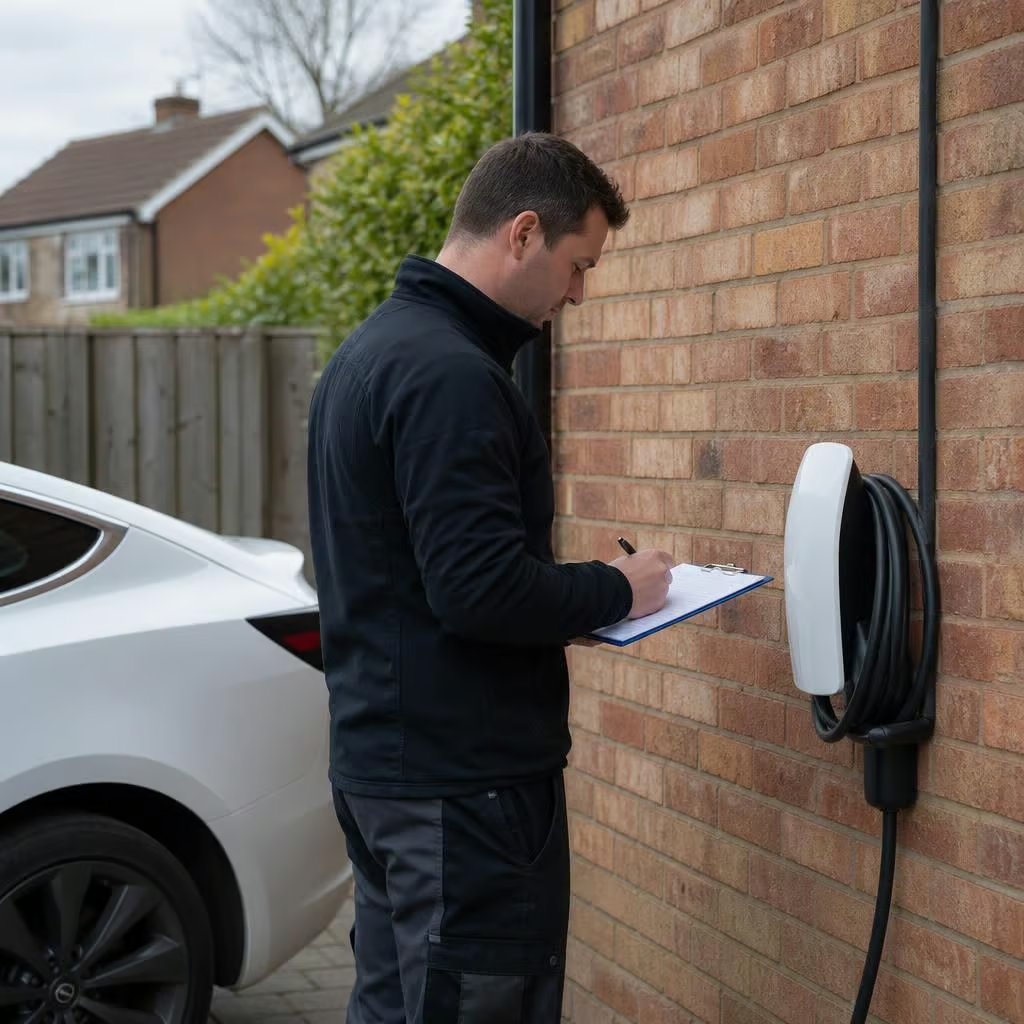
Before a Tesla home charger survey, make sure we can access the proposed parking space, electricity meter and consumer unit, along with the likely cable route. Have your Tesla model, usual parking arrangements and questions about charging ready, so we can assess the installation and explain what the work would involve.
The most useful preparation is to gather the information that affects the electrical design, cable route and position of the charger. Have the vehicle details, electricity supply information and any plans for future charging or electrical work ready. We can then use the survey to identify restrictions early and explain what the installation involves.
Have the vehicle details available
The Tesla model and battery size help us discuss the charging requirement accurately. If more than one electric vehicle may use the charger, mention that too. The expected charging pattern matters as much as the car itself. Charging overnight, topping up after short journeys and charging several vehicles can lead to different recommendations.
Bring any preferences you already have about the charger position, cable length and how the cable will reach the vehicle. You don’t need to decide every detail before the survey. It helps us understand which choices matter to you, rather than designing around assumptions.
Collect useful information about the electricity supply
If you have recent electrical paperwork, keep it available. This might include an Electrical Installation Condition Report, records of a consumer unit replacement or details of solar panels, a battery or other high-demand equipment. Old paperwork is still useful, even if it doesn’t answer every question.
Your electricity bill can also help identify the supply arrangement and tariff. Tell us about any planned tariff change, solar installation, battery system or major electrical work. A charger may need to work alongside those loads, so the wider installation is relevant to the design.
If the property has an older consumer unit, unusual earthing arrangement or a supply shared with another building, mention this before the survey. Rural homes, converted buildings and properties with outbuildings can have longer or less straightforward cable routes. That doesn’t automatically prevent a charger installation, but it may affect the work needed.
Think through access and cable protection
Consider how the car normally reaches the parking space and whether that route changes during the year. A car may be parked in a garage, on a drive, in a courtyard or beside a shared accessway. The route needs to remain practical without creating a trip hazard or leaving the cable vulnerable to vehicles, gates or garden work.
Tell us about buried services, drainage, paving, outbuildings and areas where digging or surface fixing would be difficult. If the cable may cross a wall, gate or boundary, explain who owns that structure and whether access is shared. We can then consider protection, entry points and the least disruptive route.
Listed buildings, barn conversions and older properties may have restrictions on drilling, external equipment or changes to visible walls. Let us know about any planning, conservation or landlord requirements before the installation is designed. We can identify where those requirements may affect the proposed position, although formal approval remains the property owner’s responsibility where it applies.
Decide what you want the survey to resolve
Write down anything that could influence the decision. Useful points include:
- where the charger should sit and how visible it can be;
- how far the parked car may be from the charger;
- whether the charger needs to serve more than one parking position;
- how the cable should be protected from weather, traffic and garden equipment;
- whether future electrical work may change the installation;
- how charging should fit with solar generation, battery storage or a different electricity tariff; and
- what would happen if the preferred position needs more electrical work than expected.
Ask us to explain any assumptions behind the recommendation. You should understand why a position, cable route or protective arrangement has been chosen, not just where the equipment will be fixed.
Make the property accessible for the survey
Access to the relevant parts of the property helps us assess the installation properly. This may include the parking area, the proposed cable route, the consumer unit, the electricity meter and any garage, outbuilding or service space involved. Move stored items only where they prevent a clear inspection; there is no need to empty the property.
Keep gates unlocked and arrange access to shared or rented areas if other people control them. If the meter or consumer unit is inside a locked cupboard, make sure it can be opened. A survey can be limited if we cannot inspect the parts of the installation that affect the charger design.
Clear photographs can be useful when a second visit is not practical, particularly for a distant outbuilding or a long external route. They should show the whole wall or equipment location rather than just a close-up. We may still need to inspect the installation in person before confirming the work.
What happens after the information is reviewed
We assess the supply, earthing, protective equipment, cable route and charger position together. If the existing electrical installation needs upgrading, we explain why before any work starts. Where the proposed route is unsuitable, we set out the practical alternatives rather than treating the first idea as the only option.
You receive a written quotation before work starts, so the scope and expected charges are clear. The survey is therefore not just a check that the charger will fit. It is the point at which we turn the preferred parking arrangement and the condition of the electrical installation into a workable plan.
For electrical work, our NICEIC and ECA registration reflects the standards used for the installation and certification. The important result for you is clear paperwork showing what has been inspected, installed and tested.
An older consumer unit does not automatically rule out a Tesla home charger. The important question is whether the electrical installation can provide the required protection and supply safely.
Keep the board accessible rather than replacing it before the survey. We can assess its condition, earthing arrangement and available space together, then explain whether the charger can use the existing installation or needs electrical work first.