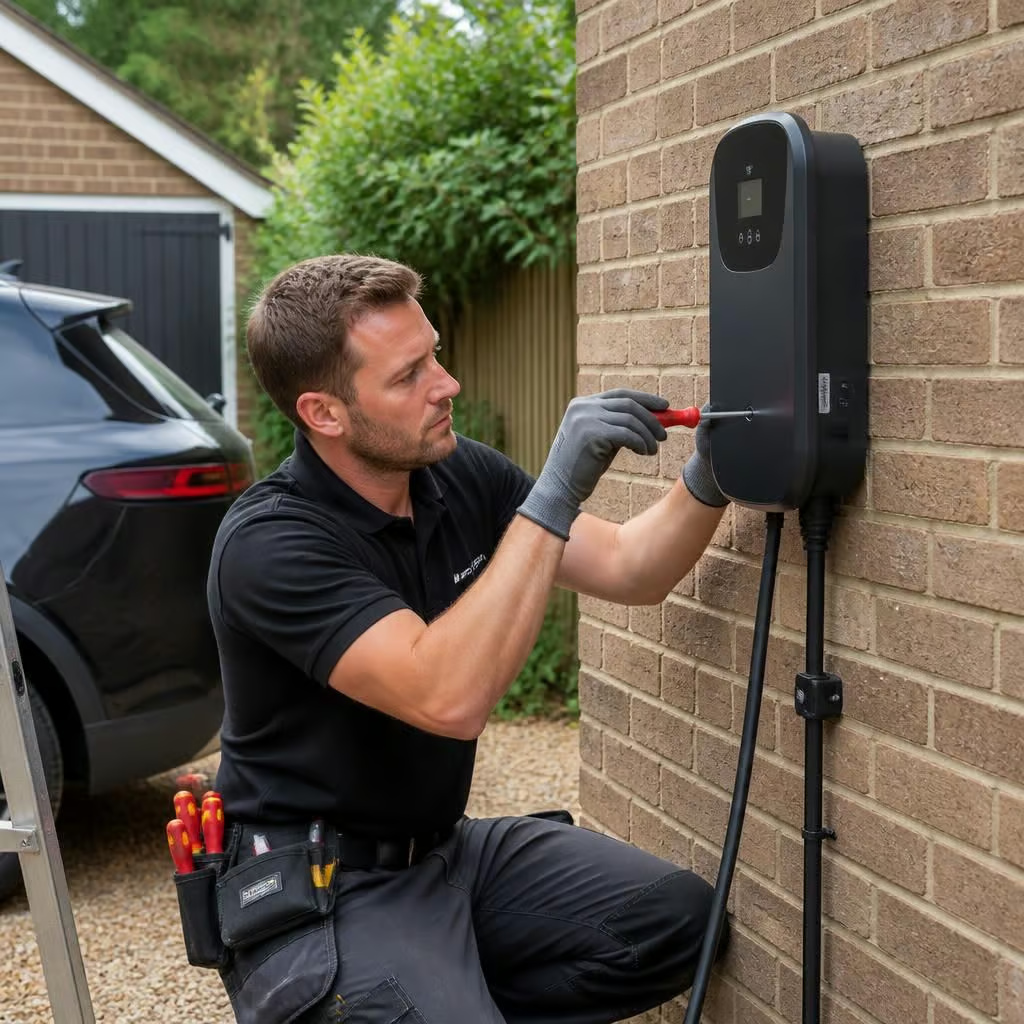
How long does a 22kW EV charger installation take?
A 22kW EV charger installation may take part or all of a working day, depending on the cable route, consumer unit and electrical supply. We confirm the likely timescale after checking the property, then allow time for fitting, testing and explaining the charger.
The installation time depends mainly on the electrical supply and the route from the consumer unit to the charger. A suitable property with three-phase power and a straightforward cable route may only need one visit. A property needing supply changes, longer cabling, external protection or groundworks will take longer.
The first stage is checking whether 22kW charging is available. A 22kW charger normally needs a three-phase supply. Many homes have single-phase electricity, so we check the incoming supply rather than assuming the charger can operate at its advertised power. If the supply cannot support 22kW, we explain the available alternatives before any work is booked. These may include a lower-rated charger or an application to the network operator for a supply upgrade.
A supply upgrade is separate from fitting the charger. It can involve design work, approval and an appointment arranged by the electricity network operator. That makes the overall programme longer, even though the charger installation itself may be relatively straightforward once the supply is ready.
The cable route often makes the biggest difference to the work on site. A charger close to the consumer unit, with accessible cable routes, needs less preparation than one at the far end of a drive or on a detached garage. We look at:
- the distance between the main electrical equipment and the charger;
- whether the cable can run internally, externally or through an existing duct;
- the wall construction and the best position for the charger;
- whether the route crosses a driveway, garden or other paved area;
- how the cable will be protected from damage and the weather; and
- whether a separate consumer unit, isolator or additional protection is needed.
A short surface-mounted route is usually quicker than concealed cabling. Chasing walls, lifting floors, drilling through thick masonry or installing a duct beneath paving adds preparation and reinstatement work. On a barn conversion, older house or detached outbuilding, the building fabric can also affect how we run the cable without causing unnecessary damage.
We confirm the likely duration after the site assessment. The survey checks the supply, the proposed charger position, the cable route and the condition of the existing electrical installation. We also check whether the consumer unit has enough capacity and whether other high-load equipment could operate at the same time as the charger.
If the existing installation needs remedial work, that can add to the programme. For example, damaged equipment, inadequate earthing, an unsuitable consumer unit or an overloaded circuit needs attention before a high-power charger is connected. We explain any required work and provide the quotation before starting it.
On the installation day, the work normally follows a set sequence:
- We confirm the charger position and cable route with you.
- We install the protective equipment and cable from the supply to the charger.
- We mount and connect the charging unit.
- We label the relevant equipment and complete the electrical tests.
- We commission the charger and check its controls and charging operation.
- We explain how to use the charger and provide the relevant electrical paperwork.
Testing is not an optional final check. We verify the circuit, protective devices, earthing and charger operation before it is put into regular use. If testing identifies a problem, we investigate it rather than leaving the installation live without resolving the issue.
Some installations take longer because access is restricted or because several trades are needed for groundworks and reinstatement. A trench to a detached garage, for example, may need separate preparation before the electrical connection can be completed. We will identify this during the survey where possible, so the expected work is clear before the installation date.
For a 22kW charger, the important question is therefore not just how long the wall-mounted unit takes to fit. The supply, cable route and condition of the existing electrics determine the overall duration. A site assessment gives you a more reliable answer than a standard installation time, particularly in an older or rural property.
Our electricians complete the testing and certification for the electrical work, and we leave the charging area tidy. You finish with a commissioned charger, the controls explained and paperwork showing what was installed and tested.
Access arrangements can affect how smoothly the installation runs. Please make sure we can reach the consumer unit, electricity meter and proposed charger position on the day.
- Keep the driveway or working area clear.
- Remove stored items blocking the consumer unit or cable route.
- Tell us about gates, shared access or parking restrictions.
- Arrange permission before work crosses shared land or a boundary.
If another contractor needs to prepare the property, such as opening a route through paving, we’ll explain what must happen before the charger can be connected. Sorting this beforehand helps us complete the electrical work without an avoidable return visit.