
Can a faulty circuit breaker be repaired without replacing the consumer unit?
Often, yes: if the circuit breaker is the fault and the consumer unit is otherwise suitable, we can replace the individual breaker and test the circuit. We recommend replacing the consumer unit only when it is damaged, obsolete or cannot provide the protection the installation now needs.
In many cases, the failed part is the removable protective device, not the consumer unit enclosure. We can replace an MCB or RCBO while retaining the existing board, but only after checking that the board, wiring and replacement device are suitable.
“Repairing” a faulty circuit breaker normally means replacing it. The internal mechanism is not repaired on site. The replacement must match the consumer unit and provide the correct protection for that circuit. An incorrectly matched device can leave the circuit unsafe, even if the power comes back on.
We first establish why the breaker has operated. A breaker may be faulty, but it may also be responding correctly to a problem elsewhere. Common causes include:
- a damaged appliance or plug
- water entering an outside circuit or accessory
- damaged cable insulation
- too much load on the circuit
- a fault between live conductors and earth
- a failing RCD or RCBO rather than a simple MCB
If we replace the device without finding the cause, the new breaker may trip again. We test the affected circuit and, where necessary, disconnect appliances or sections of wiring to identify the fault. That tells us whether the breaker is defective or is doing its job.
The existing consumer unit can usually stay when:
- the enclosure is sound and shows no heat damage, cracking or corrosion
- the replacement breaker is compatible with that board
- the busbar and connections are in good condition
- the circuit has suitable protective devices
- testing shows that the wiring and earthing arrangements are safe
We also check whether previous alterations have left loose connections, overcrowded terminals or poorly identified circuits. A sound enclosure does not make an unsafe installation suitable for a new breaker.
A wider consumer unit replacement may be the safer option when:
- the board is damaged, overheated or affected by corrosion
- compatible replacement devices are no longer available
- the board cannot provide the protection needed for the circuits
- several breakers are failing or showing signs of heat damage
- the installation has been altered repeatedly and is difficult to test or identify
- the wiring, earthing or bonding needs substantial remedial work
In some homes, the issue is not the age of the board alone. Older consumer units can remain usable if their condition and protective arrangements are satisfactory. Conversely, a newer board may still need attention if a connection has overheated or a circuit has been modified poorly.
RCD and RCBO protection needs particular care. An MCB protects against overcurrent and short circuits. An RCD detects certain leakage to earth. An RCBO combines these functions for an individual circuit. Replacing one type with another without checking the circuit and board can change how the installation is protected. We explain any limitation before recommending a replacement.
When the fault is urgent, switch off the affected circuit if the device will remain off safely. Do not keep forcing a breaker back on. If you notice a burning smell, buzzing, visible scorching, heat around the consumer unit or repeated tripping, leave the circuit isolated and arrange an electrical inspection. Do not remove the consumer unit cover yourself.
For a breaker-only repair, we isolate the supply, remove the faulty device, inspect the surrounding connections and fit the compatible replacement. We then test the circuit, check the protective device operates correctly and label the circuit if the existing identification is unclear. The power needs to be off during this work, so anything connected to that circuit will be without electricity temporarily.
If the board needs replacing, we discuss the reason before starting rather than treating a full change as the automatic answer. The work involves identifying the circuits, transferring or replacing the protective devices, checking the earthing and bonding, and testing each circuit before the supply is restored. We provide written quotations before work starts, with no surprise charges.
Our NICEIC- and ECA-related electrical work is carried out by directly employed engineers rather than subcontractors. You receive the test results and any recommendations needed to decide whether a replacement breaker is enough or the consumer unit needs wider work.
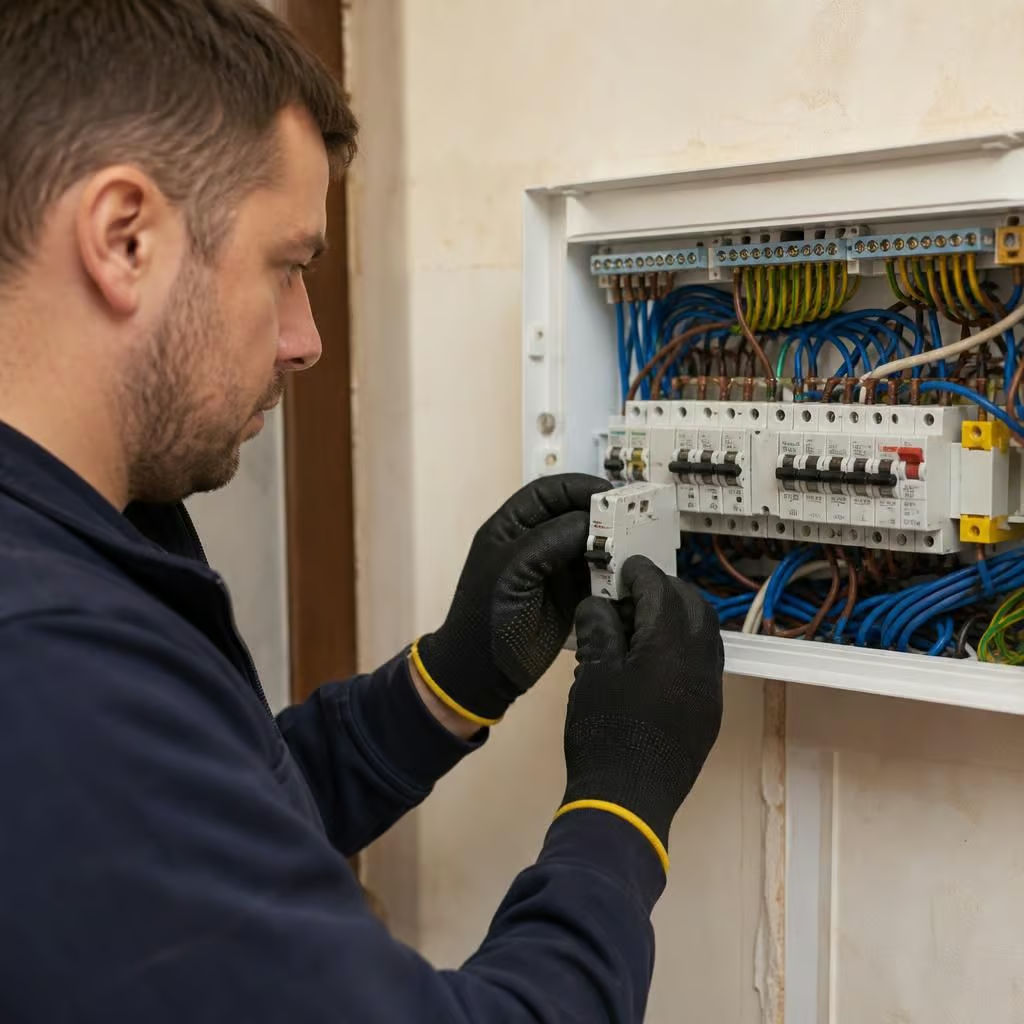
A replacement breaker does not automatically mean the rest of the electrical installation needs replacing. If testing finds the fault in an appliance, accessory or section of cable, we deal with that cause and leave a sound consumer unit in place.
It works the other way too: fitting a new breaker does not bring an older installation up to current standards. We explain any remaining limitations clearly, so you can decide whether to carry out a focused repair now or plan wider electrical work later.