
What appliances should landlords include in a PAT test?
Landlords should include every electrical appliance they provide for tenants, such as cookers, fridges, washing machines, kettles, microwaves, lamps, heaters, televisions and extension leads. Fixed wiring and permanently connected appliances fall under other electrical checks, so we assess those separately rather than treating them as portable appliances.
Include every electrical item the landlord supplies for the tenant’s use and which connects to the property through a plug. The list usually covers appliances in furnished rooms, kitchens, utility areas, garages and gardens, together with leads, adaptors and chargers supplied with them.
A useful inventory check is to walk through each room and record anything the tenant could unplug and move. Common examples include:
- Kitchen appliances: fridges, freezers, washing machines, tumble dryers, dishwashers, microwaves, kettles, toasters, coffee machines and slow cookers.
- Living and sleeping areas: lamps, televisions, sound systems, fans, portable heaters, clocks and supplied chargers.
- Cleaning equipment: vacuum cleaners, carpet cleaners and steam cleaners.
- Outdoor or utility equipment: lawnmowers, hedge trimmers, pressure washers and extension leads supplied for the property.
- Portable accessories: multi-way adaptors, plug-in timers, transformers and power supplies.
The appliance’s size does not decide whether it belongs on the list. A large washing machine and a small bedside lamp both need consideration if the landlord supplies them and the tenant plugs them into a socket.
Items that are permanently connected, such as an electric shower, built-in oven or hard-wired heater, are not normally tested as portable appliances. Their safety forms part of the fixed electrical installation or requires a separate appliance inspection. An EICR does not, by itself, test plug-in appliances.
Tenants’ own televisions, kettles, computers and chargers are generally outside the landlord’s PAT testing list. The position changes if the landlord supplies the item, leaves it as part of the tenancy, or takes responsibility for it in the inventory or tenancy agreement. A clear inventory helps show which equipment belongs to the property.
We label each item with an identification reference and record its location, condition and test result. That gives the landlord a usable appliance register rather than a certificate with no link to the individual equipment. We can also flag damaged plugs, loose casings, crushed cables, scorch marks and unsuitable extension leads during the inspection.
PAT testing is not a substitute for checking how an appliance is used. A portable heater may be electrically sound but still unsafe if it is positioned against curtains or connected through an overloaded adaptor. We point out visible use-related risks alongside the electrical test.
There is no universal rule that every rented property must have every plug-in appliance tested at a fixed interval. The sensible testing frequency depends on the type of equipment, its condition, how often tenants use it and the environment around it. A portable heater in a busy shared property needs a different assessment from an occasional-use lamp in a private flat.
Landlords should arrange a fresh check when an appliance is newly supplied, damaged, repaired, moved into a harsher environment or returned after a tenancy. A visual inspection between tenancies can identify obvious damage, but it does not replace electrical testing where the risk assessment calls for it.
For a portfolio, we can test the appliances listed for each property and return records that identify what passed, what needs attention and what should be removed from service. Our NICEIC- and ECA-recognised electrical work gives landlords a clear route to dealing with faults found during the inspection, rather than leaving unsafe equipment in the property.
An appliance that fails should be unplugged and kept out of use until the fault is understood. We explain whether it can be repaired, needs a retest after repair or should be replaced, and record the decision for the landlord’s property file.
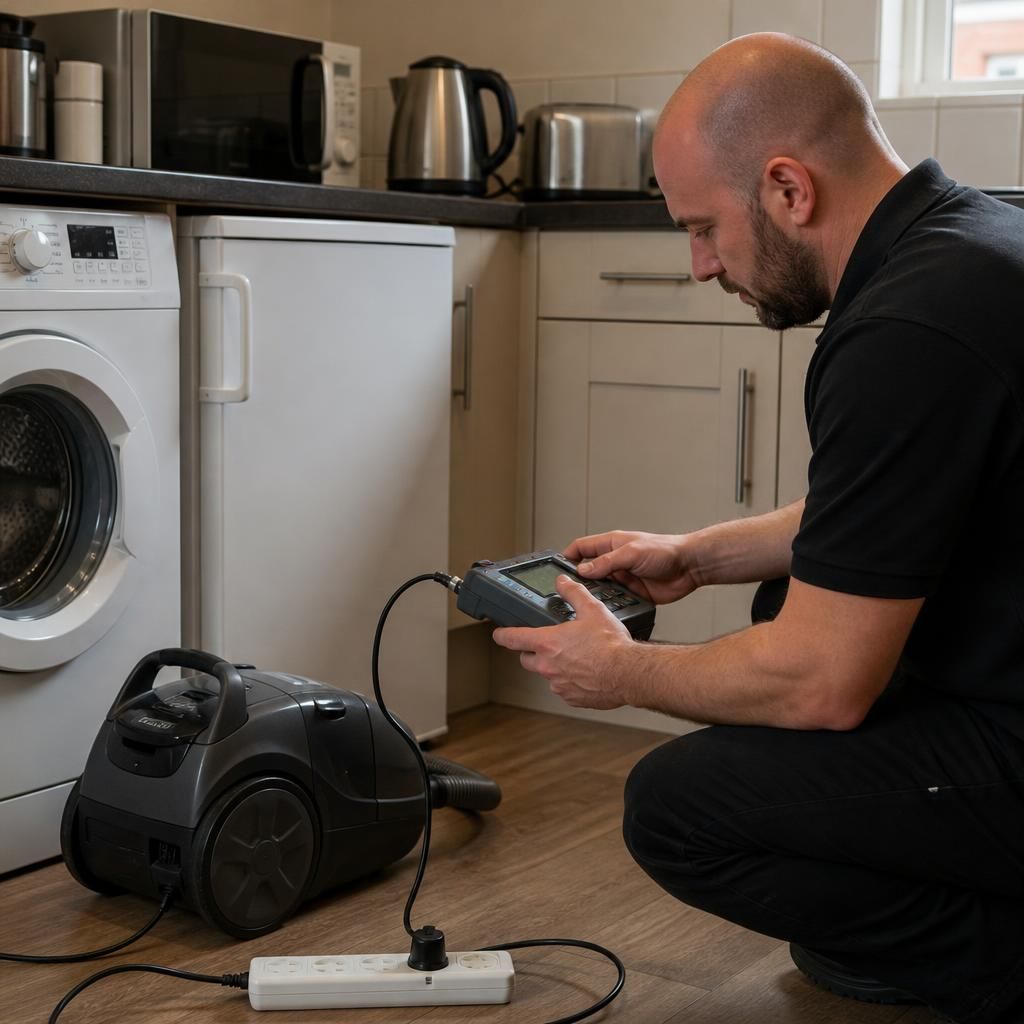
A PAT result applies to the individual appliance tested, not to every similar item in the property. Two lamps, kettles or chargers need separate records, even if they are the same make and model.
If you replace an appliance, the replacement needs its own identification and result. Keeping the old label or copying its test record can leave the inventory showing equipment that was never inspected.