
How do I choose a renewable energy installer?
Choose an installer who surveys your property properly, explains the system’s likely performance and disruption, and gives a clear written quotation. Check their relevant certification, previous experience with similar homes, planned aftercare and what happens if the system needs attention later.
The right renewable energy installer can show how the proposed system will work in your property, not just describe the equipment. Look for relevant certification, proper design calculations, experience with the building type, a transparent scope of work and practical aftercare.
Start with the technology you’re considering. A solar PV installer may not have the same experience as a heat pump installer. Battery storage also brings electrical design, fire-safety and control requirements. Ask which parts of the work the installer is qualified to design, install and commission.
For solar panels, batteries and air source heat pumps, MCS certification matters. It allows an eligible Boiler Upgrade Scheme application to be made on your behalf for a heat pump. It also makes a renewable electricity installation eligible for the Smart Export Guarantee, subject to the scheme’s requirements. Ask the installer to explain which certification applies to your system and what paperwork you’ll receive.
Electrical work should be covered by the appropriate electrical registration, such as NICEIC or ECA membership. This is particularly relevant where a battery, inverter, new consumer unit or EV charger forms part of the installation. The installer should be able to explain how the system connects safely to the existing supply and whether the distribution network operator needs to be notified.
Check how the design is reached. A credible proposal should be based on the property rather than a standard package. For solar, that means considering roof orientation, shading, usable roof area, cable routes, the inverter position and how much electricity the household uses. A battery should be sized around the generation profile, demand and intended use, rather than added simply because it is available.
For an air source heat pump, ask how the heat loss of the rooms has been calculated. The result affects the heat pump size, radiator output, pipework, cylinder and likely flow temperature. A design that ignores those details may leave you facing extra work after installation or a system that cannot operate as intended.
Your home may have solid walls, older radiators, an oil or LPG boiler, limited insulation or unusual construction. That does not automatically rule out renewable technology, but it does require careful planning. We look at the existing heating system, room temperatures, cylinder location, pipe sizes, electrical capacity and routes for the new equipment. On older rural properties, the practical installation details can matter as much as the equipment specification.
Ask what the survey actually includes. You should know whether the installer will inspect the loft, roof, consumer unit, heating emitters, external walls and proposed equipment locations. For a heat pump, ask where the outdoor unit, cylinder and controls will go. For solar and batteries, ask about scaffolding, access, cable routes, ventilation and the battery’s position.
Planning and building-control requirements should be discussed before you commit. Listed buildings, conservation areas, exposed sites and unusual roof structures may need additional consideration. The installer should identify any permissions, notifications or structural checks that apply, rather than leaving you to discover them later.
Compare quotations by scope, not just by price. A useful quotation should identify the equipment, design assumptions, installation work, electrical alterations, access arrangements, commissioning and removal of old equipment. It should also state what is excluded. For example, insulation work, radiator replacement, roof repairs, remedial plastering or supply upgrades may sit outside the installation price.
If two quotations differ significantly, ask which items account for the difference. A lower figure may exclude scaffolding, upgrading the consumer unit, replacing unsuitable radiators or connecting monitoring equipment. A higher figure is not automatically better either. You need to understand what you are paying for and whether both proposals are based on comparable system sizes and outputs.
Be cautious of guaranteed savings or payback periods presented without reference to your home. Electricity use, occupancy, roof shading, heating controls, insulation and energy prices all affect the result. We work through the likely generation, consumption and running costs using the details of the property, so the decision is based on its circumstances rather than a headline estimate.
Find out who will carry out the work. Ask whether the surveyor, designer, electrician and heating engineer belong to the same business or whether the project will pass between separate subcontractors. That affects how clearly responsibility is handled when the electrical, heating and control systems need to work together.
Our electricians and heating engineers are directly employed, and the electrical, heating and renewable work is carried out in-house. That means the same team can deal with a heat pump, radiator and pipework changes, consumer unit work and an EV charge point when the project requires them. It also gives you a clear route back to the people familiar with the installation.
Ask what happens after commissioning. The installer should explain how the controls work, how to read the monitoring system and what settings have been chosen. You should receive the relevant certificates, manuals and commissioning information. Ask who to contact if the system develops a fault, how the manufacturer warranty is administered and which parts of the installation are covered by the installer.
A good handover should leave you able to operate the system without guessing. For a heat pump, that includes understanding the heating controls and hot-water schedule. For solar and batteries, it includes knowing how the system prioritises generation, household use, storage and export. For an EV charger, it includes understanding charging controls and any connection to solar or battery equipment.
Before choosing, ask each installer:
- Which certification applies to this technology and can I verify it?
- What calculations or inspections support the proposed system size?
- What changes to the existing heating or electrical system are included?
- Are planning, network notifications and grant paperwork explained in the quotation?
- Who will design, install, commission and support the system?
- What documents and training will I receive at handover?
Pressure to sign immediately, vague equipment descriptions, unexplained exclusions and savings claims that ignore the property are warning signs. Choose the installer who can answer specific questions clearly and records the important assumptions before work begins. That gives you a sound basis for comparing the proposals and deciding whether the technology is suitable for your home.
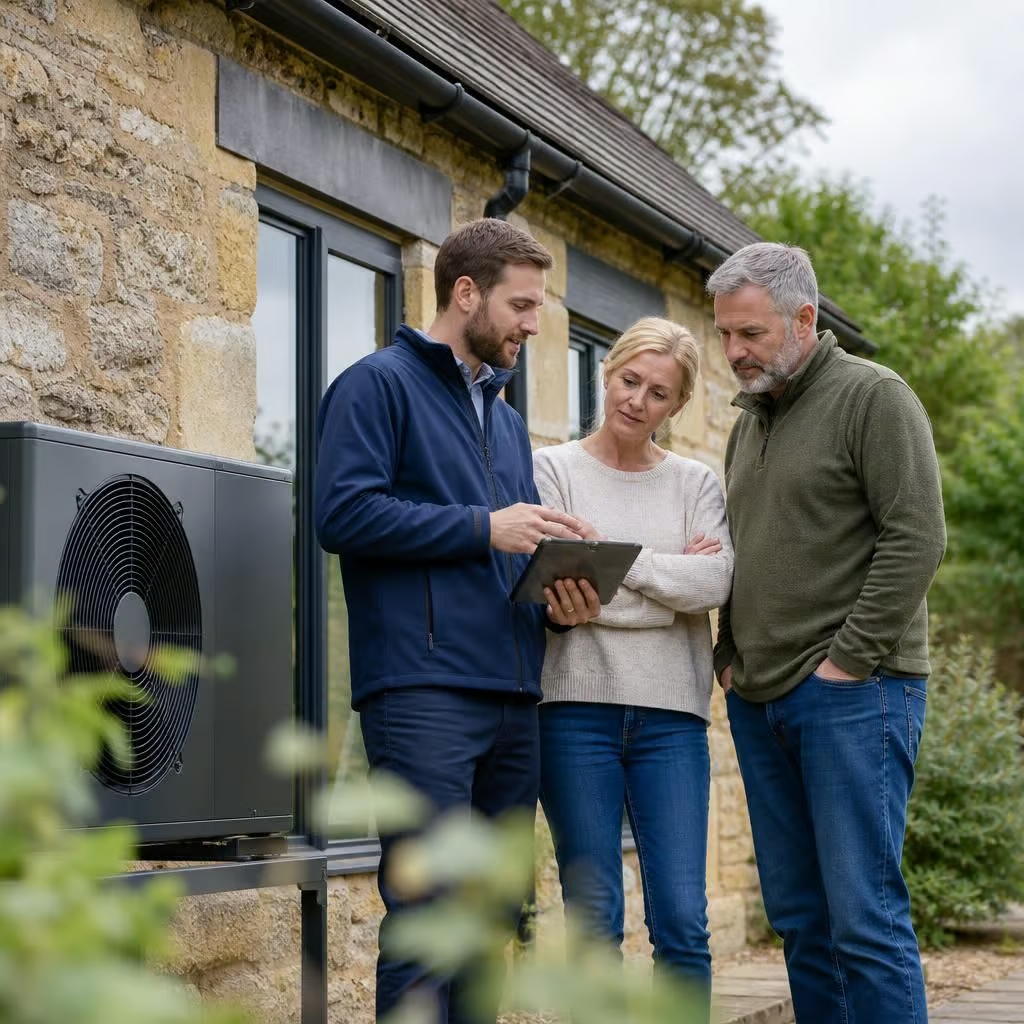
A useful test is whether the installer can explain the recommendation without relying on equipment names. You should understand why that system suits the property, what alternatives were considered and which parts remain uncertain.
If the survey identifies a problem, such as limited roof space or inadequate insulation, the installer should record it rather than gloss over it. A sound recommendation may involve changing the design, completing preparatory work first or deciding that installation isn’t worthwhile. That honesty helps you avoid paying for equipment before the property is ready for it.