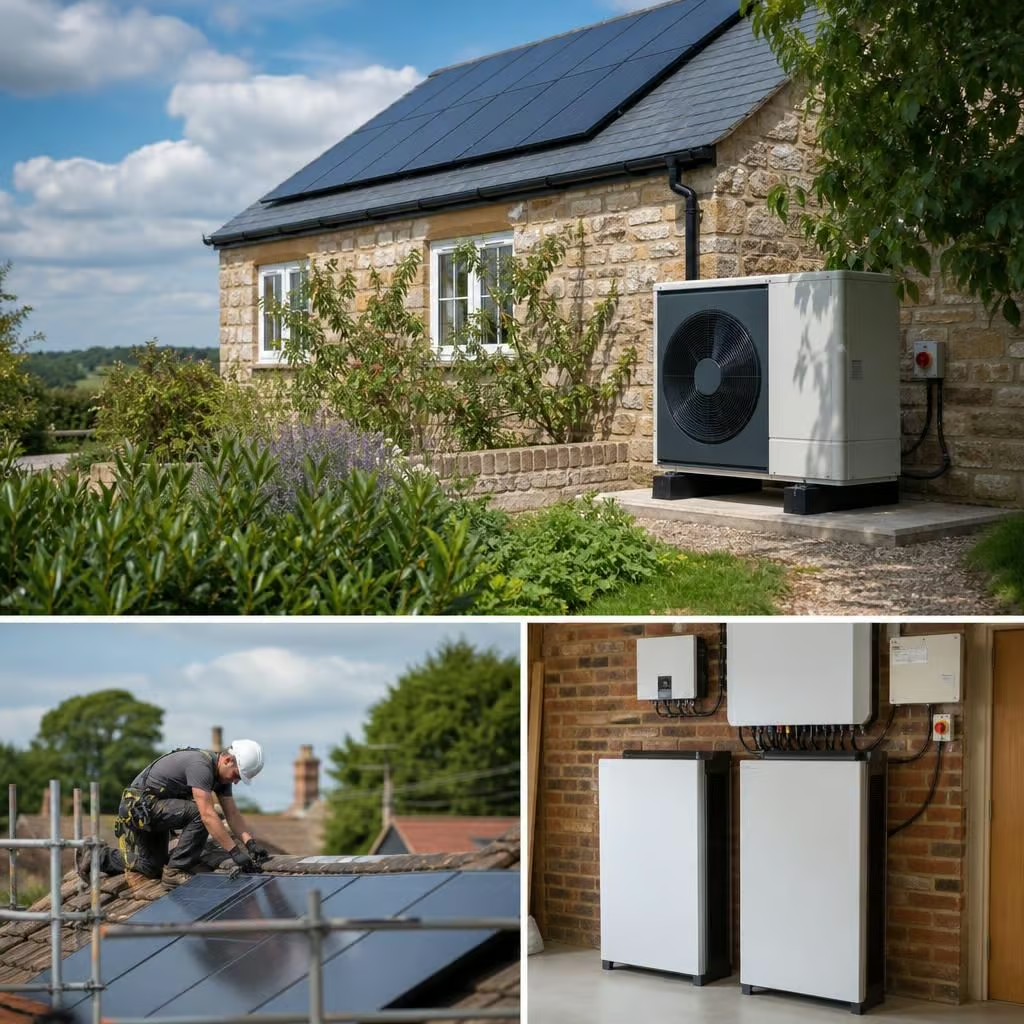
Which renewable energy source suits my property?
There is no single best renewable energy source for every property. We compare your heat demand, roof, electricity use, existing heating system and site constraints to decide whether solar panels, battery storage, an air source heat pump or a combination makes practical sense.
There isn’t one renewable system that suits every property. Solar panels usually suit homes with a usable roof and daytime electricity demand; battery storage suits homes that generate or buy electricity at different times; and an air source heat pump suits properties that can run efficiently at lower heating temperatures. Some homes benefit from combining two or more of these technologies.
Solar panels for generating electricity
Solar photovoltaic panels are often the simplest renewable improvement when the roof has a suitable area with limited shading. They generate electricity during daylight, which can run appliances, heating controls, pumps and vehicle charging without buying all that electricity from the grid.
Your electricity use matters as much as the roof. A home occupied during the day can use more of its generation directly. If most electricity is used in the evening, a battery or timed appliance controls may make more of the solar generation useful. We look at the roof layout, shading, consumer unit, cable routes and typical electricity use before recommending a panel arrangement.
Solar can still be considered on an older house, but the roof covering, structure and cable route need checking first. Listed buildings and properties in sensitive locations may also need planning advice. We identify those constraints before installation rather than treating every roof as suitable.
Battery storage for using more of your electricity
A battery stores electricity for later use. It does not generate energy on its own, so it is normally considered alongside solar panels or a suitable electricity tariff. During the day, surplus solar electricity can charge the battery. In the evening, the stored electricity can supply lighting, appliances and other household loads.
The right battery is based on how much electricity the property produces and uses, not simply on choosing the largest available unit. A battery that is too small may leave useful generation unused. One that is too large may add cost without being filled regularly. We assess the likely charge and discharge pattern, the available installation space, ventilation requirements and the condition of the existing electrical system.
Battery storage can also be useful where the household has variable demand, such as an electric vehicle, immersion heater or heat pump. The controls need setting up properly so the battery works with the rest of the installation rather than competing with it.
MCS-certified installation makes a solar and battery system eligible for the Smart Export Guarantee, subject to the scheme’s requirements and the arrangements offered by the chosen energy supplier. Export payments and tariffs can change, so we treat them as part of the property’s financial assessment rather than promising a fixed return.
Air source heat pumps for space heating and hot water
An air source heat pump is most suitable where the home can retain heat and the heating system can deliver it at a lower flow temperature than a conventional boiler. It takes heat from outside air and transfers it into the home for radiators, underfloor heating and hot water.
An older property is not automatically ruled out. Solid-wall houses, barn conversions and off-gas-grid homes can sometimes work well, but the heat losses and existing emitters need careful assessment. Some radiators may need replacing with larger models. Pipework, hot water storage, insulation and electrical capacity may also need attention.
Homes currently heated by oil or LPG often have a clear reason to investigate a heat pump, particularly where the existing boiler and tank are ageing. The change is more involved than swapping one boiler for another because the heat pump, cylinder, controls and radiators must operate as one system. We explain which parts need changing and which can remain before you decide.
The outdoor unit needs a suitable position with adequate airflow and consideration for sound, access and maintenance. The indoor equipment needs space for a hot water cylinder and associated pipework. Planning requirements depend on the property and installation, so we check the proposed position rather than assuming permission is unnecessary.
Heat pumps work differently from boilers. They generally run for longer periods at a steadier temperature instead of rapidly heating radiators to a high temperature. Your controls and daily heating habits may therefore need to change. We size the system from the building’s heat loss and check the radiators and hot water demand, rather than sizing it from the old boiler alone.
Where a heat pump meets the current scheme requirements, MCS certification allows us to make a Boiler Upgrade Scheme application on your behalf. The grant position can change, and eligibility depends on the property and installation, so we confirm the relevant conditions during the quotation process.
When combining technologies makes sense
- Solar and battery: useful when the property can generate electricity in daylight but uses more of it in the evening.
- Solar and heat pump: suitable where some daytime solar generation can support heating, hot water or other electrical demand.
- Heat pump and battery: worth assessing where the home has significant electrical demand and the battery can be integrated with the wider system.
- Solar, battery, heat pump and EV charging: a larger system that needs coordinated design, adequate electrical capacity and sensible controls.
Adding everything at once is not always the best route. A staged plan may be more practical if the roof needs work, the radiators need upgrading or the consumer unit requires changes first. We can separate essential preparation from later generation and storage decisions, so the first installation does not restrict future improvements.
How we decide what suits the property
We begin with the way the building is used. Heating demand, hot water use, occupancy, electricity consumption and plans for an electric vehicle can change the recommendation. A system that looks attractive on paper may be poorly matched to a home that is empty during the day or has limited space for equipment.
The survey also considers the roof and external areas, insulation, radiator sizes, heating controls, hot water cylinder, meter position, consumer unit and cable routes. On an off-gas-grid property, we include the existing oil or LPG arrangement and explain what removal, retention or replacement would involve.
You receive a recommendation based on the work the property actually needs. We set out the proposed equipment, preparation, controls, installation work, likely disruption and available scheme considerations in writing before work starts. We also explain when a technology is not a sensible fit. That may mean improving insulation, replacing part of the heating system first or choosing solar without a heat pump.
For a renewable installation, the best choice is the one that fits the building, the household’s energy use and the intended budget. A proper assessment should leave you knowing not only what can be installed, but why it is the appropriate option and what the property will need from you afterwards.
Planned building work can change which renewable system makes sense. If you’re considering a roof replacement, extension or renovation, we include that in the assessment before fixing equipment in place. This helps avoid installing panels, cables or controls that later need moving.
Heritage restrictions can also affect the practical choice. On a listed or visually sensitive property, we consider equipment positions, cable routes and planning requirements alongside energy performance. You can then compare an appropriate installation with the work needed to prepare the building, rather than choosing a system based only on its generating capacity.