
Which energy storage technology suits my home?
The right energy storage technology depends on how much electricity your home uses, whether you generate solar power, the space available and whether backup power matters. We assess those factors with the battery’s capacity, safety, controls, warranty and installation requirements to identify a system that fits your home and budget.
The right choice depends on how you use electricity, not simply on the battery with the largest capacity. We compare the storage chemistry, inverter arrangement, usable capacity, discharge power, backup requirement and available space before recommending a system.
Lithium-ion storage is usually the most practical category for a home. It stores a substantial amount of electricity in a relatively compact unit and responds quickly when appliances start. That makes it suitable for shifting solar electricity into the evening, reducing electricity bought from the grid and supporting selected circuits during a power cut.
Lithium iron phosphate (LFP) is a type of lithium-ion battery. It is often considered where long service life and thermal stability matter most. The battery still needs correct installation, ventilation where specified and suitable protection. We check the manufacturer’s installation requirements rather than treating the chemistry alone as a safety guarantee.
Nickel manganese cobalt (NMC) batteries can provide a high amount of energy from a compact enclosure. They are used in some domestic storage systems, but the installation must include the correct battery management, isolation and protection equipment. The available location matters as much as the chemistry, particularly in a utility room, garage or attached outbuilding.
Lead-acid batteries can appear cheaper, but they are generally less convenient for a modern home. They are heavier, need more room and are not normally used through the same depth of discharge as lithium systems. That can reduce the useful capacity available each day. We would only consider this type where the operating pattern, space and maintenance requirements genuinely suit it.
Flow batteries can offer useful characteristics for larger installations, but their size, cost and supporting equipment usually make them difficult to justify in an ordinary house. They may be worth investigating for an unusual commercial or rural application with substantial storage needs. They are not automatically a better choice because they use a different chemistry.
Your existing solar panels affect the electrical design. An AC-coupled battery can be added to an existing solar installation because it connects on the alternating-current side through its own inverter. This can avoid replacing working panels and may reduce disruption. A DC-coupled system connects the panels and battery through a hybrid inverter. It can be efficient for a new solar installation, but the panel layout, cable route and inverter specification all need checking.
Your electricity use determines the battery’s useful size. A home that uses most of its power during the day may have little surplus to store. A home with evening heating, cooking, laundry or electric vehicle charging may make better use of stored electricity. We look at the household’s consumption pattern rather than sizing the battery from the solar panel capacity alone.
Capacity and power are different. Capacity describes how much energy the battery can store. Power describes how much it can deliver at one time. A battery may have enough stored energy for the evening but still be unable to run several high-demand appliances together. We check the proposed loads, inverter rating and phase arrangement before discussing backup performance.
Your backup expectation also changes the specification. If you want selected lights, refrigeration, internet equipment or heating controls to keep running during a power cut, we can design an essential-load circuit where the equipment supports it. Running the whole house may require a larger inverter, different wiring and careful control of high-demand appliances. Storage does not automatically provide whole-home backup.
An older property does not rule out battery storage. Solid walls, barn conversions and listed buildings can still have suitable options, but we need to find a sensible position for the battery, inverter and cable routes. Planning restrictions, fire separation, access, moisture, temperature and distance from living areas can all affect the design. A small consumer unit or an older installation may also need electrical work before the battery can be connected.
Your roof does not need to be suitable for new solar panels if the aim is to store electricity bought from the grid. However, a battery normally makes better financial and environmental sense when its charging pattern matches a clear source of low-cost or self-generated electricity. We assess the existing solar system, tariff arrangements and likely operating pattern together.
Thermal storage is another option, but it stores heat rather than electricity. Using surplus electricity to heat hot water can be useful where the household has regular hot-water demand. It cannot replace a battery when you need electrical power later, and it cannot keep lights or appliances running during a power cut. We treat it as a separate part of the energy plan.
For homes considering solar at the same time, the installation route matters. MCS-certified solar and battery work can support eligibility for the Smart Export Guarantee, subject to the scheme’s rules and the export provider’s requirements. We explain which paperwork applies to the proposed system rather than assuming every battery installation qualifies in the same way.
Cost depends on the battery chemistry, usable capacity, inverter, cable routes, consumer unit changes, backup circuits and whether solar panels are being installed or retained. A larger battery is not always better: unused capacity adds cost without helping the household’s actual pattern of use. We set out the equipment and electrical work in a written quotation before work starts.
The installation normally involves mounting the battery and inverter, routing cables, making the required protective changes and commissioning the controls. Existing solar systems need compatibility checks before connection. We also explain how to view charge levels, set operating modes and respond if the system reports a fault. The final choice should leave you with storage that fits the home, the electrical installation and the way the household uses power.
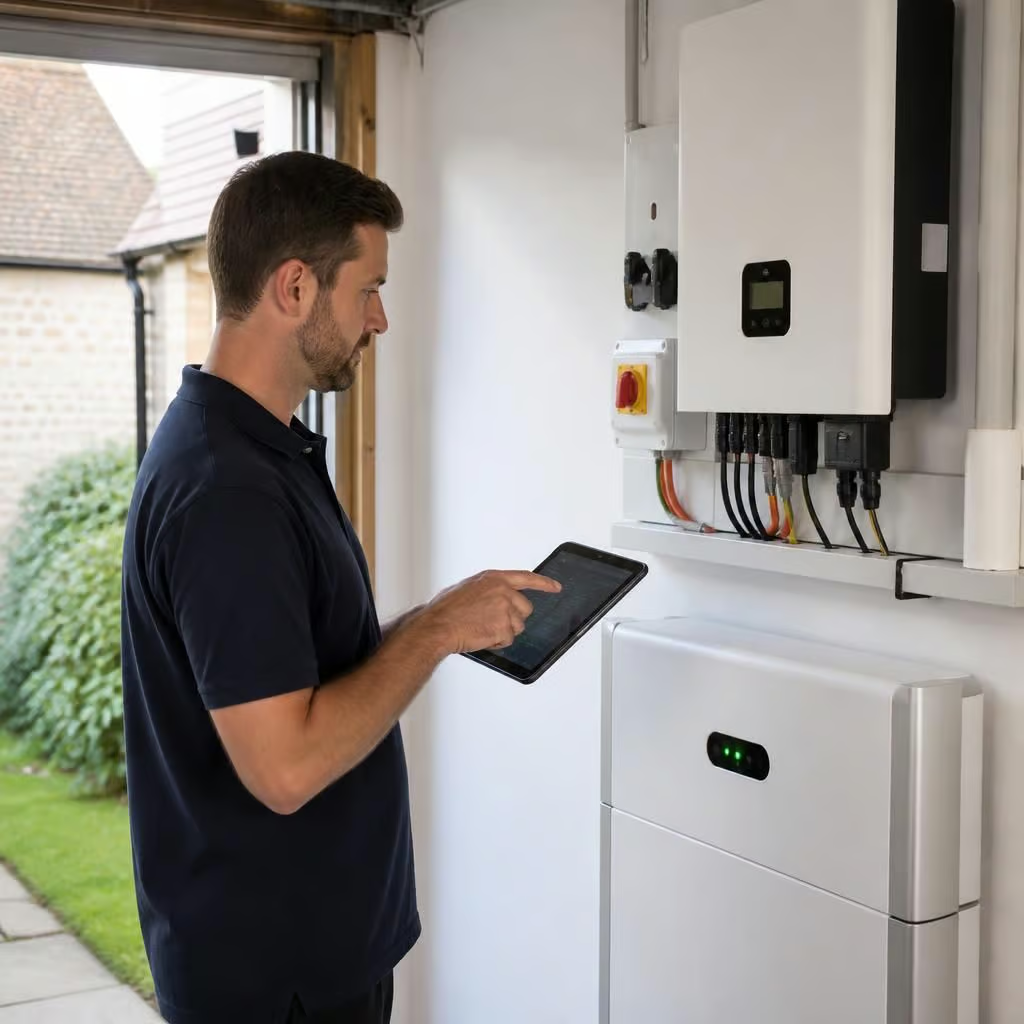
The least suitable battery is often the one that cannot be checked easily after installation. Your system should show its charge level, operating mode and fault status clearly, so you can tell whether it is using solar electricity, supporting the home or drawing from the grid.
If you plan to add solar panels, an EV charger or more storage later, mention that before we specify the equipment. We can then check the inverter capacity, consumer unit and cable routes against the likely future load. That helps you avoid choosing a battery that works today but limits the system you may want later.