
Which renewable energy source suits your property best?
The best renewable energy source depends on your property, existing heating system, roof, electricity use and available space. A heat pump can suit a well-insulated home, while solar panels, battery storage or a combination may be more practical where the roof and electrical demand support them.
For many properties, solar PV is the simplest renewable starting point. An air source heat pump can be the better choice when the aim is to replace oil, LPG or another heating system. Battery storage may add value where a home produces electricity at times when its occupants cannot use it. The right answer is often a combination, but not every property benefits from installing every technology.
Solar PV suits a property when the roof can produce useful electricity. We look at the roof’s direction, pitch, shading and condition, rather than judging it from the ground alone. Chimneys, trees and nearby buildings can reduce output at particular times of day. We also consider the available roof area, the position of the inverter and the route for cables into the electrical installation.
A sound roof usually makes the work more straightforward. If the covering needs replacement or structural work first, doing that before fitting panels can avoid removing and reinstalling the array later. Listed buildings and properties in conservation areas may need additional planning checks. We identify those restrictions during the survey instead of assuming that a standard roof installation will be acceptable.
Your daytime electricity use also affects the value of solar. A home with occupants working from home, an immersion heater, an EV or other regular daytime demand can use more of its generation directly. If most electricity is used in the morning and evening, a battery may help shift some of that energy to later. We use the household’s expected pattern rather than sizing the system from roof space alone.
An air source heat pump suits a property that can heat comfortably at a lower flow temperature. That does not rule out older houses. Solid-wall homes, barn conversions and off-gas-grid properties can work well, but the heat loss and existing emitters need careful assessment. We check room sizes, insulation, windows, radiator output, pipework and the hot water arrangement before recommending a heat pump.
Some radiators may need to be larger, and sections of pipework may need upgrading. The consumer unit and electrical supply may also require changes. These details affect the cost, the appearance of the finished system and the disruption during installation. Because our heating and electrical engineers work together, we can assess those requirements as one project rather than leaving separate trades to resolve them later.
The outdoor unit needs a suitable position with adequate airflow and reasonable separation from windows and neighbouring properties. We consider noise, access, condensate drainage and the route into the house. The indoor equipment may include a hot water cylinder and controls that need cupboard or utility-room space. If the property cannot accommodate those parts, a heat pump may not be the sensible recommendation.
Properties currently heated by oil or LPG often deserve particular attention. Replacing the boiler with a heat pump can reduce reliance on delivered fuel, but the change is not simply a like-for-like boiler swap. We calculate the heat demand, review the emitters and explain any work needed before installation. A heat pump is not automatically suitable just because a property is off the gas grid.
Battery storage suits a home that has a clear reason to store electricity. It can hold surplus solar generation for later use, reducing the amount of that generation exported when the panels are producing. It can also be considered alongside a suitable electricity tariff, although the likely benefit depends on changing tariff terms and the household’s actual demand.
A battery-only installation may be appropriate in some circumstances, but it does not generate electricity. We therefore look at the existing solar system, the available electrical capacity, the battery location, ventilation and fire-safety requirements. The usable capacity and charge rate need to reflect the property’s loads. Installing the largest battery available is not automatically the best financial or practical decision.
The property’s electrical installation can determine which renewable option is practical. We inspect the consumer unit, earthing, cable routes and space for protection equipment. Older installations may need remedial electrical work before panels, a battery or a heat pump can be connected. That work is part of making the installation safe and compliant, not an optional extra to be discovered after the equipment arrives.
We also consider how the system will be monitored and controlled. You should be able to understand what the panels are producing, what the battery is storing and when the home is drawing electricity from the grid. We explain the controls in ordinary terms and leave the relevant commissioning information and paperwork after the installation.
Grant and export arrangements form part of the decision, but they do not decide suitability. MCS certification means we can make an eligible Boiler Upgrade Scheme application on your behalf for a qualifying heat pump. It also allows an eligible renewable electricity installation to access the Smart Export Guarantee. The current rules and eligibility requirements still need checking for the property and the proposed system.
We assess the likely cost, installation work and expected use together. That produces a more useful comparison than quoting a headline saving for a technology that may not fit the building. If insulation, radiators, roof repairs or electrical upgrades need attention first, we explain that sequence. We will also say when a renewable installation is unlikely to offer a sensible result.
Our process starts with a property survey and a discussion about how the home is heated and used. We then compare the realistic options, including a combination where that makes sense. The quotation sets out the equipment, associated building and electrical work, controls, commissioning and paperwork before work starts. That gives you a basis for comparing the whole installation rather than just the price of the main unit or panels.
Solar PV is often the least disruptive option when the roof and electrical installation are suitable. A battery is useful when storage solves a specific timing problem. An air source heat pump involves more planning, but it can be the stronger choice when you want to change the way the property is heated. The most suitable renewable energy source is the one that matches the building, the existing systems and the way you use the home.
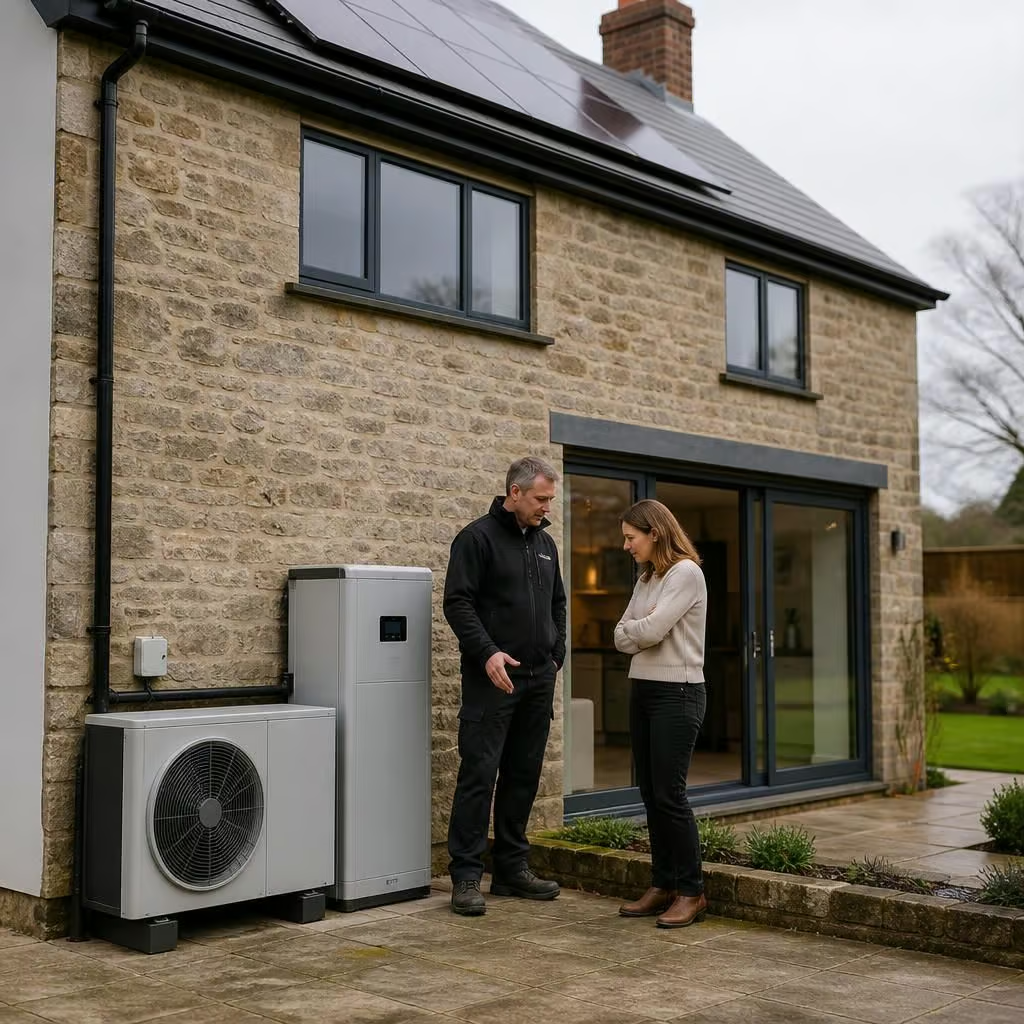
Renewable improvements don’t have to happen all at once. If a heat pump needs insulation, radiator or electrical work first, we can set out that sequence rather than forcing every change into one installation.
That may leave room for solar panels now and battery storage later, provided the electrical design allows for it. We record the work needed at each stage, so today’s installation doesn’t create unnecessary costs when you add another system in the future.