
How much does solar pool heating cost?
Solar pool heating costs vary with the pool size, collector area, mounting arrangement and any changes needed to the circulation system. We assess those details before providing a written quotation, so the price reflects the equipment and installation your pool actually needs.
There is no reliable standard price for solar pool heating in the UK. A simple outdoor pool with a suitable roof and usable circulation system costs less to adapt than one needing a new pump, long pipe runs or ground-mounted collectors. The right budget comes from matching the collector system to the pool, the site and the way you use it.
What the installation cost includes
The main cost is the solar collector system. For pool heating, these are usually purpose-made thermal collectors rather than solar PV panels. Sunlight warms the pool water as it passes through the collectors, then a controller sends the water back to the pool when the collector is warmer.
- Solar collectors and their support or fixing system
- Pipework between the pool plant room and the collectors
- A controller, temperature sensors and motorised valves
- Roof access equipment or ground supports where needed
- Connections to the existing filtration and circulation equipment
- Electrical work for the controls or pump, if the existing supply is unsuitable
An existing circulation pump and a nearby plant room can keep the installation simpler. A distant roof, difficult access or a plant room that needs rearranging adds labour and materials. If the existing pump cannot handle the additional resistance, we may need to allow for a replacement or supplementary pump.
The pool and its surroundings affect the budget
A larger pool needs more collector capacity to produce a useful heating effect. An outdoor pool in an exposed position also loses heat more quickly than one sheltered by buildings or planting. The pool’s depth, construction and usual water temperature matter too.
Roof direction and shading affect how much useful heat the collectors receive. A south-facing roof is not essential, but heavy shading during the useful part of the day can make the system less worthwhile. We look at nearby trees, chimneys, roof condition and safe access before deciding where the collectors should go.
Flat roofs, pitched roofs and ground-mounted frames each involve different supports and pipe routes. Listed or older properties may also need extra care around fixings, visible pipework and planning requirements. We take those practical restrictions into account rather than assuming a standard roof installation.
Existing equipment can make a significant difference
If the pool already has a sound circulation system and a suitable connection point, we can often integrate the solar heating controls with it. If the plant room is cramped, corroded or poorly arranged, preparation work may form a noticeable part of the price.
Some pools use a gas, oil or electric heater as a backup. Solar heating can work alongside that equipment, but the controls must prevent the backup heater from running unnecessarily. We check how the existing heater is controlled and explain any changes needed.
A pool cover is also important to the overall cost and performance of the heating arrangement. Most heat is lost from the water surface, particularly overnight and in windy weather. If the pool has no effective cover, improving that part of the installation may be more useful than simply adding more collector area.
Running costs are mainly linked to circulation
Solar collectors do not need fuel to heat the water, but the pool still needs to circulate water through the system. The running cost therefore depends on the circulation pump, control settings and how long the pool is filtered each day.
When sunlight is insufficient, the solar system will not create the same heat as it does on a bright day. It does not guarantee a particular water temperature in every weather condition. Your existing heater may still be needed at the beginning or end of the season, during cooler spells or when you want a higher temperature than the available sunlight can provide.
We can explain how the solar heating will interact with the backup heater and pool cover. That gives you a more realistic view of the likely running pattern than a headline saving based on a different pool.
What we check before pricing
- The pool’s dimensions, volume and typical operating temperature
- Collector placement, available sunlight and safe access
- The distance between the proposed collectors and the plant room
- The condition and capacity of the filtration and circulation equipment
- The existing heater, controls and electrical supply
- Pipework routes, insulation and any penetrations through walls or roofs
- Planning or property restrictions that could affect the proposed position
We use those findings to separate the cost of the collectors, controls, pipework, access work and any changes to existing equipment. If a particular roof or pool arrangement would make solar heating poor value, we explain that before you commit to the work.
Is there a grant for solar pool heating?
Solar pool heating is different from solar PV and renewable heating systems covered by some household grant schemes. You should not assume that a grant will reduce the price of a pool heating installation. We can identify what the proposed equipment does and what support, if any, is relevant, but the quotation should be based on the actual installation rather than an assumed payment.
The most useful comparison is the full installed cost alongside the pool’s likely use, the need for backup heating and the expected reduction in fuel or electricity consumption. We will discuss those points during the assessment and provide the price for the work your pool actually needs.
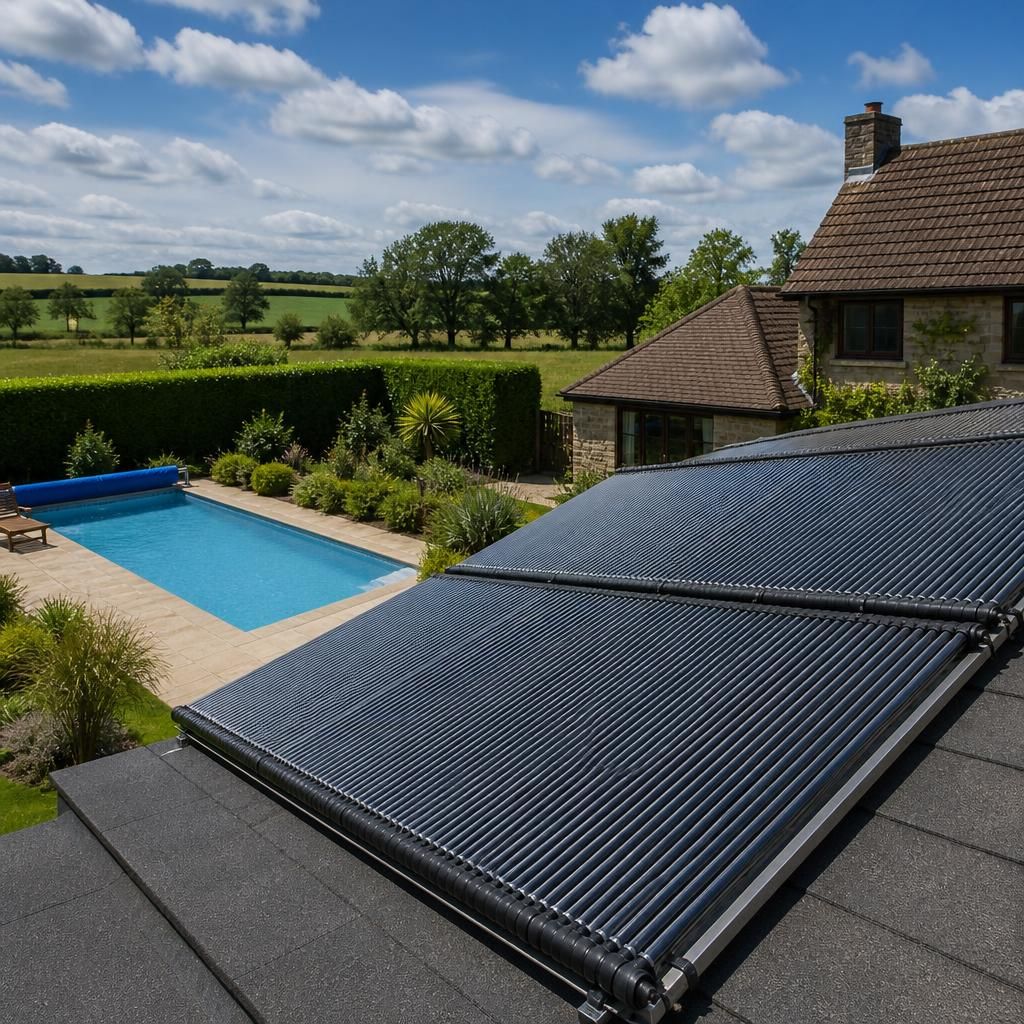
A low solar pool heating quote may not include everything needed to make the system work. Before comparing prices, check that each proposal covers the collectors, supports, pipework, controller, valves, access equipment and connection to the pool circulation system.
We set out those elements clearly after inspecting the pool and plant room. That makes it easier to see whether the difference between two prices comes from the equipment itself or from preparation work that another quote has left out.