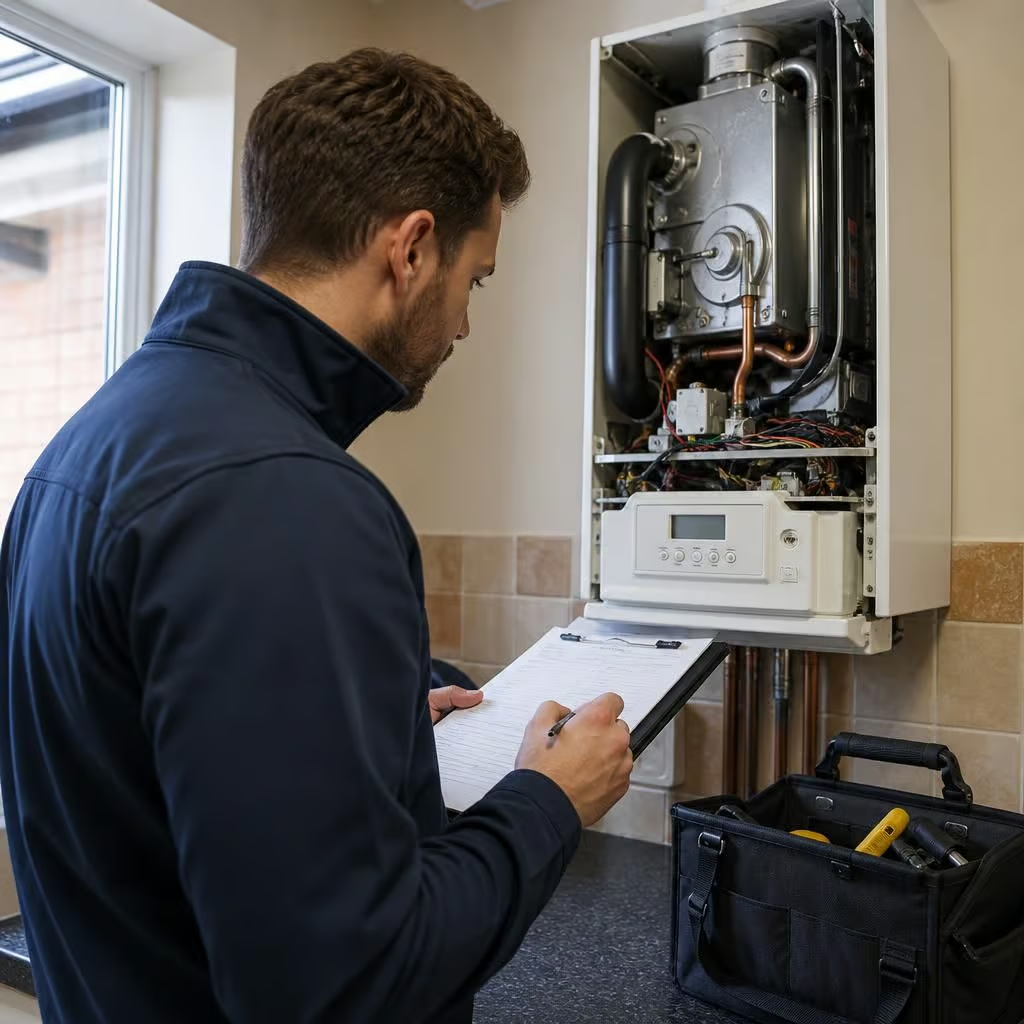
Can a CP12 certificate be issued if an appliance fails?
Yes, a CP12 can be completed when an appliance fails, but it must record the defect and cannot show the property as having passed its gas safety check. We’ll explain the risk, make an unsafe appliance safe where necessary, and set out any remedial work needed before it is used again.
A failed appliance does not automatically prevent us from completing the gas safety record. The important point is that the record must accurately show what we inspected, what we found and what action is needed.
A CP12 is commonly used to mean a landlord’s Gas Safety Record. It is not a certificate saying that every appliance has passed. It is a record of the safety checks carried out on the gas appliances and flues covered by the inspection.
If one appliance has a defect but the engineer can complete the required checks, we record that defect clearly. The record should identify the appliance, explain the issue and state any safety action taken. A landlord must not describe the appliance as safe simply because a CP12 has been issued.
The result depends on the type of fault. We assess the appliance, its flue, ventilation and surrounding installation. We then decide whether the appliance can remain in use, needs remedial work or must be disconnected from the gas supply.
- A minor defect: We record the issue and explain what repair or further investigation is needed. The appliance may remain in use only if the engineer considers it safe to do so.
- An unsafe appliance: We explain the risk and advise that the appliance is not used. Where necessary, we isolate it or disconnect it from the gas supply in line with the safety procedure.
- A serious flue or ventilation problem: The appliance may need to be taken out of service until the installation is made safe and checked again.
The tenant should receive clear information about any appliance that has been isolated or labelled unsafe. A note on the record is not a substitute for dealing with the risk. The landlord remains responsible for arranging the repair and making sure the appliance is not returned to use before the problem has been resolved.
If the appliance is repaired during the same visit, we can record the work carried out and complete the relevant safety checks afterwards. If the repair needs another appointment, the original record still reflects the condition found during that inspection. The later visit should produce suitable documentation showing what was repaired and what checks were completed.
A new inspection is particularly important where we have replaced a component, altered the flue or ventilation, reconnected an isolated appliance or carried out work that could affect safe operation. The appliance must not simply be switched back on because the repair appears complete. We check it again before it returns to service.
A record cannot cover appliances that were not properly inspected. If access is blocked, the appliance cannot be operated safely for testing or a flue cannot be examined, we record that limitation rather than treating the appliance as passed. The landlord will need to arrange access or further work so the required checks can be completed.
The same applies if the inspection finds a problem outside the appliance itself. A boiler may operate correctly while its flue, ventilation or gas pipework presents a concern. Those parts form part of the safety assessment, so the record must reflect any defect that affects safe use.
For landlords, the practical steps are:
- Read the record and identify which appliance or flue has failed or needs attention.
- Follow the engineer’s instructions about isolation, warning labels and use of the appliance.
- Arrange the recommended repair or further investigation.
- Keep the inspection record and the remedial-work paperwork together.
- Ask for the appliance to be checked again before it is put back into service.
- Give the tenant the relevant safety information and updated documentation.
For an oil-fired appliance, the inspection follows a different certification route. Gas appliances must be checked by a Gas Safe registered engineer, and the landlord’s record should relate only to the gas appliances and flues covered by that inspection.
We explain the defect in plain terms and set out what needs to happen next. That may be a repair, further testing or replacement where the appliance cannot safely be returned to service. The written record gives the landlord evidence of the condition found, but it does not remove the need to correct an unsafe installation.
When a property has several gas appliances, we assess and record each one separately. A defect in the boiler does not remove the inspection result for a cooker or fire that we could check safely.
The landlord should use the record alongside the engineer’s recommendations. It shows the condition found on the inspection date, while any later repair needs its own evidence and safety checks before the affected appliance is used again.