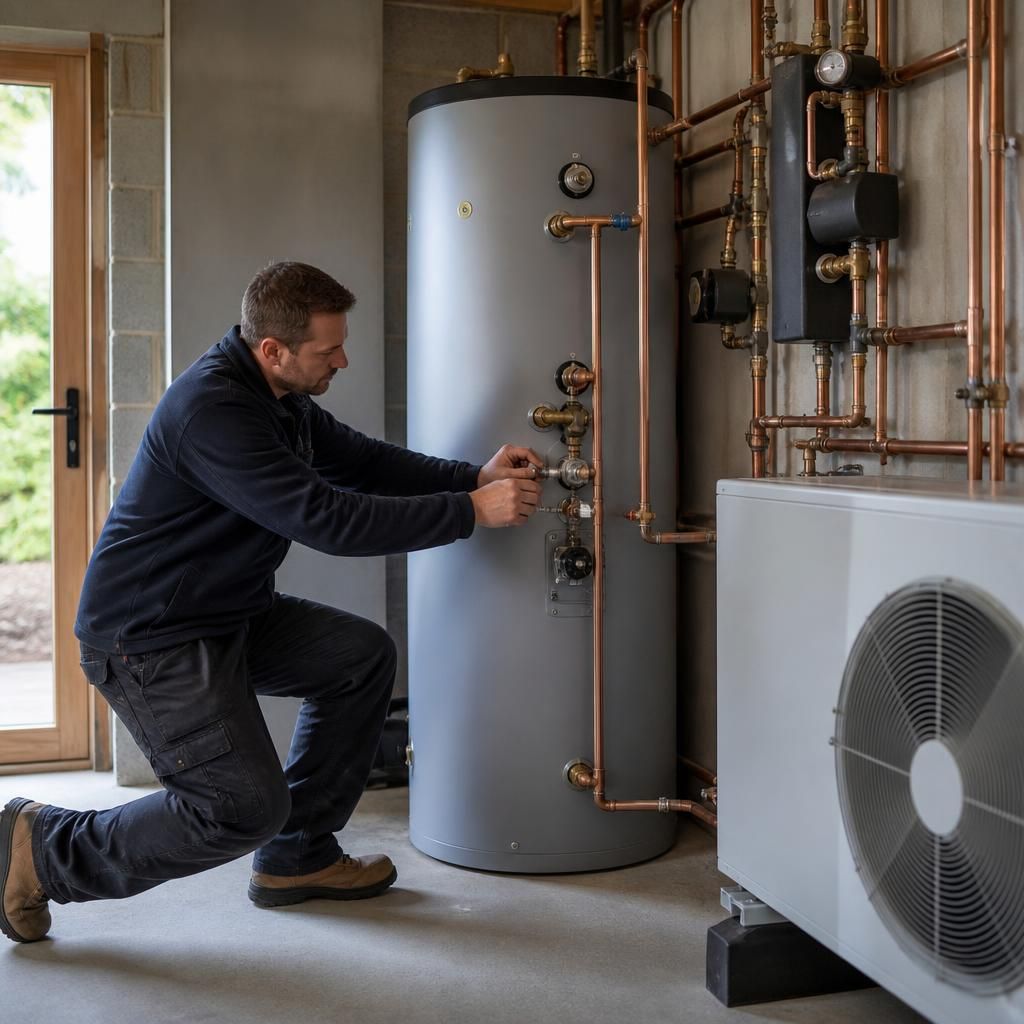
Can thermal storage be added to an existing heat pump system?
Yes, thermal storage can often be added to an existing heat pump system, but the right arrangement depends on the heat pump, controls, pipework and available space. We assess the existing installation to confirm whether a thermal store or buffer vessel is suitable and how it should be connected.
Yes, an existing heat pump can often be fitted with a thermal store later. The store connects to the heating circuit, not to the heat pump’s refrigerant system, so the work usually involves adapting pipework, pumps and controls rather than replacing the heat pump itself.
The first point to clarify is what the system actually needs. A thermal store can mean a buffer vessel, a volumiser or a larger cylinder that stores heated water for space heating. These arrangements work differently. A buffer vessel can give the heat pump more water volume to work with, while a volumiser adds volume without necessarily separating the heating circuits. A store may also allow several heating zones to draw heat without repeatedly starting and stopping the heat pump.
Your heat pump may benefit from added storage if the system has several small zones, thermostatic valves that regularly close, or insufficient water volume in the heating circuit. The stored water gives the heat pump a steadier load. It can reduce short cycling, support a stable flow rate and provide a useful place for heat during the defrost cycle.
That does not make a thermal store automatically beneficial. A badly sized vessel adds heat loss, takes up space and may require another circulating pump. It can also make the controls harder to understand. If the existing system already has enough water volume and the heat pump runs steadily, adding storage may bring little improvement.
We start by reviewing the heat pump’s installation information and the way the system operates. The survey covers:
- the heat pump model, output and minimum water volume;
- the existing cylinder, buffer vessel and heating pumps;
- radiator and underfloor-heating circuits;
- the number of zones and how the thermostats and valves control them;
- available space, access routes and the position of existing pipework;
- flow temperatures, return temperatures and signs of short cycling;
- the electrical supply needed for any additional pump or control equipment.
Your radiators and pipework still need to suit the heat pump. A thermal store cannot correct undersized radiators, restricted pipework or a home that needs a higher flow temperature than the heat pump can efficiently provide. If the property has older radiators or a mixture of radiator and underfloor circuits, we may recommend changes to the emitters, valves or mixing controls alongside the store.
The position of the store affects the practical side of the work. A suitable location needs a sound floor, enough clearance for installation and maintenance, and a route for larger heating pipes. In an older home, that may mean using a utility room, plant room or part of an existing airing cupboard. We check the route before recommending equipment, because getting a large cylinder into the property can be more disruptive than connecting it once it is in place.
Adding storage can also change the control strategy. The heat pump, store sensor, heating pump and room controls must work together. We set the controls so the heat pump charges the store only when there is a genuine heating demand. The heating circuits then draw from it at the correct temperature. Without that coordination, the heat pump may heat the store unnecessarily or the radiators may receive water that is too cool.
For some systems, a simpler alteration is more appropriate. We may be able to add a volumiser, change the control settings, rebalance the heating circuit or alter the zoning arrangement. These options can address inadequate water volume or frequent cycling without installing a full thermal store.
The installation normally involves isolating and draining part of the heating system, adapting the flow and return pipework, fitting the vessel and sensors, then reconnecting and testing the controls. We refill the system, remove air, check pressures and confirm that each heating circuit receives the required flow. The final checks include heat pump cycling, pump operation and the temperatures entering and leaving the store.
Expect some disruption while the pipework is changed, particularly if the existing connections are tight to walls or floors. The extent depends on the store position and the layout of the plant room. We explain the proposed pipe routes and any likely making-good before work starts, then provide the written quotation so the scope is clear.
A thermal store is worth adding when it solves a specific hydraulic or control problem. It is less useful as a general upgrade carried out without measurements. After assessing the existing heat pump and heating circuit, we can tell you if storage is justified, what type is appropriate and whether a smaller change would achieve the same result.
A thermal store for heating is not automatically a replacement for the cylinder that supplies hot water to your taps. The proposed vessel may serve the radiators or underfloor heating, while the existing cylinder continues to provide domestic hot water.
That distinction matters when space is limited. We identify which vessel serves each circuit and check that the heat pump can meet both demands without the heating system competing with hot-water heating. In some homes, a smaller buffer vessel or volumiser is enough. You may not need a large combined unit.
The quotation will show what the added storage does, which existing equipment remains, and any changes needed to the pipework and controls. That gives you a clear choice before work starts, rather than assuming that more storage is automatically better.